
Title
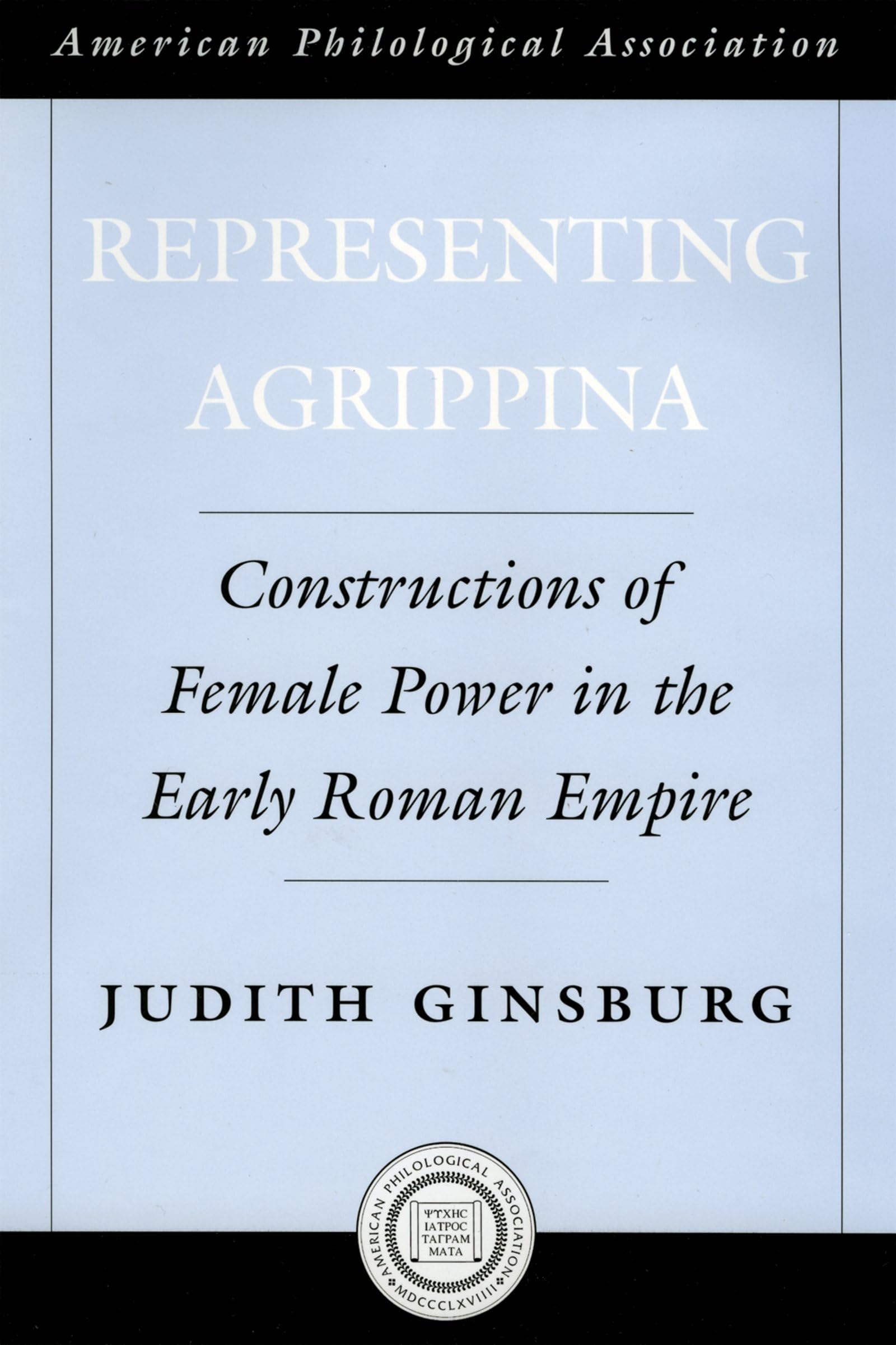
Representing Agrippina: Constructions Of Female Power In The Early Roman Empire (Society For Classical Studies American Classica
Sold by Ergodebooks, an authorized reseller.
Returns accepted within 30 days | support@ergodebooks.com
Shipping Information
- Free Standard Shipping — United States only
- Processing Time: 3–5 business days
- Estimated Delivery: 6–10 business days after dispatch
- Double-boxed, fully insured & discreetly packaged
- Tracking number sent via email once dispatched
Returns & Refund
Returns accepted within 30 days of delivery.
Damaged or Defective Item
Free return shipping + replacement or full refund
Wrong Item Received
Free return shipping + replacement or full refund
Change of Mind
Return shipping at customer's expense · 25% restocking fee applies
Payment Option

Agrippina The Younger, Wife Of The Emperor Claudius And Mother Of His Successor Nero, Wielded Power And Authority At The Center Of The Roman Empire In Ways Unmatched By Almost Any Other Woman In Roman History. Such, At Least, Is The Portrait Of Agrippina Delivered By Our Sources And Perpetuated In Modern Scholarship. In This Posthumous Work, Judith Ginsburg Provides A Fresh Look At Both The Literary And Material Representations Of Agrippina. Unlike Previous Treatments, She Seeks Neither To Condemn Nor To Rehabilitate Agrippina. Nor Does She Endeavor To Exhume The Real Agrippina From The Embellished Or Fabricated Portraits Found Among The Ancients. Ginsburg Trains Her Focus On The Representations Themselves. Her Painstaking Dissection Of The Portrayals By Historians Exposes The Rhetorical Tropes, The Recurrent Motifs, And The Craft That Shaped The Literary Image Of Agrippina. The Designs, As Ginsburg Shows, Were More Than Literary Flourishes. They Aimed To Blur The Boundaries Between The Domestic And The Imperial Realms, Deploying The Image Of Agrippina As Domineering Wife And Mother To Suggest The Flaws And Instability Of The Regime, A Dysfunctional Family Entailing A Dysfunctional System Of Governance. Gender Inversions At Home Played Themselves Out On The Public Scene As Imperial Rule Compromised By Female Ascendancy. Distorted Stereotypes Of The Wicked Stepmother, The Domineering Woman, And The Sexual Transgessor Were Applied To Underscore The Violations Of Status And Disruption Of Gender Relations That Characterized The Imperial Administration. Ginsburg Has As Keen An Eye For Visual (Mis)Representations As For Literary Ones. The Depictions Of Agrippina On Coinage And Statuary Provide A Stark Contrast With The Written Evidence. She Appears As Matron And Priestess, Emblematic Of Domestic Rectitude And Public Piety, And A Central Figure In The Continuity Of The Dynasty. Ginsburg Incisively Demonstrates The Means Whereby Agrippina'S Imagery Was Molded Both To Serve The Interests Of The Julioclaudian Regime And To Advance The Ends Of Its Critics.
⚠️ WARNING (California Proposition 65):
This product may contain chemicals known to the State of California to cause cancer, birth defects, or other reproductive harm.
For more information, please visit www.P65Warnings.ca.gov.
- Q: How many pages does the book have? A: The book has one hundred sixty pages. It is a concise exploration of Agrippina's representations in the Roman Empire.
- Q: What is the binding type of this book? A: The book is hardcover. This durable binding provides protection and longevity for such a significant historical work.
- Q: What are the dimensions of the book? A: The book measures nine point twenty-one inches in length, zero point forty-four inches in width, and nine point twenty-one inches in height. These dimensions make it easy to handle and store.
- Q: Is this book suitable for beginners? A: Yes, this book is suitable for readers new to classical studies. Judith Ginsburg presents complex ideas in an accessible manner.
- Q: What themes are explored in the book? A: The book explores themes of female power, representation, and the intersection of gender and politics in the early Roman Empire. It offers insights into Agrippina's influence.
- Q: Who is the intended audience for this book? A: The intended audience includes scholars, students, and anyone interested in classical studies or gender dynamics in history. It serves both academic and general interest readers.
- Q: How should I store this book? A: Store the book in a cool, dry place away from direct sunlight. Keeping it on a bookshelf upright will help maintain its shape.
- Q: Can I clean the cover of this hardcover book? A: Yes, you can clean the cover using a soft, damp cloth. Avoid using harsh chemicals to preserve the integrity of the book.
- Q: Is this book safe for children? A: Yes, the book is safe for older children interested in history. However, parental guidance is recommended due to complex themes.
- Q: What should I do if the book arrives damaged? A: If the book arrives damaged, contact the seller for a return or exchange. Most retailers have policies for damaged items.
- Q: Is there a warranty for this book? A: No, books typically do not come with a warranty. However, check the retailer's return policy for any guarantees.
- Q: How can I access further resources on this topic? A: You can access further resources through academic databases, libraries, and online platforms specializing in classical studies.
- Q: What if I want to learn more about the author? A: Judith Ginsburg is a recognized scholar in classical studies. You can find her other works and publications through academic journals and university presses.
- Q: Is this book part of a series? A: No, this book is a standalone work. It provides an in-depth analysis of Agrippina without being part of a larger series.
- Q: Are there any illustrations in the book? A: Yes, the book includes illustrations of coinage and statuary related to Agrippina. These visual aids enhance the textual analysis.