
Title
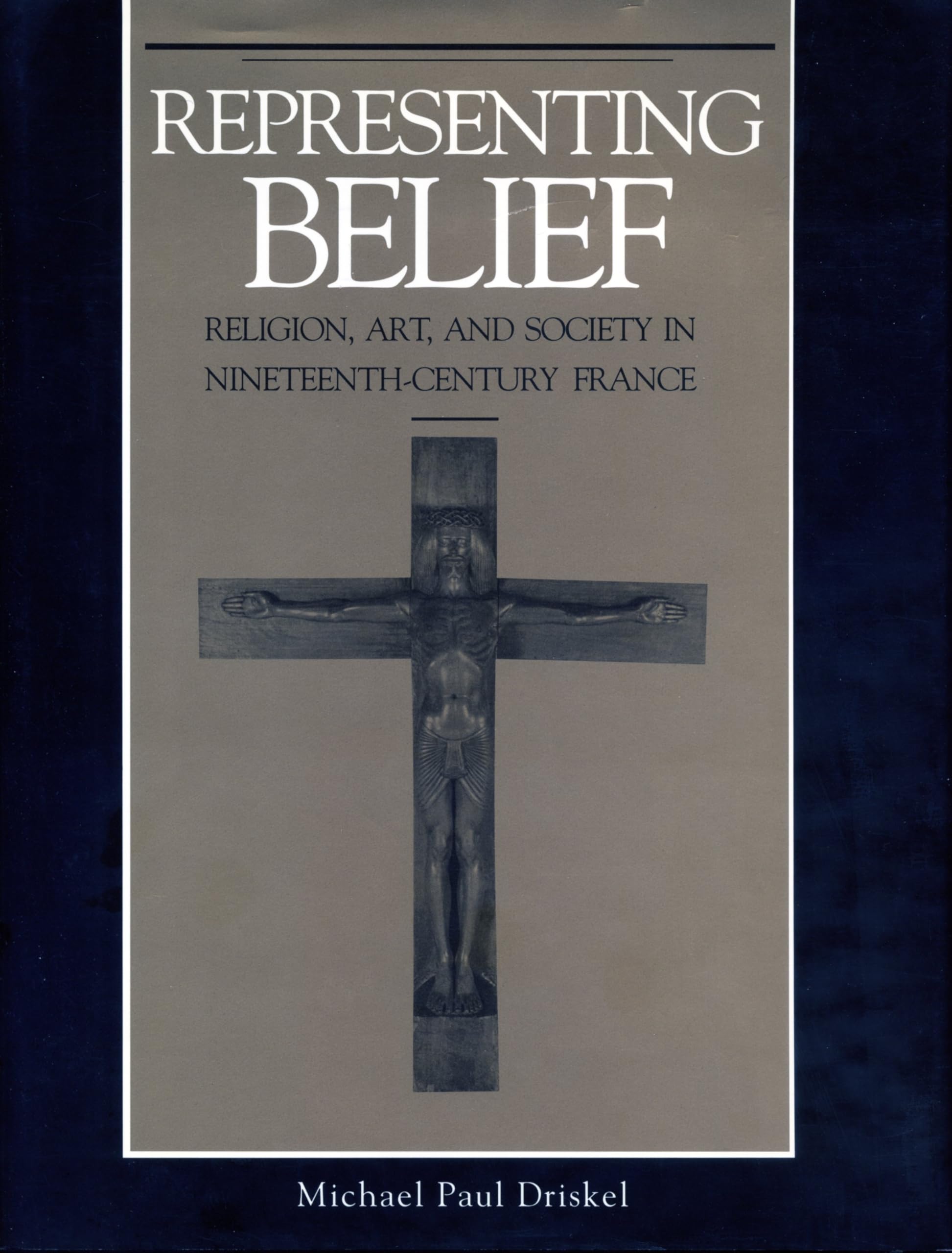
Representing Belief: Religion, Art, And Society In Nineteenthcentury France
Sold by Ergodebooks, an authorized reseller.
Returns accepted within 30 days | support@ergodebooks.com
Shipping Information
- Free Standard Shipping — United States only
- Processing Time: 3–5 business days
- Estimated Delivery: 6–10 business days after dispatch
- Double-boxed, fully insured & discreetly packaged
- Tracking number sent via email once dispatched
Returns & Refund
Returns accepted within 30 days of delivery.
Damaged or Defective Item
Free return shipping + replacement or full refund
Wrong Item Received
Free return shipping + replacement or full refund
Change of Mind
Return shipping at customer's expense · 25% restocking fee applies
Payment Option

Representing Belief Provides A Detailed Discussion And Analysis Of The Forms And Meanings In Religious Art Of Nineteenthcentury France. This Genre, Usually Assigned Minimal Importance By Writers On The Period, Turns Out To Occupy A Central Place In The Cultural History Of The Era, Touching The Core Of The Century'S Conflict Between Tradition And Modernity, Science And Faith, Ultramontanism And Naturalism. Although It Was Generally Assumed That This Kind Of Art Was Of Little Importance In The Evolution Of Modern Painting, Driskel Demonstrates That In Reality It Played A Crucial Role. Many Of The Artists Discussed Are Firmly Installed In The Present Canon (Delacroix, Ingres, Manet, Gauguin), While Others (Flandrin, Orsel, Gleyre, Cazin) Were Major Figures In Their Own Time, Though Largely Forgotten Today.Writing From An Interdisciplinary Perspective And Employing Concepts Derived From Structuralist And Poststructuralist Theory, Driskel Moves Beyond Simple Formalism To Restore A Category Of Onceimportant Works To A Meaningful Context, Thereby Offering Others A Model By Which To Discuss And Interpret These Paintings. Carefully Charting The Genealogies Of Hieraticism And Naturalism, He Demonstrates That A Dramatic Shift Occurred In The 1860S And 1870S As Naturalism Gained Acceptance Among Ultramontanes And The Hieratic Mode Began To Attract The Interest Of Adherents To The Belief System Of Modernism. Representing Belief Is The First Book To Situate This Art In Its Social And Historical Contexts And To Approach It From This Point Of View.
⚠️ WARNING (California Proposition 65):
This product may contain chemicals known to the State of California to cause cancer, birth defects, or other reproductive harm.
For more information, please visit www.P65Warnings.ca.gov.
- Q: How many pages does this book have? A: This book contains two hundred ninety-eight pages. It provides a comprehensive analysis of religious art in nineteenth-century France.
- Q: What is the binding type of this book? A: This book is hardcover bound. The hardcover provides durability and a more formal presentation for collectors and readers.
- Q: What are the dimensions of this book? A: The dimensions are eight and a half inches in length, eleven inches in height, and zero point seventy-one inches in width. These dimensions make it a comfortable size for reading and display.
- Q: Who is the author of this book? A: The author is Driskel, Michael Paul. He provides an interdisciplinary perspective on the subject matter.
- Q: What genre does this book belong to? A: This book belongs to the Criticism genre. It focuses on the cultural history of art and religion.
- Q: How should I approach reading this book? A: You should read this book if you are interested in the intersection of religion and art. It is suitable for those who appreciate historical and cultural analysis.
- Q: Is this book suitable for academic study? A: Yes, this book is suitable for academic study. It employs structuralist and poststructuralist theory, making it ideal for students and scholars.
- Q: What themes are explored in this book? A: This book explores themes of tradition versus modernity, science versus faith, and the evolution of religious art. It provides insights into societal conflicts of the era.
- Q: Can this book be used for a research paper? A: Yes, this book can be used for a research paper. It offers detailed discussions that are valuable for scholarly writing.
- Q: How do I care for this book? A: To care for this book, keep it in a dry environment and avoid direct sunlight. This will help preserve its condition over time.
- Q: Is this book safe for children? A: No, this book is not specifically aimed at children. It contains complex themes that may not be suitable for younger audiences.
- Q: What if the book arrives damaged? A: If the book arrives damaged, you should contact customer support for a return or exchange. They will assist you in resolving the issue.
- Q: Does this book have illustrations? A: Yes, the book includes illustrations of the artworks discussed. These visuals enhance the understanding of the text.
- Q: Are there any notable artists mentioned in this book? A: Yes, notable artists such as Delacroix, Ingres, Manet, and Gauguin are discussed. The author highlights their contributions to religious art.
- Q: What makes this book unique compared to others on the subject? A: This book is unique because it situates religious art within its social and historical contexts, offering a fresh perspective on a typically overlooked genre.