If you have any questions, you are always welcome to contact us. We'll get back to you as soon as possible, withing 24 hours on weekdays.
Customer service
All questions about your order, return and delivery must be sent to our customer service team by e-mail at yourstore@yourdomain.com
Sale & Press
If you are interested in selling our products, need more information about our brand or wish to make a collaboration, please contact us at press@yourdomain.com
Help
If you have any questions, you are always welcome to contact us. We'll get back to you as soon as possible, withing 24 hours on weekdays.
Customer service
All questions about your order, return and delivery must be sent to our customer service team by e-mail at yourstore@yourdomain.com
Sale & Press
If you are interested in selling our products, need more information about our brand or wish to make a collaboration, please contact us at press@yourdomain.com
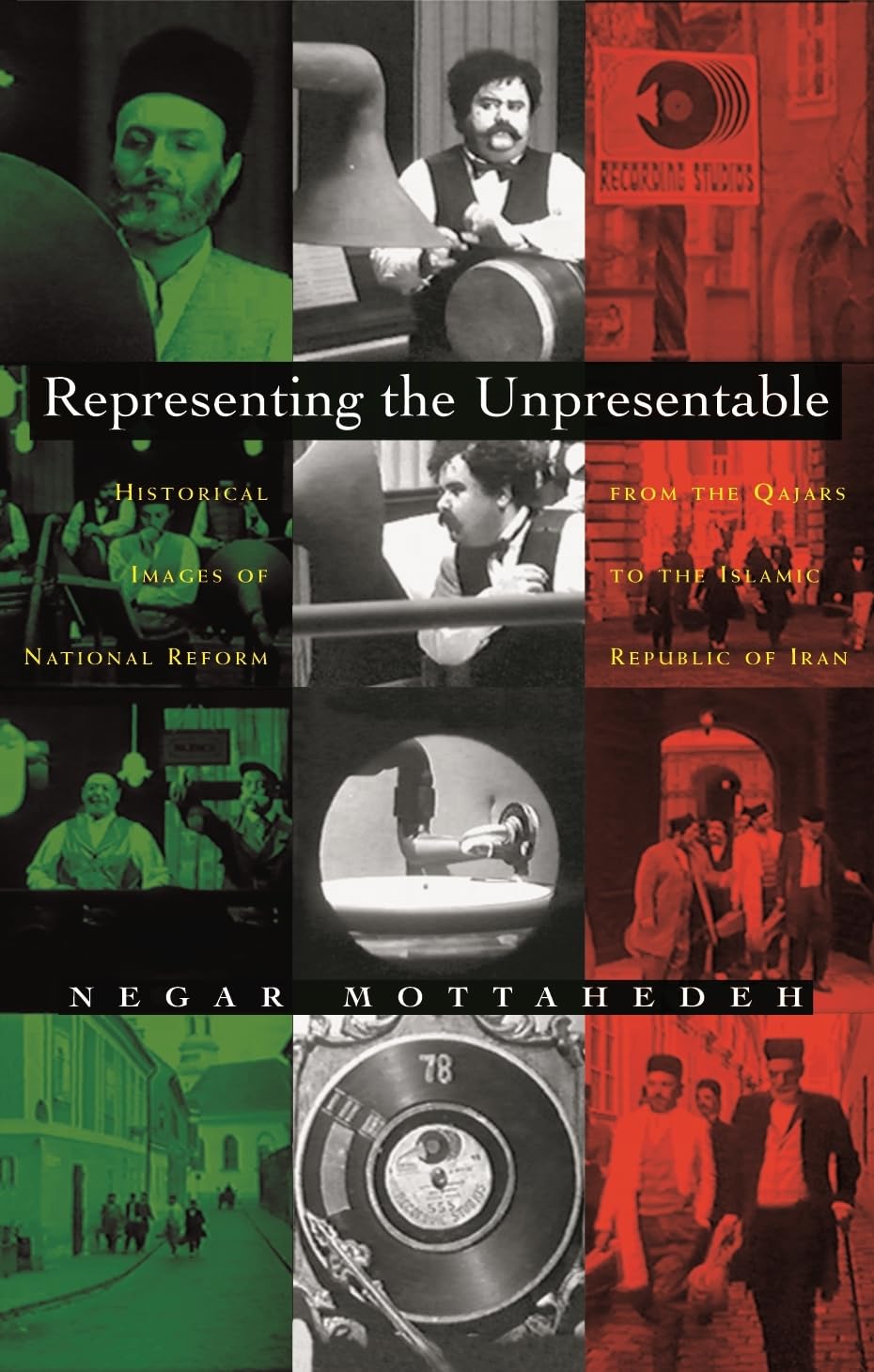
In this pioneering book, Negar Mottahedeh explores the central issues of vision and visibility in Iranian culture. She focuses on historical and literary texts to understand the use of visual culture and performance traditions in the production of the contemporary nation. Tracing the historical mediation and dissemination of ideas for national reform in the modern period of Iran, the book examines the various discourses that have constituted the image of the unpresentable Babi as the figure of Irans Other. In her exploration of gender and Iranian cinema, the author powerfully argues that this unpresentable image continues to haunt contemporary Iranian cinemas representations of the nation. As cinema began to displace other forms of representation in Iran, Islamic culture attempted to keep the motion picture industry free from what it perceived to be the taint of foreign values and intervention. With insight and detail, Mottahedeh looks at the revealing ways in which contemporary Iranian cinema has dealt with representing an unpresentable national modernity articulated through traversals in time and space. These deeply national tropes of traversal shaped the image of the Babi, against which nineteenthcentury Iran produced its own modernity. This highly original work, signaling a paradigmatic shift in Iranian studies and gender studies, will be an invaluable resource for scholars in cultural, Iranian, or film studies.
⚠️ WARNING (California Proposition 65):
This product may contain chemicals known to the State of California to cause cancer,
birth defects, or other reproductive harm.
For MAP (Minimum Advertised Price) violations and Intellectual Property (IP) or Trademark concerns, please contact:
support@ergodebooks.com
⚠️ California Proposition 65 Warning: Some products sold on this website may expose you to chemicals known to the State of California to cause cancer, birth defects, or other reproductive harm. For more information, visit www.P65Warnings.ca.gov.