
Title
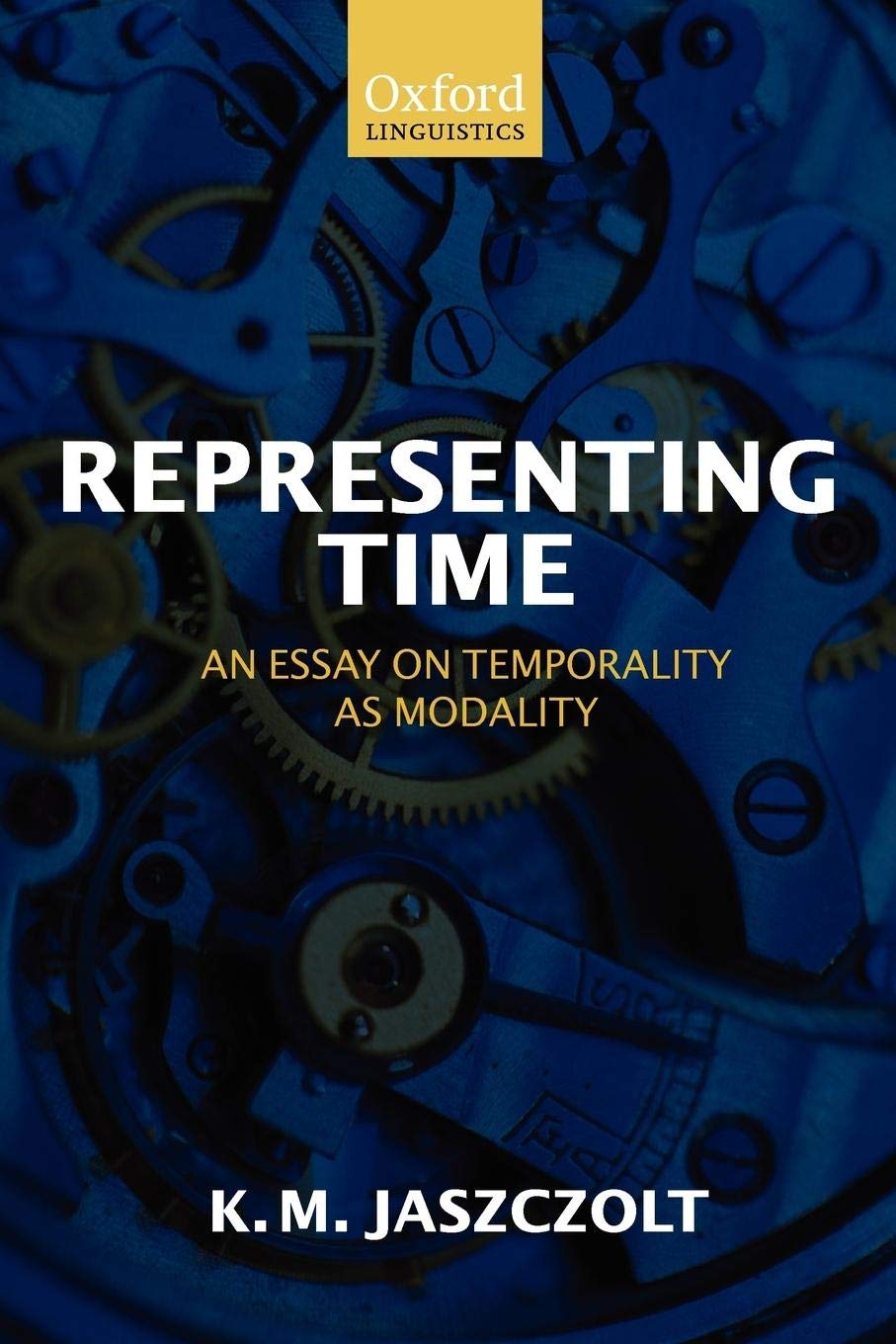
Representing Time: An Essay On Temporality As Modality
Sold by Ergodebooks, an authorized reseller.
Returns accepted within 30 days | support@ergodebooks.com
Shipping Information
- Free Standard Shipping — United States only
- Processing Time: 3–5 business days
- Estimated Delivery: 6–10 business days after dispatch
- Double-boxed, fully insured & discreetly packaged
- Tracking number sent via email once dispatched
Returns & Refund
Returns accepted within 30 days of delivery.
Damaged or Defective Item
Free return shipping + replacement or full refund
Wrong Item Received
Free return shipping + replacement or full refund
Change of Mind
Return shipping at customer's expense · 25% restocking fee applies
Payment Option

Thinking and speaking about time is ridden with puzzles and paradoxes. How do human beings conceptualize time? Why, for example, does the availability of tense vary in different languages? How do the lines of information from tense, aspect, temporal adverbs, and context interact in the mind? Does time describe events? If real time does not flow, where do the concepts of the past, present and future come from? Are they basic concepts or are they composed out of more primitive constituents? And, finally, what is the semantics of expressions with temporal reference? This book offers a new approach to the representation of meaning of temporallylocated utterances and discourses. Temporality, the author suggests, should be taken to mean degrees of certainty, understood in turn as degrees of acceptability concerning the eventuality referred to in the speaker's utterance. She presents theoretical arguments and empirical evidence from IndoEuropean and nonIndoEuropean languages to show that speakers represent the past, present, and future as degrees of epistemic modality. She argues that temporality can be subsumed under the general label of acceptability or attitude and, rather like the semantic category of evidentiality, founded on the strength of evidence. In the approach she develops, modality provides basic conceptual building blocks for the concept of time and at the same time semantic building blocks for representing temporal expressions in her framework of Default Semantics. Dr Jaszczolt sets the results of her research in the context of linguistic and philosophical work in semantics and pragmatics.
⚠️ WARNING (California Proposition 65):
This product may contain chemicals known to the State of California to cause cancer, birth defects, or other reproductive harm.
For more information, please visit www.P65Warnings.ca.gov.