
Title
Repressed Spaces: The Poetics of Agoraphobia,Used
Sold by Ergodebooks, an authorized reseller.
Returns accepted within 30 days | support@ergodebooks.com
Shipping Information
- Free Standard Shipping — United States only
- Processing Time: 3–5 business days
- Estimated Delivery: 6–10 business days after dispatch
- Double-boxed, fully insured & discreetly packaged
- Tracking number sent via email once dispatched
Returns & Refund
Returns accepted within 30 days of delivery.
Damaged or Defective Item
Free return shipping + replacement or full refund
Wrong Item Received
Free return shipping + replacement or full refund
Change of Mind
Return shipping at customer's expense · 25% restocking fee applies
Payment Option

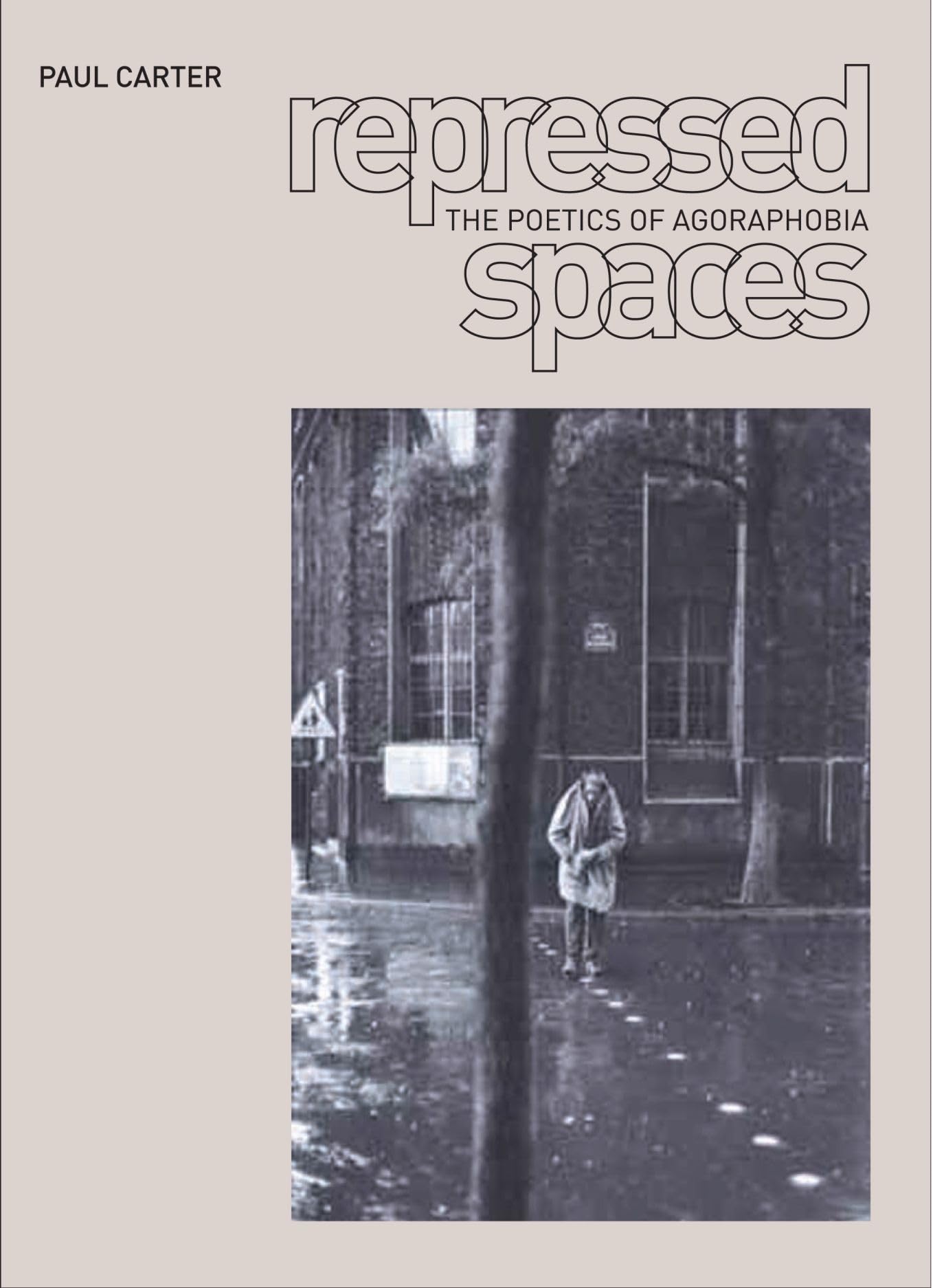
In Repressed Spaces Paul Carter tours the cultural history of agoraphobia, the fear of open space. Its symptoms were first described in The Anatomy of Melancholy (1621) by Robert Burton, the British scholar and writer, although it wasnt until 1871 that Carl Otto Westphal coined the term to describe several of his patients who experienced severe anxiety when walking through streets or squares. There have been many attempts to explain and treat the condition: critics of modernization have linked it to bad city planning; psychoanalysts, calling it 'street panic', have blamed it on the Oedipus complex; psychiatrists have tied it to existential insecurity and describe it as the fear of places or situations that have triggered panic attacks. Freud believed that agoraphobia, like all phobias, was part of an 'anxiety neurosis' and had a sexual origin.Taking as his startingpoint the fact that Freud himself was agoraphobic, and analyzing the way people have negotiated open spaces from Greek and Roman times to the present day, Paul Carter finds that 'space fear' ultimately results from the inhibition of movement. Along the way, the author asks why Freud repressed his agoraphobia, and examines literature, the work of architects and theorists including Le Corbusier, Walter Benjamin and R. D. Laing artists such as Munch, Lapique and Giacometti, and the German 'street films' of the 1920s. He concludes by proposing a new way of regarding open space, a new 'poetics of agoraphobia', one that is sensitive to the agoraphobes point of view and provides lessons for architects and urban planners today.
⚠️ WARNING (California Proposition 65):
This product may contain chemicals known to the State of California to cause cancer, birth defects, or other reproductive harm.
For more information, please visit www.P65Warnings.ca.gov.