
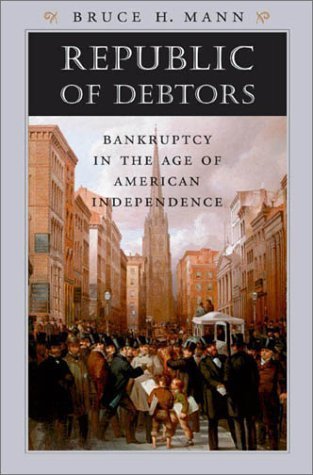
Title
Republic Of Debtors: Bankruptcy In The Age Of American Independence,New
Sold by Ergodebooks, an authorized reseller.
Returns accepted within 30 days | support@ergodebooks.com
Shipping Information
- Free Standard Shipping — United States only
- Processing Time: 3–5 business days
- Estimated Delivery: 6–10 business days after dispatch
- Double-boxed, fully insured & discreetly packaged
- Tracking number sent via email once dispatched
Returns & Refund
Returns accepted within 30 days of delivery.
Damaged or Defective Item
Free return shipping + replacement or full refund
Wrong Item Received
Free return shipping + replacement or full refund
Change of Mind
Return shipping at customer's expense · 25% restocking fee applies
Payment Option

Debt Was An Inescapable Fact Of Life In Early America. At The Beginning Of The Eighteenth Century, Its Sinfulness Was Preached By Ministers And The Right To Imprison Debtors Was Unquestioned. By 1800, Imprisonment For Debt Was Under Attack And Insolvency Was No Longer Seen As A Moral Failure, Merely An Economic Setback. In Republic Of Debtors, Bruce H. Mann Illuminates This Crucial Transformation In Early American Society.From The Wealthy Merchant To The Backwoods Farmer, Mann Tells The Personal Stories Of Men And Women Struggling To Repay Their Debts And Stay Ahead Of Their Creditors. He Opens A Window Onto A Society Undergoing Such Fundamental Changes As The Growth Of A Commercial Economy, The Emergence Of A Consumer Marketplace, And A Revolution For Independence. In Addressing Debt Americans Debated Complicated Questions Of Commerce And Agriculture, Nationalism And Federalism, Dependence And Independence, Slavery And Freedom. And When Numerous Prominent Menincluding The Richest Man In America And A Justice Of The Supreme Courtfound Themselves Imprisoned For Debt Or Forced To Become Fugitives From Creditors, Their Fate Altered The Political Dimensions Of Debtor Relief, Leading To The Highly Controversial Bankruptcy Act Of 1800.Whether A Society Forgives Its Debtors Is Not Just A Question Of Law Or Economics; It Goes To The Heart Of What A Society Values. In Chronicling Attitudes Toward Debt And Bankruptcy In Early America, Mann Explores The Very Character Of American Society.
⚠️ WARNING (California Proposition 65):
This product may contain chemicals known to the State of California to cause cancer, birth defects, or other reproductive harm.
For more information, please visit www.P65Warnings.ca.gov.
- Q: How many pages does this book have? A: This book has three hundred fifty-eight pages. It's a hardcover edition published by Harvard University Press.
- Q: What are the dimensions of this book? A: The dimensions of this book are six point twenty-five inches by one inch by nine point twenty-five inches. This size makes it easy to handle and read.
- Q: Who is the author of this book? A: The author of this book is Bruce H. Mann. He explores the topic of debt in early American society.
- Q: What is the main theme of the book? A: The main theme of the book is the transformation of attitudes toward debt and bankruptcy in early America. It delves into societal values regarding financial struggles.
- Q: What type of binding does this book have? A: This book features hardcover binding. Hardcover books are known for their durability and long-lasting quality.
- Q: Is this book suitable for young readers? A: This book is primarily aimed at adults and those interested in economic history. It contains complex themes that may not be suitable for younger readers.
- Q: Can this book be used for academic purposes? A: Yes, this book is suitable for academic purposes. It provides in-depth analysis and historical context regarding bankruptcy in early America.
- Q: What should I do if I want to take notes while reading? A: You can take notes in a separate notebook or use sticky notes. The hardcover format allows for easy handling while jotting down thoughts.
- Q: Is this book available in digital format? A: No, this specific edition is only available in hardcover format. Check with retailers for any available digital versions.
- Q: How should I store this book to keep it in good condition? A: Store this book upright on a shelf to prevent damage. Keep it away from direct sunlight and moisture to maintain its condition.
- Q: Can I clean the book if it gets dirty? A: Yes, you can clean the book gently with a dry cloth. Avoid using water or cleaning solutions that may damage the material.
- Q: What is the publisher of this book? A: The publisher of this book is Harvard University Press. They are known for their scholarly publications.
- Q: What if the book arrives damaged? A: If the book arrives damaged, you should contact the retailer for a return or exchange. Most retailers have policies for damaged items.
- Q: Is there a warranty for this book? A: No, books typically do not come with a warranty. However, you can check the return policy with the retailer.
- Q: How can I find more books similar to this one? A: You can look for books on economic history or similar topics at your local bookstore or online. Explore recommendations based on the author's work.