
Title
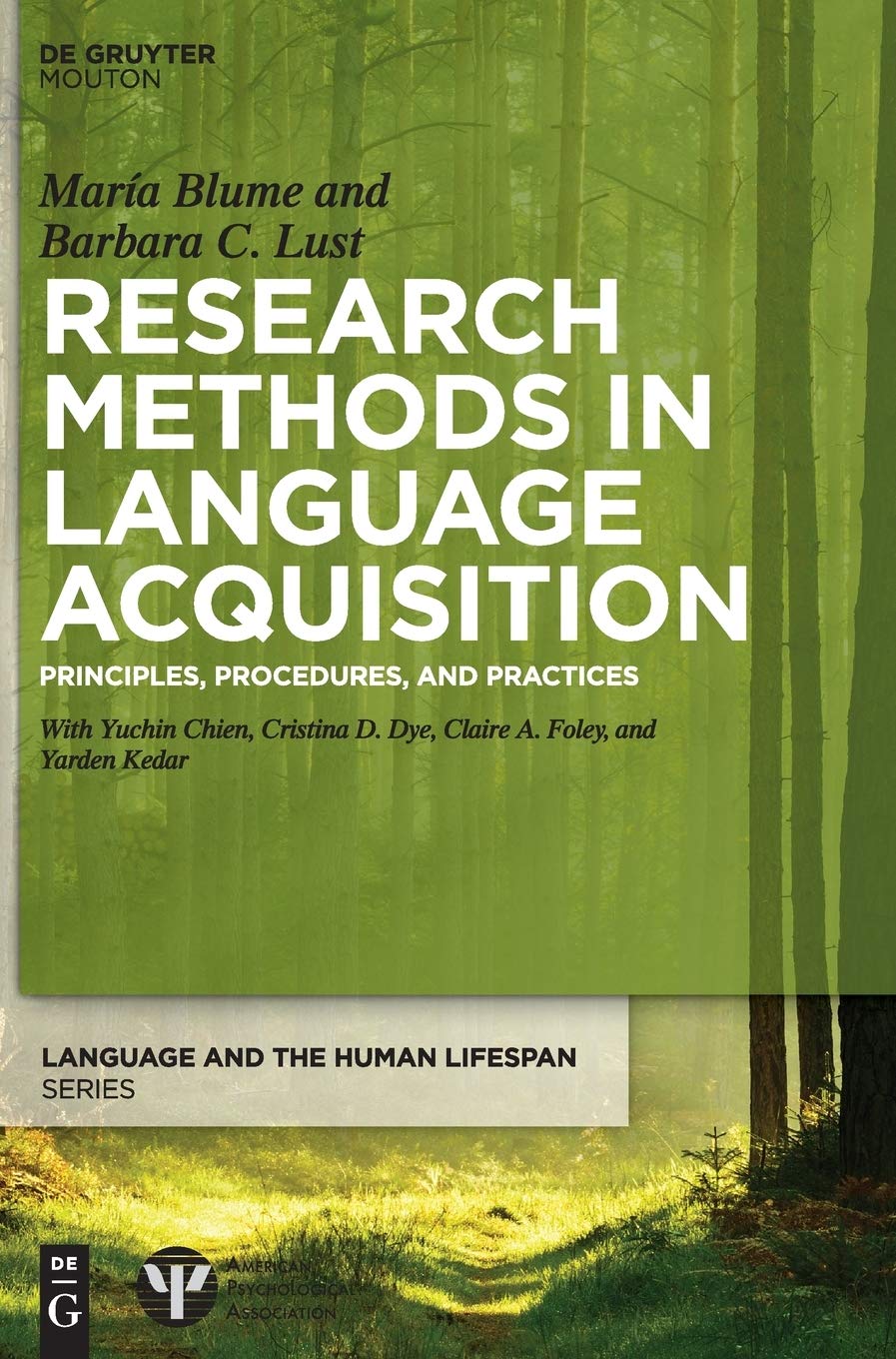
Research Methods In Language Acquisition: Principles, Procedures, And Practices (Language And The Human Lifespan (Lhls))
Sold by Ergodebooks, an authorized reseller.
Returns accepted within 30 days | support@ergodebooks.com
Shipping Information
- Free Standard Shipping — United States only
- Processing Time: 3–5 business days
- Estimated Delivery: 6–10 business days after dispatch
- Double-boxed, fully insured & discreetly packaged
- Tracking number sent via email once dispatched
Returns & Refund
Returns accepted within 30 days of delivery.
Damaged or Defective Item
Free return shipping + replacement or full refund
Wrong Item Received
Free return shipping + replacement or full refund
Change of Mind
Return shipping at customer's expense · 25% restocking fee applies
Payment Option

Language Acquisition Research Is Challengingthe Intricate Behavioral And Cognitive Foundations Of Speech Are Difficult To Measure Objectively. The Audible Components Of Speech, However, Are Quantifiable And Thus Provide Crucial Data. This Practical Guide Synthesizes The Authors Decades Of Experience Into A Comprehensive Set Of Tools That Will Allow Students And Early Career Researchers In The Field To Design And Conduct Rigorous Studies That Produce Reliable And Valid Speech Data And Interpretations.The Authors Thoroughly Review Specific Techniques For Obtaining Qualitative And Quantitative Speech Data, Including How To Tailor The Testing Environments For Optimal Results. They Explore Observational Tasks For Collecting Natural Speech And Experimental Tasks For Eliciting Specific Types Of Speech. Language Comprehension Tasks Are Also Reviewed So Researchers Can Study Participants Interpretations Of Speech And Conceptualizations Of Grammar. Most Tasks Are Oriented Towards Children, But Special Considerations For Infants Are Also Reviewed, As Well As Multilingual Children.Chapters Also Provide Strategies For Transcribing And Coding Raw Speech Data Into Reliable Data Sets That Can Be Scientifically Analyzed. Furthermore, They Investigate The Intricacies Of Interpretation So That Researchers Can Make Empirically Sound Inferences From Their Data And Avoid Common Pitfalls That Can Lead To Unscientific Conclusions.
⚠️ WARNING (California Proposition 65):
This product may contain chemicals known to the State of California to cause cancer, birth defects, or other reproductive harm.
For more information, please visit www.P65Warnings.ca.gov.
- Q: How many pages does this book have? A: This book has three hundred twenty-three pages. It provides an extensive exploration of research methods in language acquisition.
- Q: What is the binding type of this book? A: This book is hardcover. The durable binding is designed to withstand regular use and enhance longevity.
- Q: What are the dimensions of this book? A: The book measures seven point twenty-five inches in length, one inch in width, and ten inches in height. These dimensions make it a manageable size for reading.
- Q: What is the main focus of this book? A: The main focus of this book is on research methods in language acquisition. It offers practical guidance for conducting rigorous studies.
- Q: Who is the author of this book? A: The author of this book is Barbara Lust. She is recognized for her expertise in language acquisition research.
- Q: What are the key themes covered in this book? A: Key themes include qualitative and quantitative speech data collection, observational tasks, and language comprehension tasks. It also discusses strategies for transcription and coding.
- Q: How do I apply the methods in this book to my research? A: To apply the methods, follow the practical guidelines provided for designing and conducting studies. The book outlines techniques for collecting reliable speech data.
- Q: Is this book suitable for beginners in research? A: Yes, this book is suitable for beginners. It provides comprehensive tools that are accessible for students and early career researchers.
- Q: Can I use this book for studying multilingual children? A: Yes, this book includes considerations for multilingual children. It offers valuable insights for researchers working in diverse linguistic contexts.
- Q: What kind of speech data does this book help to collect? A: This book helps to collect both qualitative and quantitative speech data. It emphasizes techniques for obtaining reliable and valid data.
- Q: Are there any tips for transcription in this book? A: Yes, the book provides strategies for transcribing and coding raw speech data. These tips are essential for creating scientifically analyzable data sets.
- Q: How can I ensure the accuracy of my research findings? A: To ensure accuracy, follow the authors' guidelines on interpreting data and avoid common pitfalls. This book emphasizes empirically sound inferences.
- Q: What type of audience is this book intended for? A: This book is intended for students and early career researchers in the field of language acquisition. It caters to those looking to enhance their research skills.
- Q: Does this book address challenges in language acquisition research? A: Yes, the book discusses the challenges in language acquisition research. It offers practical solutions to effectively measure and interpret speech.
- Q: Is this book helpful for those studying child language development? A: Yes, the book is particularly helpful for studying child language development. Most tasks are oriented towards children, with insights applicable to infants.