
Title
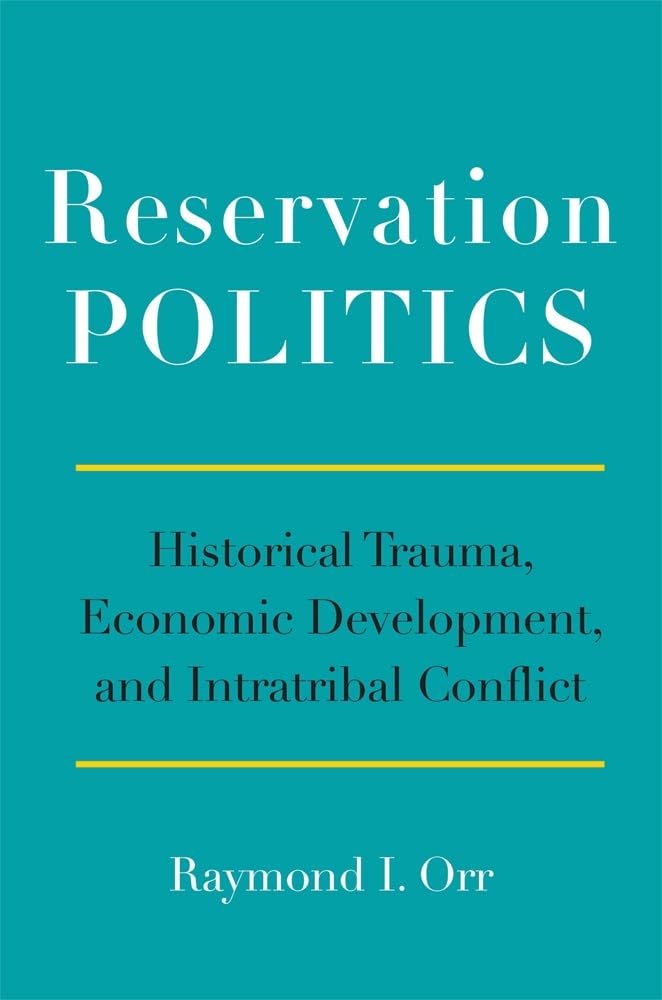
Reservation Politics: Historical Trauma, Economic Development, And Intratribal Conflict,Used
Sold by Ergodebooks, an authorized reseller.
Returns accepted within 30 days | support@ergodebooks.com
Shipping Information
- Free Standard Shipping — United States only
- Processing Time: 3–5 business days
- Estimated Delivery: 6–10 business days after dispatch
- Double-boxed, fully insured & discreetly packaged
- Tracking number sent via email once dispatched
Returns & Refund
Returns accepted within 30 days of delivery.
Damaged or Defective Item
Free return shipping + replacement or full refund
Wrong Item Received
Free return shipping + replacement or full refund
Change of Mind
Return shipping at customer's expense · 25% restocking fee applies
Payment Option

For American Indians, tribal politics are paramount. They determine the standards for tribal enrollment, guide negotiations with outside governments, and help set collective economic and cultural goals. But how, asks Raymond I. Orr, has history shaped the American Indian political experience? By exploring how different tribes politics and internal conflicts have evolved over time, Reservation Politics offers rare insight into the role of historical experience in the political lives of American Indians.To trace variations in political conflict within tribes today to their different historical experiences, Orr conducted an ethnographic analysis of three federally recognized tribes: the Isleta Pueblo in New Mexico, the Citizen Potawatomi in Oklahoma, and the Rosebud Sioux in South Dakota. His extensive interviews and research reveal that at the center of tribal politics are intratribal factions with widely different worldviews. These factions make conflicting claims about the purpose, experience, and identity of their tribe. Reservation Politics points to two types of historical experience relevant to the construction of tribes political and economic worldviews: historical trauma, such as ethnic cleansing or geographic removal, and the incorporation of Indian communities into the market economy. In Orr's case studies, differences in experience and interpretation gave rise to complex worldviews that in turn have shaped the beliefs and behavior at play in Indian politics.By engaging a topic often avoided in political science and American Indian studies, Reservation Politics allows us to see complex historical processes at work in contemporary American Indian life. Orrs findings are essential to understanding why tribal governments make the choices they do.
⚠️ WARNING (California Proposition 65):
This product may contain chemicals known to the State of California to cause cancer, birth defects, or other reproductive harm.
For more information, please visit www.P65Warnings.ca.gov.