If you have any questions, you are always welcome to contact us. We'll get back to you as soon as possible, withing 24 hours on weekdays.
Customer service
All questions about your order, return and delivery must be sent to our customer service team by e-mail at yourstore@yourdomain.com
Sale & Press
If you are interested in selling our products, need more information about our brand or wish to make a collaboration, please contact us at press@yourdomain.com
Help
If you have any questions, you are always welcome to contact us. We'll get back to you as soon as possible, withing 24 hours on weekdays.
Customer service
All questions about your order, return and delivery must be sent to our customer service team by e-mail at yourstore@yourdomain.com
Sale & Press
If you are interested in selling our products, need more information about our brand or wish to make a collaboration, please contact us at press@yourdomain.com
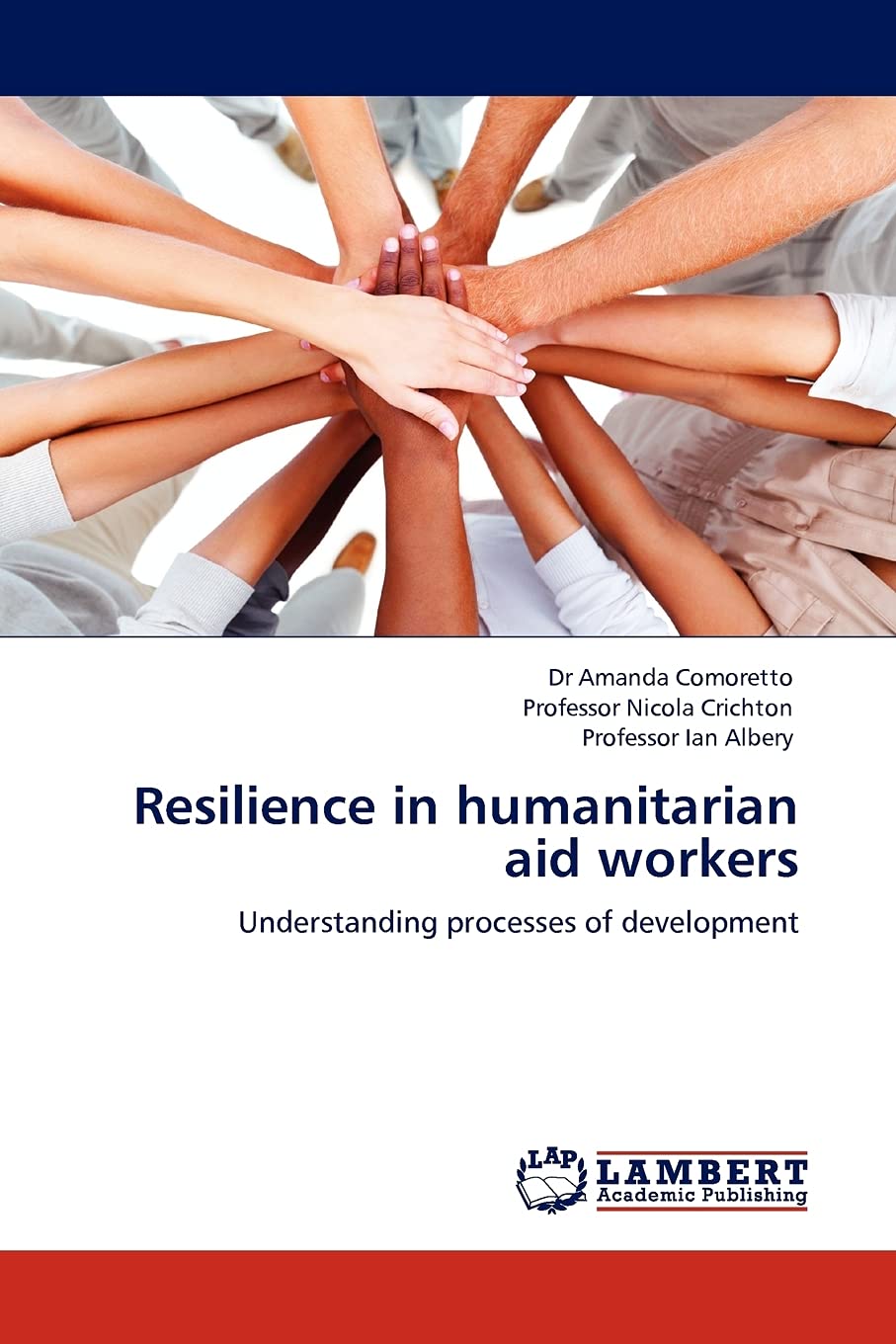
Resilience describes factors that promote wellbeing in individuals undergoing stressful life conditions. The majority of investigations conducted on coping mechanisms have focused on policemen, soldiers, and health care. Only recently has attention towards workplace adversity in humanitarian aid workers become the focus of attention. While some aid workers leave their organisations because of issues associated with workplace adversity many are likely to remain. This raises the issue of why some people are able to thrive despite challenging career choices, while others do not. In this book three protective categories applicable to populations at risk for stress are identified as responsible for the development of resilience: individual characteristics, social support, and cognitive features. A model is developed theorising that positive or negative change in resilience is governed by the relations among protective factors within the individual and the environment. This theoretical framework contributes to the understanding of how resilience develops in fieldbased humanitarian aid workers allowing them to survive and thrive within extremely challenging environments.
⚠️ WARNING (California Proposition 65):
This product may contain chemicals known to the State of California to cause cancer,
birth defects, or other reproductive harm.
For MAP (Minimum Advertised Price) violations and Intellectual Property (IP) or Trademark concerns, please contact:
support@ergodebooks.com
⚠️ California Proposition 65 Warning: Some products sold on this website may expose you to chemicals known to the State of California to cause cancer, birth defects, or other reproductive harm. For more information, visit www.P65Warnings.ca.gov.