
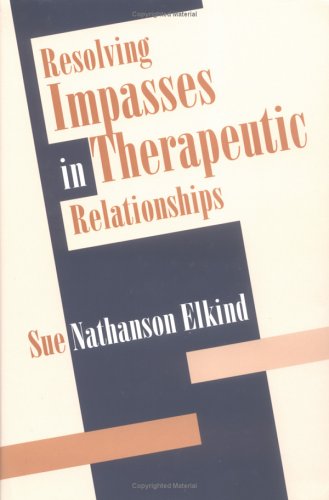
Title
Resolving Impasses in Therapeutic Relationships,Used
Sold by Ergodebooks, an authorized reseller.
Returns accepted within 30 days | support@ergodebooks.com
Shipping Information
- Free Standard Shipping — United States only
- Processing Time: 3–5 business days
- Estimated Delivery: 6–10 business days after dispatch
- Double-boxed, fully insured & discreetly packaged
- Tracking number sent via email once dispatched
Returns & Refund
Returns accepted within 30 days of delivery.
Damaged or Defective Item
Free return shipping + replacement or full refund
Wrong Item Received
Free return shipping + replacement or full refund
Change of Mind
Return shipping at customer's expense · 25% restocking fee applies
Payment Option

This volume deals with a fundamental issue that all clinicians face at some time or other: the therapeutic impasse. What should you do when sessions with a client seem hopelessly mired, or when the client feels that you have done something so egregious that therapy goes awry? How about an abrupt rupture: when you find the angry or hostile feelings directed toward you to be so intolerable that you decide to terminate?Based on years of clinical and consultation work, Sue Nathanson Elkind presents a theoretical framework for understanding and working with the relational knots that occur between therapists and their patients. Asserting that such episodes are unavoidable pivotal events in therapeutic relationships, she provides a map of the wide range of predicaments that can arise, including:* Mismatches between therapist and patient* Stalemates resulting from patienttherapist collusion* Irreconcilable conflicts or power struggles* Breaches in the attachment bond* Untimely terminationsElkind demonstrates how patients and therapists function as relational partners. Without blame and with compassion for inevitable difficulties, she describes how impasses arise when these partnerships become rigid, operate outside of conscious awareness, or when the vulnerabilities and defenses of the patient and the therapist intersect in problematic ways. Her concepts of primary vulnerabilities and relational modes benefit both parties: Rather than automatically pathologizing the patient, they empower the patient and humanize the therapist by recognizing normal human limitations.The final section of the book presents an indepth discussion of a form of consultation for therapeutic impasses that may include both the patient and the therapist. Demonstrating how both may suffer when the therapeutic dyads function in isolation, Elkind advocates setting up a relational network through the presence of a consultant. Vignettes of actual consultations of this type for a wide range of problems illustrate how such consultations work, what functions they can serve, and what their limitations are.Featuring stories that often are not told because of the feelings of shame and failure that arise for therapists and patients caught in therapeutic impasses, this book is compelling reading. It fills a gap in the literature by comprehensively addressing a common, but rarely discussed, aspect of the profession. As such, it is an important volume for both experienced and novice clinicians regardless of theoretical persuasion. Bringing theoretical issues to life through its clinical vignettes, it also serves as an excellent text for graduate and postgraduate courses in psychology, counseling, psychiatry, and psychiatric social work.
⚠️ WARNING (California Proposition 65):
This product may contain chemicals known to the State of California to cause cancer, birth defects, or other reproductive harm.
For more information, please visit www.P65Warnings.ca.gov.
- Q: How many pages are in 'Resolving Impasses in Therapeutic Relationships'? A: This book contains three hundred thirty-five pages. It provides comprehensive insights into therapeutic relationships and impasses.
- Q: What are the dimensions of this book? A: The dimensions are six point two six inches in length, one inch in width, and nine point two five inches in height.
- Q: What type of binding does this book have? A: This book is bound in hardcover. This binding offers durability and a professional presentation.
- Q: Who is the author of this book? A: The author is Sue Nathanson Elkind. She is recognized for her expertise in clinical psychology and therapeutic relationships.
- Q: What is the main focus of the book? A: The main focus is on resolving therapeutic impasses. It addresses challenges clinicians face in therapeutic settings.
- Q: How can I apply the concepts from this book? A: You can apply the concepts by understanding and navigating therapeutic impasses in your practice. The book offers a framework and case examples.
- Q: Is this book suitable for beginner therapists? A: Yes, this book is suitable for both experienced and novice clinicians. It addresses common issues in therapy that all practitioners encounter.
- Q: What topics are covered in this book? A: The book covers topics such as mismatches between therapist and patient, stalemates, and breaches in the attachment bond.
- Q: Can this book help with understanding patient-therapist dynamics? A: Yes, it provides insights into the dynamics between patients and therapists. The author emphasizes compassion and understanding in these relationships.
- Q: How should I care for this hardcover book? A: To care for this hardcover book, keep it in a dry place and avoid exposure to direct sunlight. This will help preserve its condition.
- Q: Is there a warranty for this book? A: Typically, books do not come with a warranty. However, check the return policy with the seller for any issues.
- Q: What if the book arrives damaged? A: If the book arrives damaged, contact the seller for a return or replacement. Most retailers have policies for damaged items.
- Q: How do I store this book properly? A: Store this book upright on a shelf or in a bookcase. Avoid stacking heavy items on top to prevent damage.
- Q: Does this book address common challenges in therapy? A: Yes, it comprehensively addresses common challenges such as power struggles and conflicts in therapeutic settings.
- Q: Is this book appropriate for academic use? A: Yes, it serves as an excellent text for graduate and postgraduate courses in psychology and counseling.