
Title
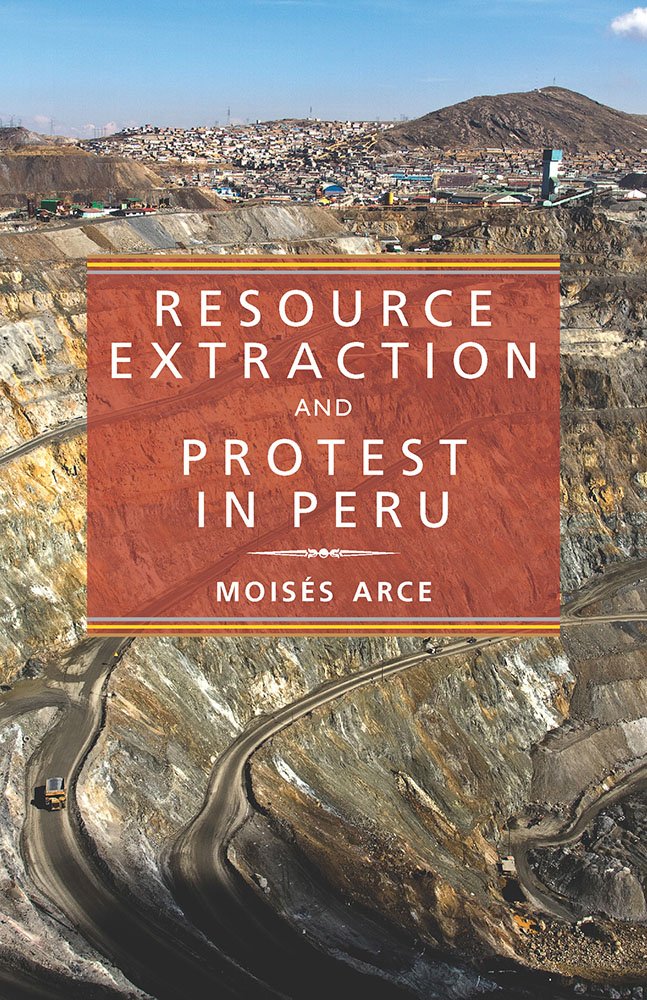
Resource Extraction and Protest in Peru (Pitt Latin American Series),Used
Sold by Ergodebooks, an authorized reseller.
Returns accepted within 30 days | support@ergodebooks.com
Shipping Information
- Free Standard Shipping — United States only
- Processing Time: 3–5 business days
- Estimated Delivery: 6–10 business days after dispatch
- Double-boxed, fully insured & discreetly packaged
- Tracking number sent via email once dispatched
Returns & Refund
Returns accepted within 30 days of delivery.
Damaged or Defective Item
Free return shipping + replacement or full refund
Wrong Item Received
Free return shipping + replacement or full refund
Change of Mind
Return shipping at customer's expense · 25% restocking fee applies
Payment Option

Natural resource extraction has fueled protest movements in Latin America and existing research has drawn considerable scholarly attention to the politics of antimarket contention at the national level, particularly in Ecuador, Bolivia, and Argentina. Despite its residents reporting the thirdhighest level of protest participation in the region, Peru has been largely ignored in these discussions.In this groundbreaking study, Moiss Arce exposes a longstanding climate of popular contention in Peru. Looking beneath the surface to the subnational, regional, and local level as inception points, he rigorously dissects the political conditions that set the stage for protest. Focusing on natural resource extraction and its key role in the political economy of Peru and other developing countries, Arce reveals a wide disparity in the incidence, forms, and consequences of collective action.Through empirical analysis of protest events over thirtyone years, extensive personal interviews with policymakers and societal actors, and individual case studies of major protest episodes, Arce follows the ebb and flow of Peruvian protests over time and space to show the territorial unevenness of democracy, resource extraction, and antimarket contentions. Employing political process theory, Arce builds an interactive framework that views the moderating role of democracy, the quality of institutional representation as embodied in political parties, and most critically, the level of political party competition as determinants in the variation of protest and subsequent government response. Overall, he finds that both the fluidity and fragmentation of political parties at the subnational level impair the mechanisms of accountability and responsiveness often attributed to party competition. Thus, as political fragmentation increases, political opportunities expand, and contention rises. These dynamics in turn shape the longterm development of the state.Resource Extraction and Protest in Peru will inform students and scholars of globalization, market transitions, political science, contentious politics and Latin America generally, as a comparative analysis relating natural resource extraction to democratic processes both regionally and internationally.
⚠️ WARNING (California Proposition 65):
This product may contain chemicals known to the State of California to cause cancer, birth defects, or other reproductive harm.
For more information, please visit www.P65Warnings.ca.gov.