If you have any questions, you are always welcome to contact us. We'll get back to you as soon as possible, withing 24 hours on weekdays.
Customer service
All questions about your order, return and delivery must be sent to our customer service team by e-mail at yourstore@yourdomain.com
Sale & Press
If you are interested in selling our products, need more information about our brand or wish to make a collaboration, please contact us at press@yourdomain.com
Help
If you have any questions, you are always welcome to contact us. We'll get back to you as soon as possible, withing 24 hours on weekdays.
Customer service
All questions about your order, return and delivery must be sent to our customer service team by e-mail at yourstore@yourdomain.com
Sale & Press
If you are interested in selling our products, need more information about our brand or wish to make a collaboration, please contact us at press@yourdomain.com
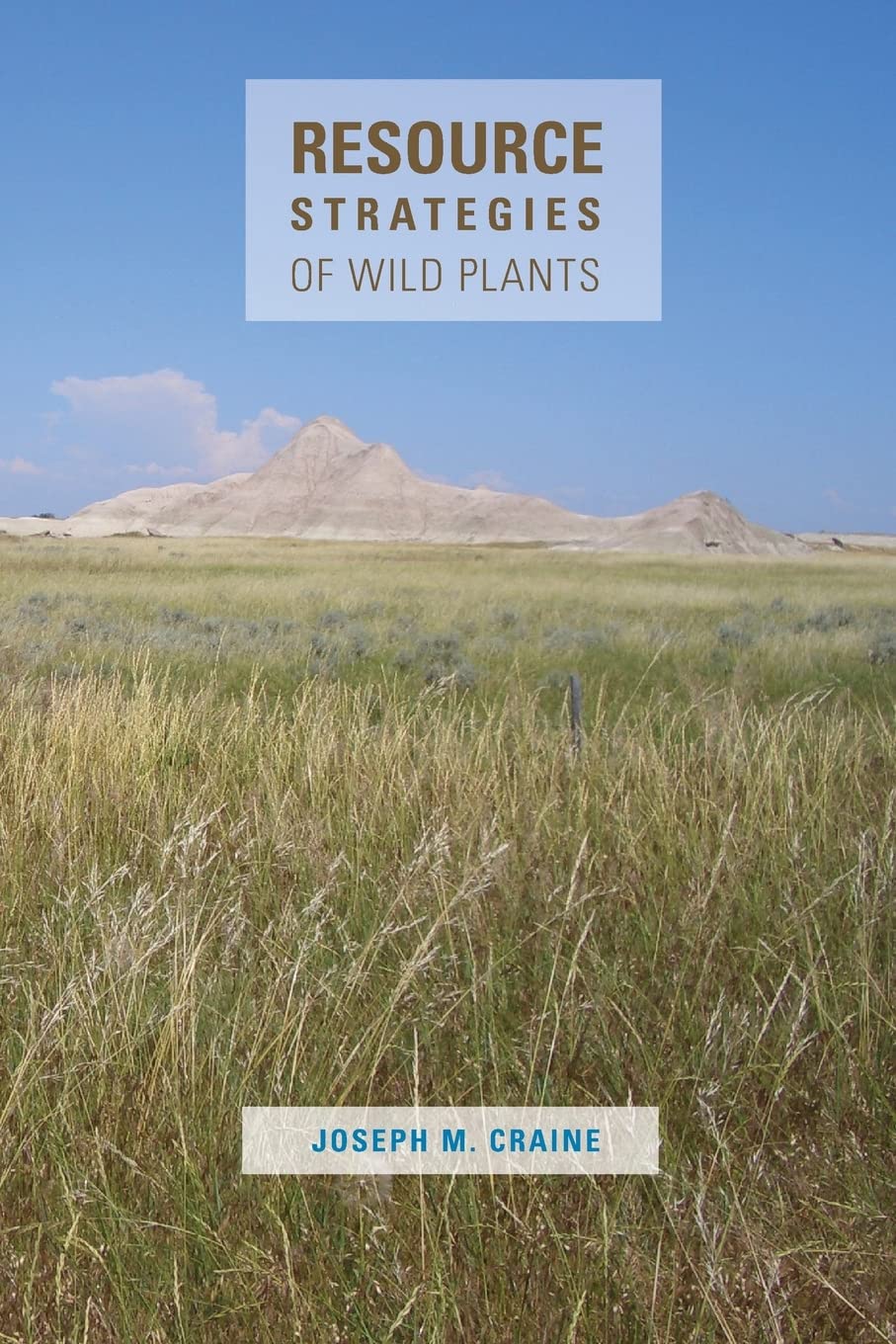
Over millions of years, terrestrial plants have competed for limited resources, defended themselves against herbivores, and resisted a myriad of environmental stresses. These struggles have helped generate more than a quarter million terrestrial plant species, each possessing a unique strategy for success. Yet, as Resource Strategies of Wild Plants demonstrates, the constraints on plant growth are universal enough that a few survival strategies hold true for all seedproducing plants. This book describes the five major strategies of growth for terrestrial plants, details how plants succeed when resources are scarce, delves into the history of research into plant strategies, and resets the foundational understanding of ecological processes.Drawing from recent findings in plantherbivore interactions, ecosystem ecology, and evolutionary ecology, Joseph Craine explains how plants attain available nutrients, withstand the immense stresses of drying soils, and flourish in the race for light. He shows that the competition for resources has shaped plant evolution in newly discovered ways, while the scarcity of such resources has affected how plants interact with herbivores, wind, fire, and frost. An understanding of the major resource strategies of wild plants remains central to learning about the ecology of plant communities, global changes in the biosphere, methods for species conservation, and the evolution of life on earth.
⚠️ WARNING (California Proposition 65):
This product may contain chemicals known to the State of California to cause cancer,
birth defects, or other reproductive harm.
For MAP (Minimum Advertised Price) violations and Intellectual Property (IP) or Trademark concerns, please contact:
support@ergodebooks.com
⚠️ California Proposition 65 Warning: Some products sold on this website may expose you to chemicals known to the State of California to cause cancer, birth defects, or other reproductive harm. For more information, visit www.P65Warnings.ca.gov.