If you have any questions, you are always welcome to contact us. We'll get back to you as soon as possible, withing 24 hours on weekdays.
Customer service
All questions about your order, return and delivery must be sent to our customer service team by e-mail at yourstore@yourdomain.com
Sale & Press
If you are interested in selling our products, need more information about our brand or wish to make a collaboration, please contact us at press@yourdomain.com
Help
If you have any questions, you are always welcome to contact us. We'll get back to you as soon as possible, withing 24 hours on weekdays.
Customer service
All questions about your order, return and delivery must be sent to our customer service team by e-mail at yourstore@yourdomain.com
Sale & Press
If you are interested in selling our products, need more information about our brand or wish to make a collaboration, please contact us at press@yourdomain.com
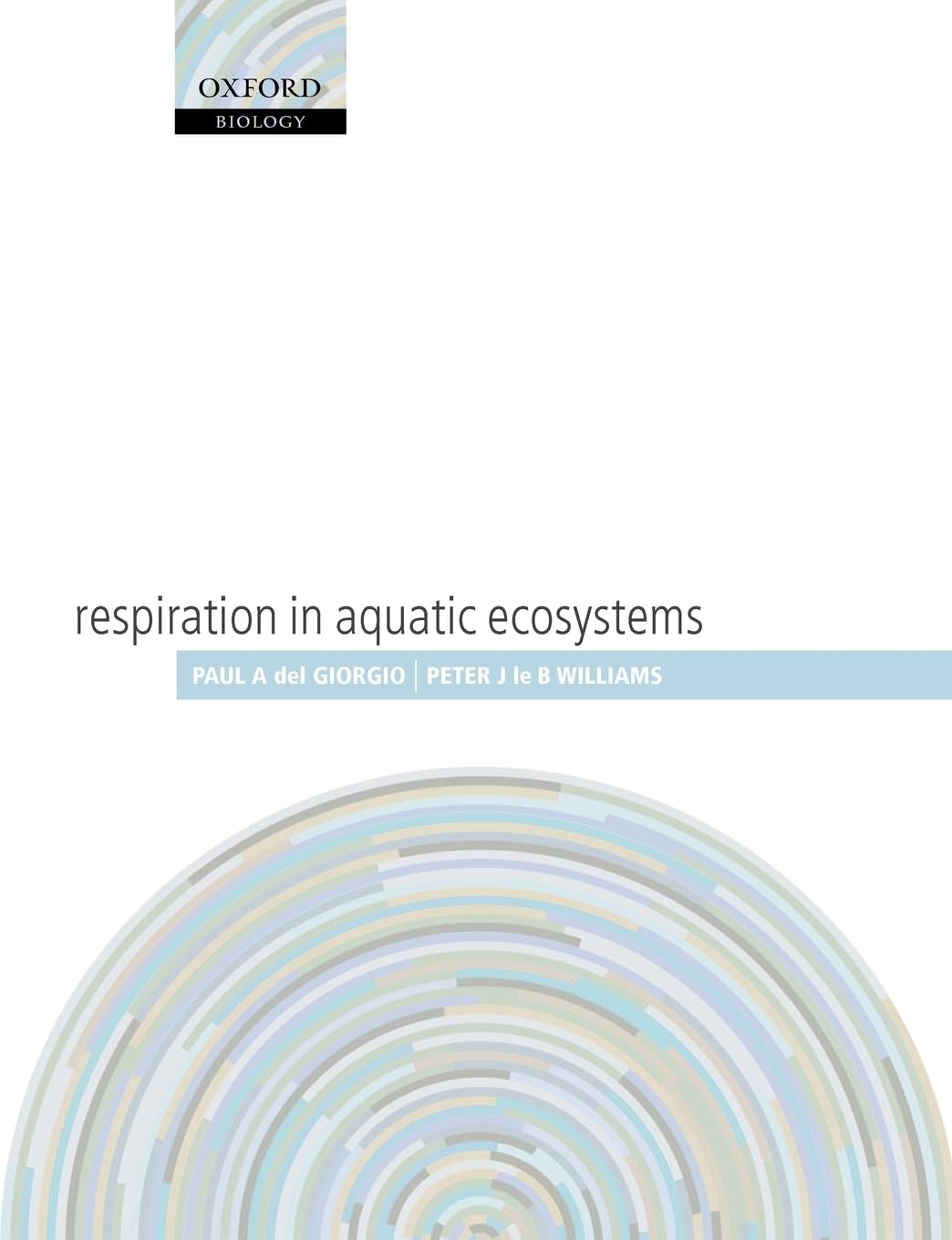
Respiration represents the major area of ignorance in our understanding of the global carbon cycle. In spite of its obvious ecological and biogeochemical importance, most oceanographic and limnological textbooks invariably deal with respiration only superficially and as an extension of production and other processes. The objective of this book is to fill this gap and to provide the first comprehensive review of respiration in the major aquatic systems of the biosphere. The introductory chapters review the general importance of respiration in aquatic systems, and deal with respiration within four key biological components of aquatic systems: bacteria, algae, heterotrophic protists, and zooplankton. The aim of this first part is to provide the backbone for the analysis and interpretation of ecosystemlevel respiration in a variety of aquatic environments. The central chapters of the book review respiration in major aquatic ecosystems including freshwater wetlands, lakes and rivers, estuaries, coastal and open ocean and pelagic ecosystems. For each major ecosystem, the corresponding chapter provides a synthesis of methods used to assess respiration, outlines the existing information and data on respiration, discusses its regulation and link to biotic and abiotic factors, and finally provides regional and global estimates of the magnitude of respiration. The final chapter provides a general synthesis of the information and data provided in the different sections, and further attempts to place aquatic respiration within the context of the global carbon budget.
⚠️ WARNING (California Proposition 65):
This product may contain chemicals known to the State of California to cause cancer,
birth defects, or other reproductive harm.
For MAP (Minimum Advertised Price) violations and Intellectual Property (IP) or Trademark concerns, please contact:
support@ergodebooks.com
⚠️ California Proposition 65 Warning: Some products sold on this website may expose you to chemicals known to the State of California to cause cancer, birth defects, or other reproductive harm. For more information, visit www.P65Warnings.ca.gov.