If you have any questions, you are always welcome to contact us. We'll get back to you as soon as possible, withing 24 hours on weekdays.
Customer service
All questions about your order, return and delivery must be sent to our customer service team by e-mail at yourstore@yourdomain.com
Sale & Press
If you are interested in selling our products, need more information about our brand or wish to make a collaboration, please contact us at press@yourdomain.com
Help
If you have any questions, you are always welcome to contact us. We'll get back to you as soon as possible, withing 24 hours on weekdays.
Customer service
All questions about your order, return and delivery must be sent to our customer service team by e-mail at yourstore@yourdomain.com
Sale & Press
If you are interested in selling our products, need more information about our brand or wish to make a collaboration, please contact us at press@yourdomain.com
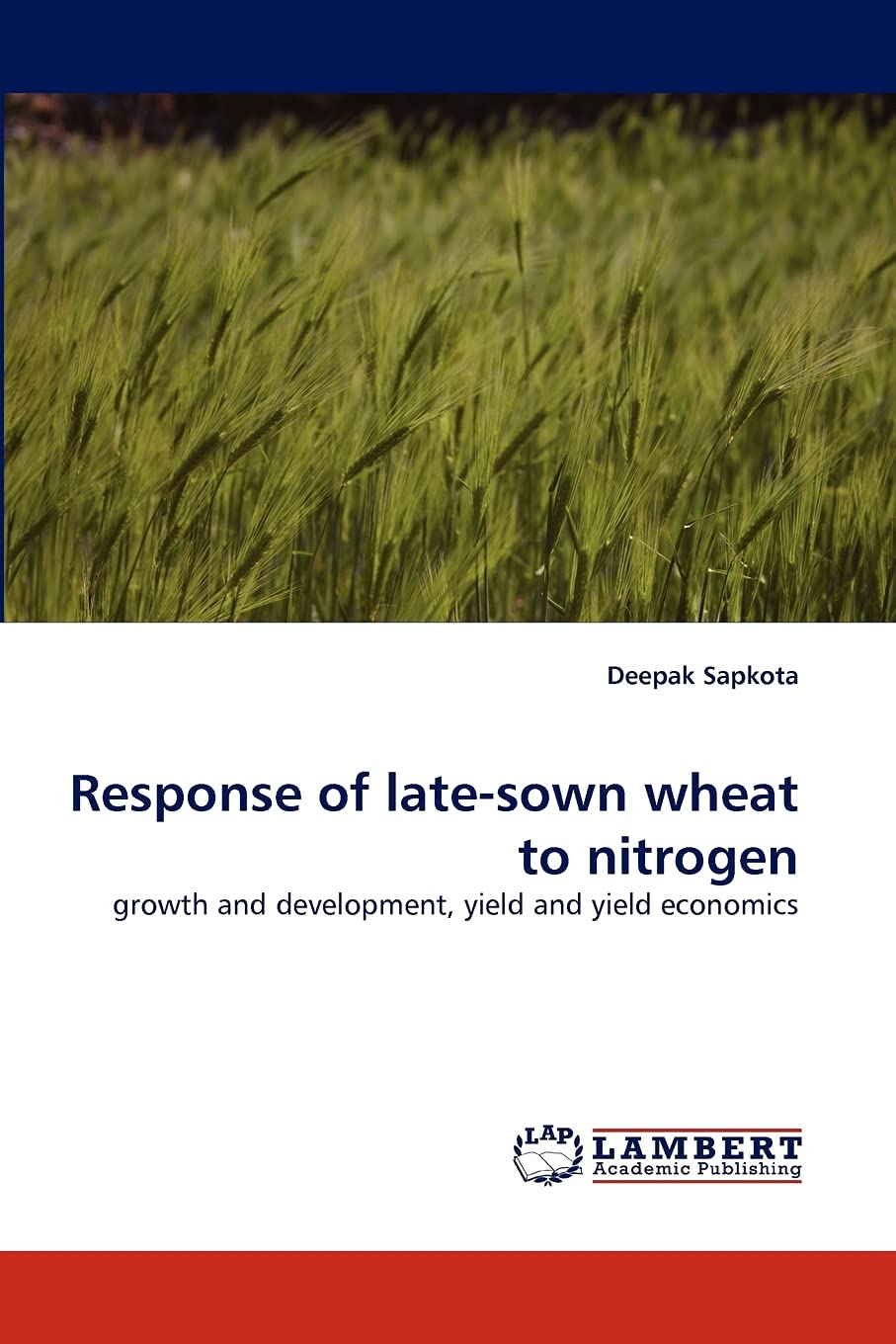
Wheat crop being the world's leading cereal crop has the major role in the hunger reduction from the mushrooming world population. With the development of high yielding varieties and new technologies, the production and productivity since late 1970s has increased significantly up to this date. Still there are various yield limiting factors and one of them is the latesowing condition especially in the agrozones where ricewheat system prevails. In the recent context of climate change and global warming, the production practices of many crops have been pushed to gradually change. In the ricewheat system of cropping pattern, late sowing of wheat is becoming a common phenomenon and for any reason of late sowing, suitable variety/genotype selection with proper fertilization especially only nitrogen management can be the boon to greatly boost up the production and net returns from wheat cultivation. This book is especially important to those who are willing to conduct research activity in the field of crop science & wheat agronomy, farmers, students, academicians and development professionals.
⚠️ WARNING (California Proposition 65):
This product may contain chemicals known to the State of California to cause cancer,
birth defects, or other reproductive harm.
For MAP (Minimum Advertised Price) violations and Intellectual Property (IP) or Trademark concerns, please contact:
support@ergodebooks.com
⚠️ California Proposition 65 Warning: Some products sold on this website may expose you to chemicals known to the State of California to cause cancer, birth defects, or other reproductive harm. For more information, visit www.P65Warnings.ca.gov.