
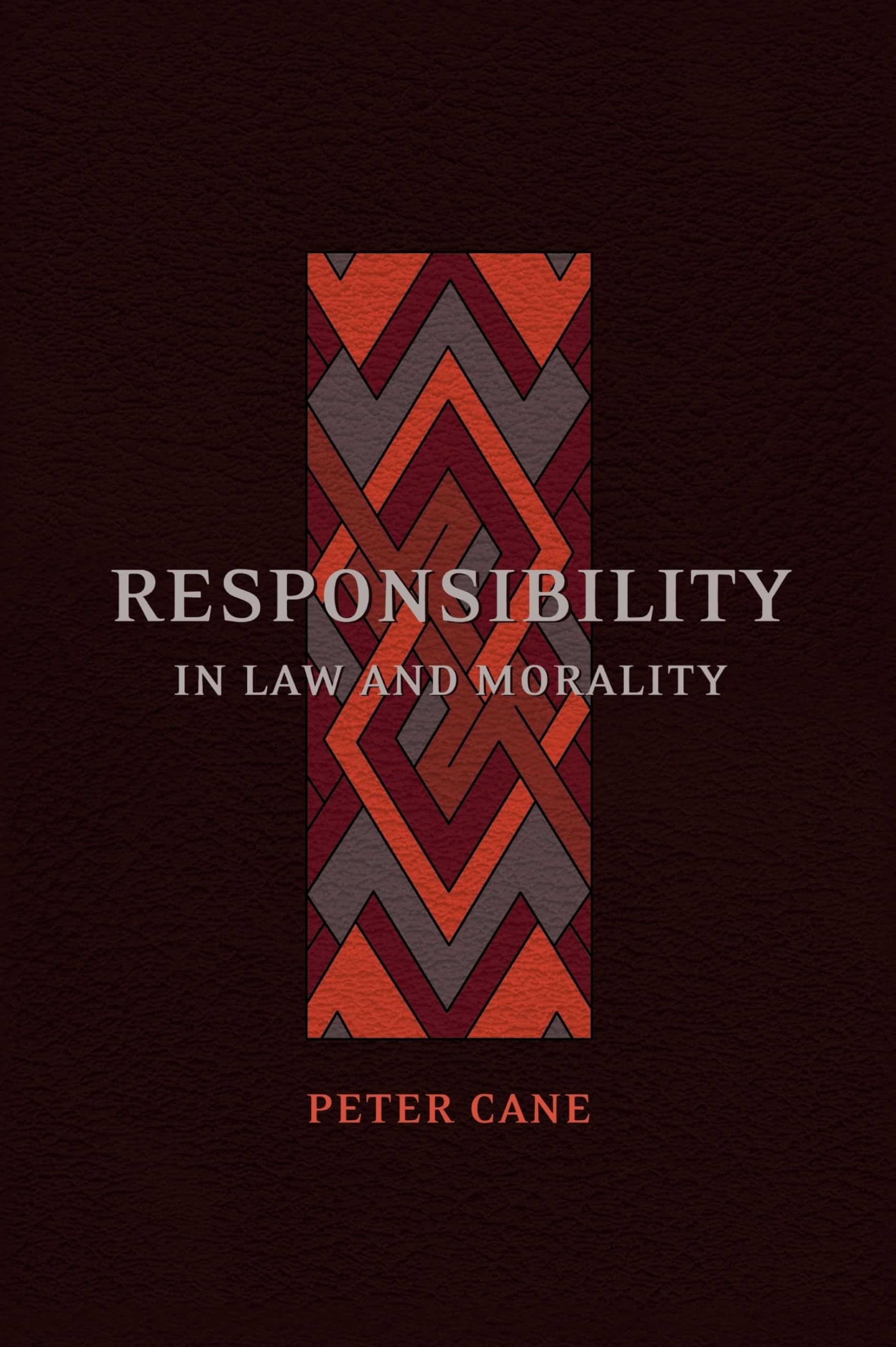
Title
Responsibility in Law and Morality,Used
Sold by Ergodebooks, an authorized reseller.
Returns accepted within 30 days | support@ergodebooks.com
Shipping Information
- Free Standard Shipping — United States only
- Processing Time: 3–5 business days
- Estimated Delivery: 6–10 business days after dispatch
- Double-boxed, fully insured & discreetly packaged
- Tracking number sent via email once dispatched
Returns & Refund
Returns accepted within 30 days of delivery.
Damaged or Defective Item
Free return shipping + replacement or full refund
Wrong Item Received
Free return shipping + replacement or full refund
Change of Mind
Return shipping at customer's expense · 25% restocking fee applies
Payment Option

Lawyers who write about responsibility tend to focus on criminal law at the expense of civil and public law; while philosophers tend to treat responsibility as a moral concept,and either ignore the law or consider legal responsibility to be a more or less distorted reflection of its moral counterpart. This book aims to counteract both of these biases. By adopting a comparative institutional approach to the relationship between law and morality, it challenges the common view that morality stands to law as critical standard to conventional practice. It shows how law and morality interact symbiotically, and how careful study of legal concepts of responsibility can add significantly to our understanding of responsibility more generally.Central to this project is a distinction between two paradigms of responsibility the criminal law paradigm and the civil law paradigm. Whereas theoretical discussions of responsibility tend focus on conduct and agency, taking account of civil law reveals the importance of outcomes and the interests of victims and society to ideas of responsibility. The book examines from a distinctively legal point of view central philosophical questions about responsibility such as its relationship withculpability (challenging the common view that moral responsibility requires fault), causation and personality. It explores the relevance of sanctions and problems of proof and enforcement to ideas of responsibility, as well as the relationship between responsibility and distributive justice, and the role of concepts of responsibility in public law.At the heart of this book lie two questions: what does it mean to say we are responsible? and, what are our responsibilities? Its aim is not to answer these questions but to challenge some traditional approaches to answering them and more importantly, to suggest fruitful alternative approaches that take law seriously.
⚠️ WARNING (California Proposition 65):
This product may contain chemicals known to the State of California to cause cancer, birth defects, or other reproductive harm.
For more information, please visit www.P65Warnings.ca.gov.