If you have any questions, you are always welcome to contact us. We'll get back to you as soon as possible, withing 24 hours on weekdays.
Customer service
All questions about your order, return and delivery must be sent to our customer service team by e-mail at yourstore@yourdomain.com
Sale & Press
If you are interested in selling our products, need more information about our brand or wish to make a collaboration, please contact us at press@yourdomain.com
Help
If you have any questions, you are always welcome to contact us. We'll get back to you as soon as possible, withing 24 hours on weekdays.
Customer service
All questions about your order, return and delivery must be sent to our customer service team by e-mail at yourstore@yourdomain.com
Sale & Press
If you are interested in selling our products, need more information about our brand or wish to make a collaboration, please contact us at press@yourdomain.com
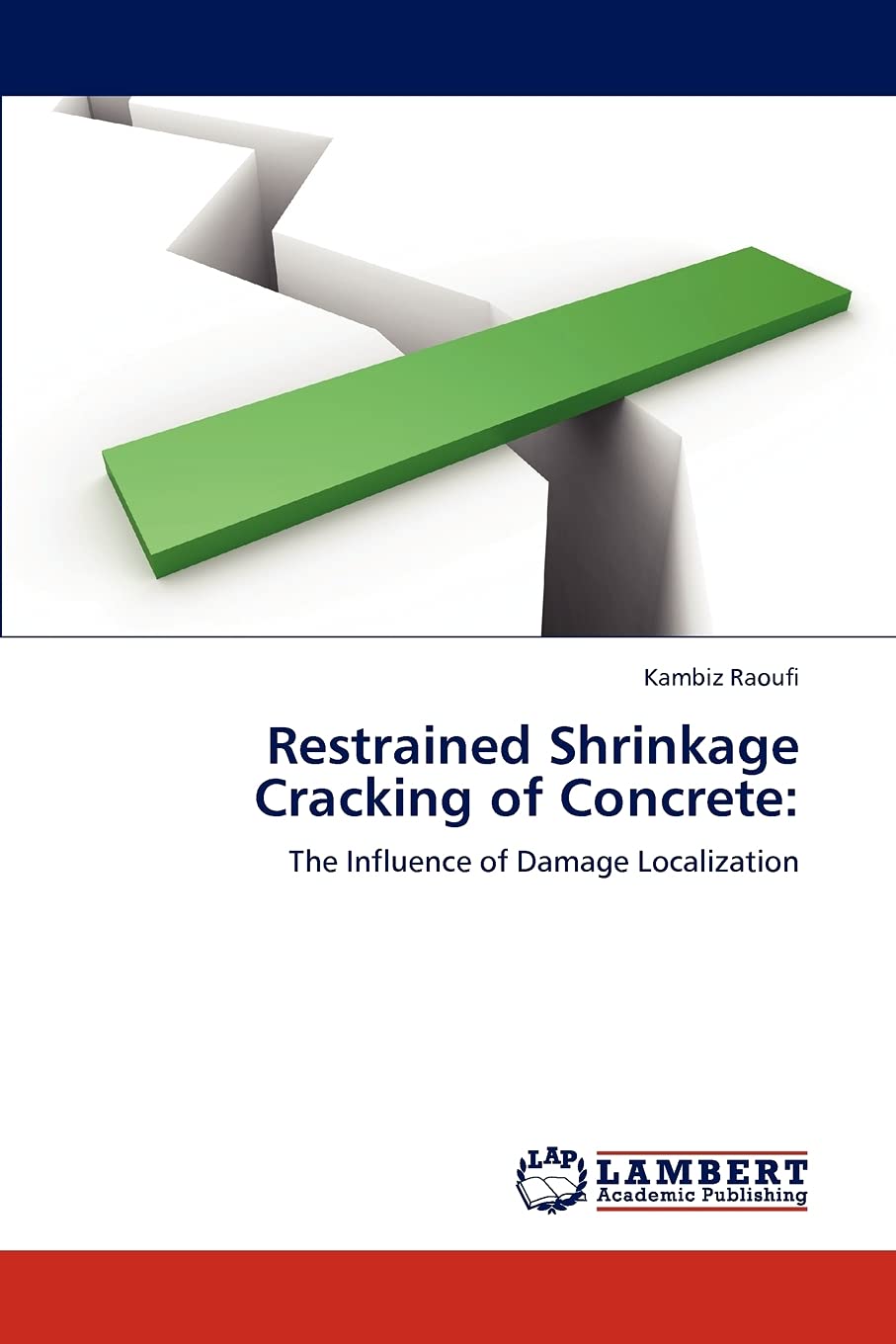
Shrinkage cracking can accelerate deterioration of concrete and reduce service life of structures. Numerous techniques have been developed to mitigate the shrinkage cracking of concrete. While influence of these techniques on the cracking performance of concrete mixtures are often evaluated using small scale laboratory geometries, further work is still needed to link the cracking behavior of small laboratory geometries to that of full scale concrete elements. While small scale laboratory geometries such as the ASTM C1581 restrained ring correspond to a slab of about one meter long, most concrete members of interest in the field are 35 meters long. In addition to the dissimilarity in the size, rate of stress development, boundary conditions, and degree of restraint of laboratory geometries can be different from those of insitu concrete members. This book offers a unique perspective on the influence of these factors on the shrinkage cracking of concrete. The content of this book can be used in interpreting the results of restrained shrinkage testing, designing largescale shrinkage testing geometries, and estimating the insitu cracking performance of concrete members.
⚠️ WARNING (California Proposition 65):
This product may contain chemicals known to the State of California to cause cancer,
birth defects, or other reproductive harm.
For MAP (Minimum Advertised Price) violations and Intellectual Property (IP) or Trademark concerns, please contact:
support@ergodebooks.com
⚠️ California Proposition 65 Warning: Some products sold on this website may expose you to chemicals known to the State of California to cause cancer, birth defects, or other reproductive harm. For more information, visit www.P65Warnings.ca.gov.