
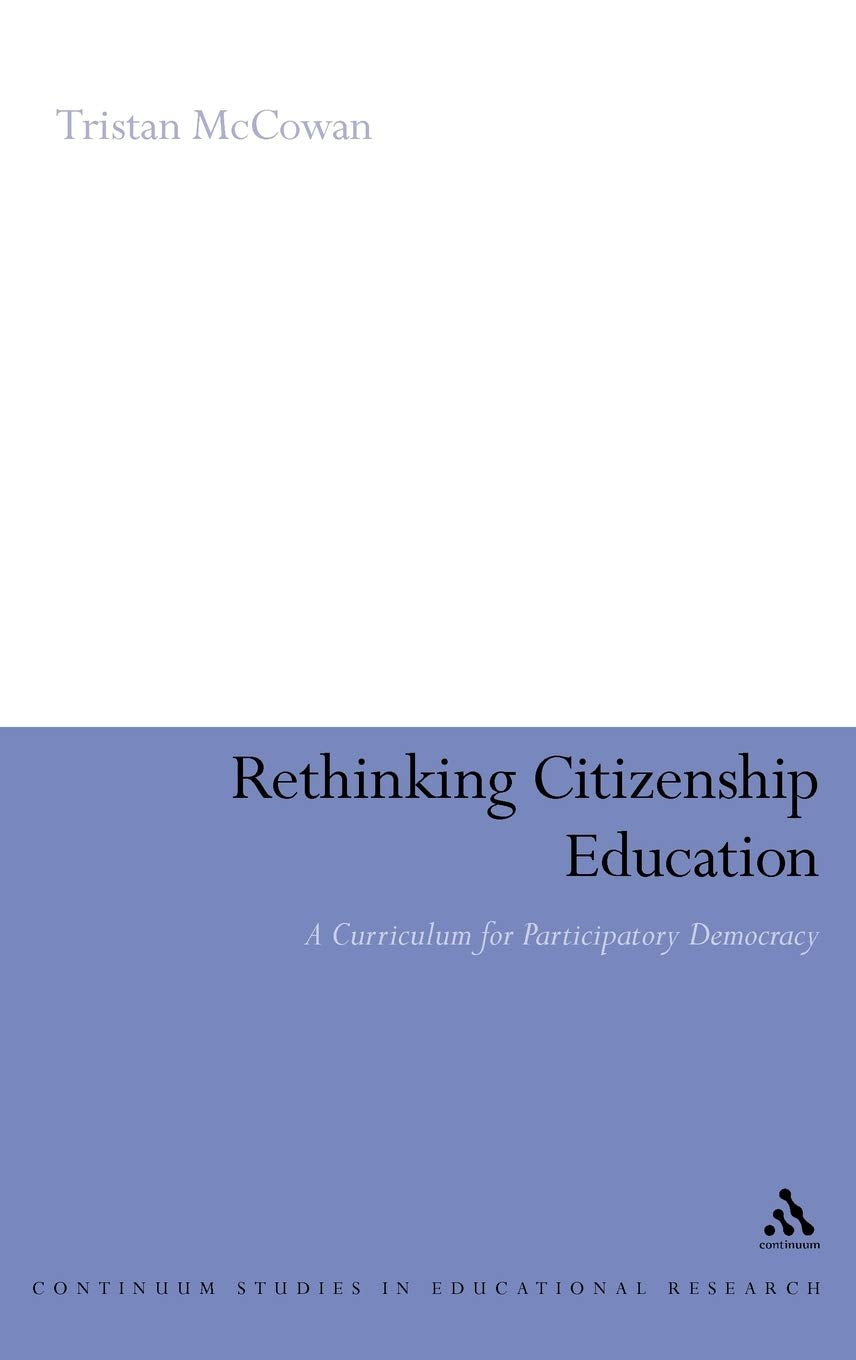
Title
Rethinking Citizenship Education: A Curriculum For Participatory Democracy (Continuum Studies In Educational Research)
Sold by Ergodebooks, an authorized reseller.
Returns accepted within 30 days | support@ergodebooks.com
Shipping Information
- Free Standard Shipping — United States only
- Processing Time: 3–5 business days
- Estimated Delivery: 6–10 business days after dispatch
- Double-boxed, fully insured & discreetly packaged
- Tracking number sent via email once dispatched
Returns & Refund
Returns accepted within 30 days of delivery.
Damaged or Defective Item
Free return shipping + replacement or full refund
Wrong Item Received
Free return shipping + replacement or full refund
Change of Mind
Return shipping at customer's expense · 25% restocking fee applies
Payment Option

Rethinking Citizenship Education Presents A Fundamental Reassessment Of The Field. Drawing On Empirical Research, The Book Argues That Attempting To Transmit Preconceived Notions Of Citizenship Through Schools Is Both Unviable And Undesirable. The Notion Of 'Curricular Transposition' Is Introduced, A Framework For Understanding The Changes Undergone In The Passage Between The Ideals Of Citizenship, The Curricular Programmes Designed To Achieve Them, Their Implementation In Practice And The Effects On Students. The 'Leaps' Between These Different Stages Make The Project Of Forming Students In A Mould Of Predefined Citizenship Highly Problematic.Case Studies Are Presented Of Contrasting Initiatives In Brazil, A Country With High Levels Of Political Marginalisation, But Also Significant Experiences Of Participatory Democracy. These Studies Indicate That Effective Citizenship Education Depends On A Harmonisation Or 'Seamless Enactment' Of The Stages Outlined Above. In Contrast, Provision In Countries Such As The Uk And Usa Is Characterised By Disjunctures, Showing Insufficient Involvement Of Teachers In Programme Design, And A Lack Of Space For The Construction Of Students' Own Political Understandings.Some More Promising Directions For Citizenship Education Are Proposed, Therefore, Ones Which Acknowledge The Significance Of Pedagogical Relations And School Democratisation, And Allow Students To Develop As Political Agents In Their Own Right.Rethinking Citizenship Education Presents A Fundamental Reassessment Of The Field. Drawing On Empirical Research, The Book Argues That Attempting To Transmit Preconceived Notions Of Citizenship Through Schools Is Both Unviable And Undesirable. The Notion Of 'Curricular Transposition' Is Introduced, A Framework For Understanding The Changes Undergone In The Passage Between The Ideals Of Citizenship, The Curricular Programmes Designed To Achieve Them, Their Implementation In Practice And The Effects On Students. The 'Leaps' Between These Different Stages Make The Project Of Forming Students In A Mould Of Predefined Citizenship Highly Problematic.Case Studies Are Presented Of Contrasting Initiatives In Brazil, A Country With High Levels Of Political Marginalisation, But Also Significant Experiences Of Participatory Democracy. These Studies Indicate That Effective Citizenship Education Depends On A Harmonisation Or 'Seamless Enactment' Of The Stages Outlined Above. In Contrast, Provision In Countries Such As The Uk And Usa Is Characterised By Disjunctures, Showing Insufficient Involvement Of Teachers In Programme Design, And A Lack Of Space For The Construction Of Students' Own Political Understandings.Some More Promising Directions For Citizenship Education Are Proposed, Therefore, Ones Which Acknowledge The Significance Of Pedagogical Relations And School Democratisation, And Allow Students To Develop As Political Agents In Their Own Right.
⚠️ WARNING (California Proposition 65):
This product may contain chemicals known to the State of California to cause cancer, birth defects, or other reproductive harm.
For more information, please visit www.P65Warnings.ca.gov.
- Q: What is the page count of this book? A: This book has two hundred thirty-two pages. It provides a thorough exploration of citizenship education and its implications.
- Q: What binding type does this book have? A: This book is bound in hardcover. Hardcover binding offers durability and a professional appearance, making it suitable for libraries and personal collections.
- Q: Who is the author of this book? A: The author is Tristan McCowan. He presents critical insights into participatory democracy and citizenship education.
- Q: How do I approach the curriculum outlined in this book? A: To use the curriculum effectively, engage with the case studies and frameworks presented. This will help in understanding the nuances of citizenship education.
- Q: Is this book suitable for educational professionals? A: Yes, this book is ideal for educators and researchers. It offers valuable insights into citizenship education that can enhance teaching practices.
- Q: What educational level is this book appropriate for? A: This book is suitable for higher education students and professionals. It addresses complex themes relevant to advanced studies in education.
- Q: How should I store this book to keep it in good condition? A: Store this book in a cool, dry place. Avoid direct sunlight to prevent fading and ensure it remains in good physical condition.
- Q: Can I lend this book to others? A: Yes, you can lend this book. Ensure that it is returned in the same condition to maintain its quality.
- Q: What should I do if the book arrives damaged? A: If the book arrives damaged, contact the seller for a return or exchange. Most sellers will provide instructions for returns.
- Q: How does this book compare to others in the field? A: This book offers a unique perspective on citizenship education, emphasizing participatory democracy. It differs from others by focusing on practical case studies.
- Q: Is this book relevant for students studying democracy? A: Yes, this book is highly relevant for students studying democracy. It provides insights into citizenship and educational practices in democratic societies.
- Q: What are the key themes covered in this book? A: Key themes include curricular transposition, participatory democracy, and the role of educators in citizenship education. These themes are explored through empirical research.
- Q: Are there any illustrations or images in the book? A: No, this book primarily contains text and case studies. It focuses on analytical content rather than visual elements.
- Q: What is the main argument of this book? A: The main argument is that preconceived notions of citizenship are problematic in education. It advocates for a more fluid and participatory approach.
- Q: Can this book be used as a textbook? A: Yes, this book can be used as a textbook in educational courses. Its comprehensive analysis makes it suitable for academic settings.
- Q: Does this book include any references or bibliographies? A: Yes, this book includes references and bibliographies. These resources provide additional reading and support the research presented.