
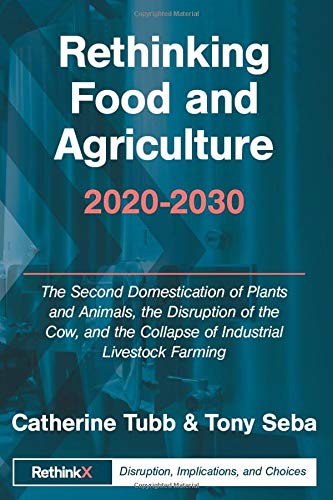
Title

Rethinking Food And Agriculture 20202030: The Second Domestication Of Plants And Animals, The Disruption Of The Cow, And The Co,New
Sold by Ergodebooks, an authorized reseller.
Returns accepted within 30 days | support@ergodebooks.com
Shipping Information
- Free Standard Shipping — United States only
- Processing Time: 3–5 business days
- Estimated Delivery: 6–10 business days after dispatch
- Double-boxed, fully insured & discreetly packaged
- Tracking number sent via email once dispatched
Returns & Refund
Returns accepted within 30 days of delivery.
Damaged or Defective Item
Free return shipping + replacement or full refund
Wrong Item Received
Free return shipping + replacement or full refund
Change of Mind
Return shipping at customer's expense · 25% restocking fee applies
Payment Option

We Are On The Cusp Of The Deepest, Fastest, Most Consequential Disruption In Food And Agricultural Production Since The First Domestication Of Plants And Animals Ten Thousand Years Ago.This Is Primarily A Protein Disruption Driven By Economics. The Cost Of Proteins Will Be Five Times Cheaper By 2030 And 10 Times Cheaper By 2035 Than Existing Animal Proteins, Before Ultimately Approaching The Cost Of Sugar. They Will Also Be Superior In Every Key Attribute More Nutritious, Healthier, Better Tasting, And More Convenient, With Almost Unimaginable Variety. This Means That, By 2030, Modern Food Products Will Be Higher Quality And Cost Less Than Half As Much To Produce As The Animal Derived Products They Replace.The Impact Of This Disruption On Industrial Animal Farming Will Be Profound. By 2030, The Number Of Cows In The U.S. Will Have Fallen By 50% And The Cattle Farming Industry Will Be All But Bankrupt. All Other Livestock Industries Will Suffer A Similar Fate, While The Knockon Effects For Crop Farmers And Businesses Throughout The Value Chain Will Be Severe.
⚠️ WARNING (California Proposition 65):
This product may contain chemicals known to the State of California to cause cancer, birth defects, or other reproductive harm.
For more information, please visit www.P65Warnings.ca.gov.
- Q: How many pages does this book have? A: This book has one hundred fifty-two pages. It provides an in-depth analysis of food and agricultural disruption.
- Q: What is the binding type of this book? A: The book is paperback bound. This type of binding is lightweight and flexible, making it easy to handle.
- Q: What are the dimensions of this book? A: The book measures six inches in length, zero point thirty-five inches in width, and nine point zero two inches in height. These dimensions make it portable for reading.
- Q: Who is the author of this book? A: The author of this book is Tony Seba. He is known for his expertise in innovation and disruption in various sectors.
- Q: What is the main topic of this book? A: The main topic is the disruption in food and agricultural production. It discusses the shifts in protein production and livestock farming.
- Q: Is this book suitable for beginners in agriculture? A: Yes, this book is suitable for beginners. It presents complex ideas in an accessible way, making it easier to understand the future of agriculture.
- Q: How can I apply the concepts in this book? A: You can apply the concepts by examining current agricultural practices and considering innovative alternatives. The book encourages readers to rethink conventional methods.
- Q: Is this book targeted at professionals in the agriculture industry? A: Yes, it is also targeted at professionals. The insights provided can help industry experts adapt to emerging trends and disruptions.
- Q: How do I keep this book in good condition? A: To keep this book in good condition, store it in a dry place away from direct sunlight. Avoid bending or damaging the cover.
- Q: What if my book arrives damaged? A: If your book arrives damaged, contact the seller for a return or replacement. Most sellers have policies to address damaged items.
- Q: Does this book provide solutions for sustainable agriculture? A: Yes, the book discusses sustainable alternatives to industrial livestock farming. It offers insights into the future of sustainable food production.
- Q: Is there a glossary or index in this book? A: No, there is no glossary or index in this book. However, the content is organized in a way that makes navigation easy.
- Q: How does this book compare to others in the agriculture genre? A: This book offers a unique perspective on disruption, unlike many traditional agricultural texts that focus on practices rather than innovations.
- Q: Can this book help me understand future food trends? A: Yes, this book provides valuable insights into future food trends. It discusses the economic factors influencing protein production and consumer preferences.
- Q: Is this book based on research or opinion? A: This book is based on extensive research. It uses data and case studies to support its claims about the future of food and agriculture.