If you have any questions, you are always welcome to contact us. We'll get back to you as soon as possible, withing 24 hours on weekdays.
Customer service
All questions about your order, return and delivery must be sent to our customer service team by e-mail at yourstore@yourdomain.com
Sale & Press
If you are interested in selling our products, need more information about our brand or wish to make a collaboration, please contact us at press@yourdomain.com
Help
If you have any questions, you are always welcome to contact us. We'll get back to you as soon as possible, withing 24 hours on weekdays.
Customer service
All questions about your order, return and delivery must be sent to our customer service team by e-mail at yourstore@yourdomain.com
Sale & Press
If you are interested in selling our products, need more information about our brand or wish to make a collaboration, please contact us at press@yourdomain.com
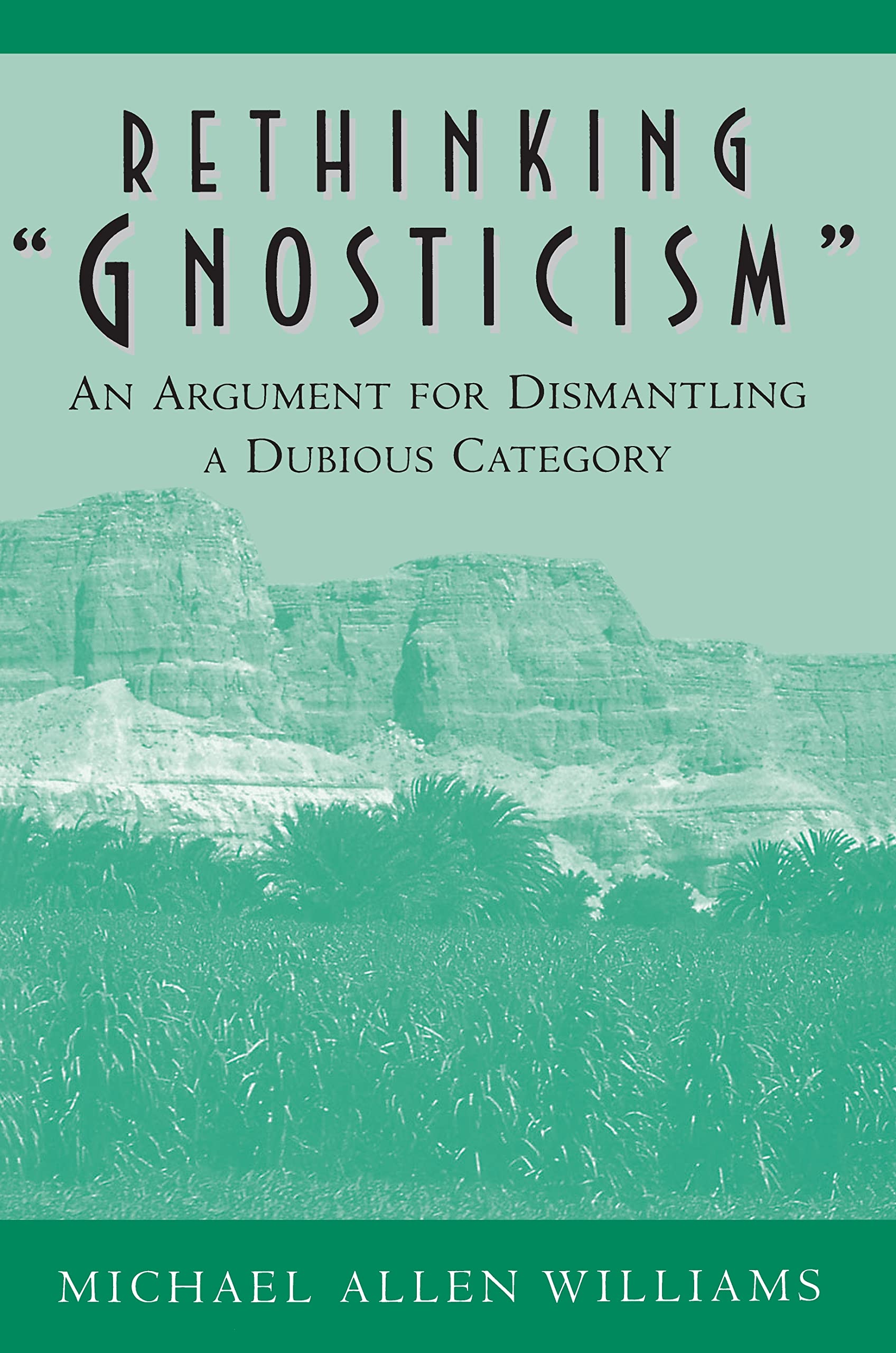
Most anyone interested in such topics as creation mythology, Jungian theory, or the idea of 'secret teachings' in ancient Judaism and Christianity has found 'gnosticism' compelling. Yet the term 'gnosticism,' which often connotes a single rebellious movement against the prevailing religions of late antiquity, gives the false impression of a monolithic religious phenomenon. Here Michael Williams challenges the validity of the widely invoked category of ancient 'gnosticism' and the ways it has been described. Presenting such famous writings and movements as the Apocryphon of John and Valentinian Christianity, Williams uncovers the similarities and differences among some major traditions widely categorized as gnostic. He provides an eloquent, systematic argument for a more accurate way to discuss these interpretive approaches.The modern construct 'gnosticism' is not justified by any ancient selfdefinition, and many of the most commonly cited religious features that supposedly define gnosticism phenomenologically turn out to be questionable. Exploring the sample sets of 'gnostic' teachings, Williams refutes generalizations concerning asceticism and libertinism, attitudes toward the body and the created world, and alleged features of protest, parasitism, and elitism. He sketches a fresh model for understanding ancient innovations on more 'mainstream' Judaism and Christianity, a model that is informed by modern research on dynamics in new religious movements and is freed from the false stereotypes from which the category 'gnosticism' has been constructed.
⚠️ WARNING (California Proposition 65):
This product may contain chemicals known to the State of California to cause cancer,
birth defects, or other reproductive harm.
For MAP (Minimum Advertised Price) violations and Intellectual Property (IP) or Trademark concerns, please contact:
support@ergodebooks.com
⚠️ California Proposition 65 Warning: Some products sold on this website may expose you to chemicals known to the State of California to cause cancer, birth defects, or other reproductive harm. For more information, visit www.P65Warnings.ca.gov.