If you have any questions, you are always welcome to contact us. We'll get back to you as soon as possible, withing 24 hours on weekdays.
Customer service
All questions about your order, return and delivery must be sent to our customer service team by e-mail at yourstore@yourdomain.com
Sale & Press
If you are interested in selling our products, need more information about our brand or wish to make a collaboration, please contact us at press@yourdomain.com
Help
If you have any questions, you are always welcome to contact us. We'll get back to you as soon as possible, withing 24 hours on weekdays.
Customer service
All questions about your order, return and delivery must be sent to our customer service team by e-mail at yourstore@yourdomain.com
Sale & Press
If you are interested in selling our products, need more information about our brand or wish to make a collaboration, please contact us at press@yourdomain.com
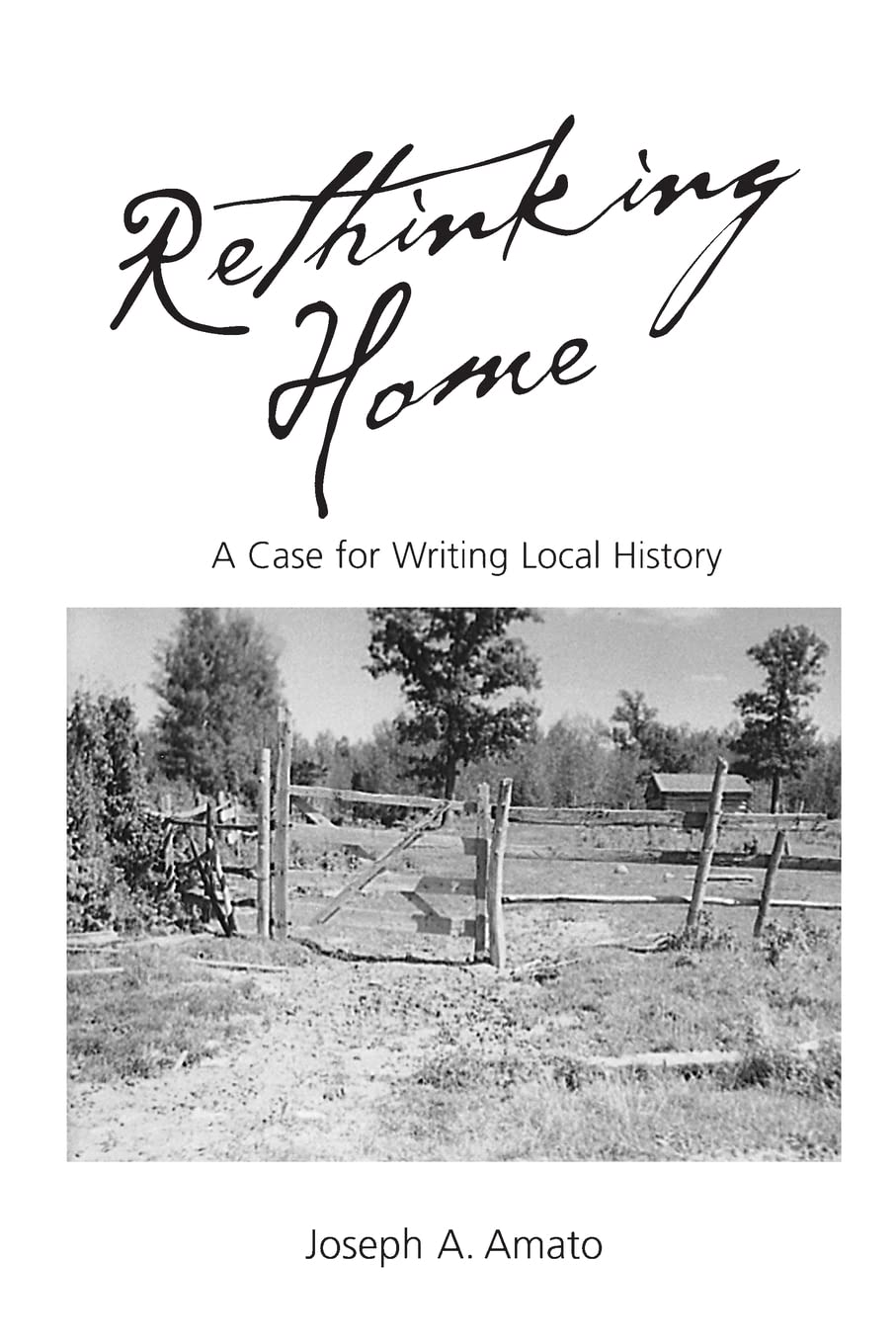
Joseph A. Amato proposes a bold and innovative approach to writing local history in this imaginative, wideranging, and deeply engaging exploration of the meaning of place and home. Arguing that people of every place and time deserve a history, Amato draws on his background as a European cultural historian and a prolific writer of local history to explore such topics as the history of cleanliness, sound, anger, madness, the clandestine, and the environment in southwestern Minnesota. While dedicated to the unique experiences of a place, his lively work demonstrates that contemporary local history provides a vital link for understanding the relation between immediate experience and the metamorphosis of the world at large. In an era of encompassing forces and global sensibilities, Rethinking Home advocates the power of local history to revivify the individual, the concrete, and the particular. This singular book offers fresh perspectives, themes, and approaches for energizing local history at a time when the very notion of place is in jeopardy.Amato explains how local historians shape their work around objects we can touch and institutions we have directly experienced. For them, theory always gives way to facts. His vivid portraits of individual people, places, situations, and cases (which include murders, crop scams, and taking custody of the law) are joined to local illustrations of the use of environmental and ecological history. This book also puts local history in the service of contemporary history with the examination of recent demographic, social, and cultural transformations. Critical concluding chapters on politics and literatureespecially Sinclair Lewis's Main Street and Longfellow's Hiawathashow how metaphor and myth invent, distort, and hold captive local towns, peoples, and places.
⚠️ WARNING (California Proposition 65):
This product may contain chemicals known to the State of California to cause cancer,
birth defects, or other reproductive harm.
Q: How many pages does the book have?A: The book contains two hundred sixty-two pages. This length allows for an in-depth exploration of local history themes.
Q: What is the binding type of this book?A: The book is available in paperback binding. This makes it lightweight and easy to handle for readers.
Q: What are the dimensions of the book?A: The book measures six inches in length, zero point six seven inches in width, and eight point nine inches in height. These dimensions make it a convenient size for reading.
Q: Who is the author of this book?A: The author is Joseph A. Amato. He is known for his contributions to local history and cultural studies.
Q: What genre does this book belong to?A: This book falls under the genre of Criticism and Theory. It offers insights into the writing of local history.
Q: Is this book suitable for academic study?A: Yes, this book is suitable for academic study. It provides critical perspectives and methodologies beneficial for historians and students.
Q: How can I use the insights from this book?A: You can use the insights by applying Amato's methods to your own local history research. This book encourages the exploration of personal and communal narratives.
Q: Is this book appropriate for beginners in local history?A: Yes, the book is appropriate for beginners. It presents complex ideas in an accessible manner, making it suitable for those new to the subject.
Q: What themes are explored in this book?A: The book explores themes like the history of cleanliness, sound, and environmental changes. Each theme connects personal experiences to wider historical contexts.
Q: How should I care for this paperback book?A: To care for the paperback book, keep it in a dry place and avoid exposing it to direct sunlight. This will help preserve its condition.
Q: Is there a specific way to store this book?A: Yes, store the book upright on a shelf to prevent bending. Ensure it is placed away from moisture to avoid damage.
Q: What if the book arrives damaged?A: If the book arrives damaged, you should contact the retailer for a return or exchange. Most sellers have policies in place for such issues.
Q: Can I return the book if I don't like it?A: Yes, you can typically return the book if you don't like it. Check the retailer's return policy for specific guidelines.
Q: What age group is this book suitable for?A: This book is suitable for adults and older teens. Its themes and discussions are geared towards a mature audience.
Q: Are there illustrations in the book?A: Yes, the book includes local illustrations that complement the text. These visuals enhance the reader's understanding of the discussed themes.
For MAP (Minimum Advertised Price) violations and Intellectual Property (IP) or Trademark concerns, please contact:
support@ergodebooks.com
⚠️ California Proposition 65 Warning: Some products sold on this website may expose you to chemicals known to the State of California to cause cancer, birth defects, or other reproductive harm. For more information, visit www.P65Warnings.ca.gov.