If you have any questions, you are always welcome to contact us. We'll get back to you as soon as possible, withing 24 hours on weekdays.
Customer service
All questions about your order, return and delivery must be sent to our customer service team by e-mail at yourstore@yourdomain.com
Sale & Press
If you are interested in selling our products, need more information about our brand or wish to make a collaboration, please contact us at press@yourdomain.com
Help
If you have any questions, you are always welcome to contact us. We'll get back to you as soon as possible, withing 24 hours on weekdays.
Customer service
All questions about your order, return and delivery must be sent to our customer service team by e-mail at yourstore@yourdomain.com
Sale & Press
If you are interested in selling our products, need more information about our brand or wish to make a collaboration, please contact us at press@yourdomain.com
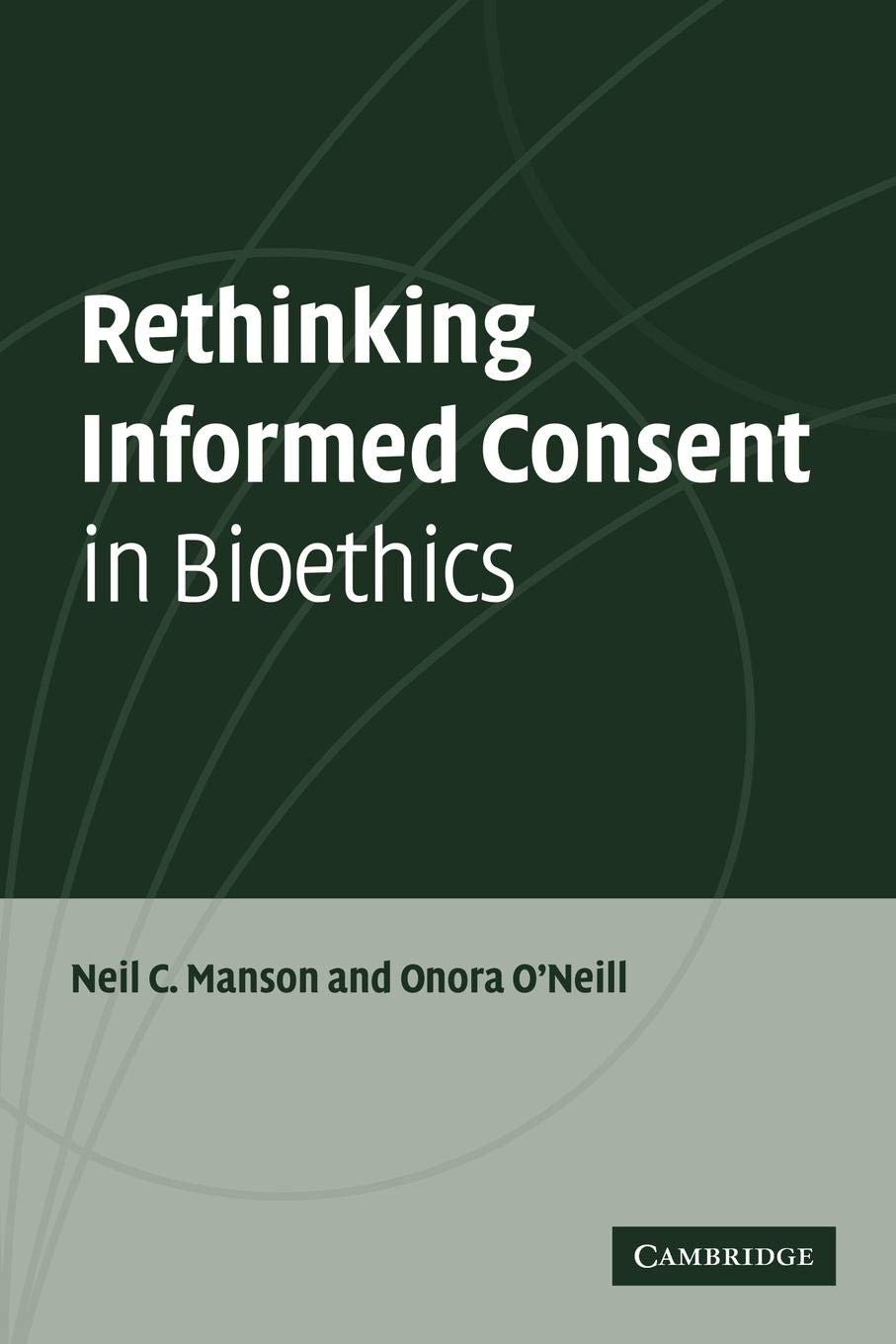
Informed consent is a central topic in contemporary biomedical ethics. Yet attempts to set defensible and feasible standards for consenting have led to persistent difficulties. In Rethinking Informed Consent in Bioethics, first published in 2007, Neil Manson and Onora O'Neill set debates about informed consent in medicine and research in a fresh light. They show why informed consent cannot be fully specific or fully explicit, and why more specific consent is not always ethically better. They argue that consent needs distinctive communicative transactions, by which other obligations, prohibitions, and rights can be waived or set aside in controlled and specific ways. Their book offers a coherent, wideranging and practical account of the role of consent in biomedicine which will be valuable to readers working in a range of areas in bioethics, medicine and law.
⚠️ WARNING (California Proposition 65):
This product may contain chemicals known to the State of California to cause cancer,
birth defects, or other reproductive harm.
For MAP (Minimum Advertised Price) violations and Intellectual Property (IP) or Trademark concerns, please contact:
support@ergodebooks.com
⚠️ California Proposition 65 Warning: Some products sold on this website may expose you to chemicals known to the State of California to cause cancer, birth defects, or other reproductive harm. For more information, visit www.P65Warnings.ca.gov.