
Title
Rethinking Party Systems In The Third Wave Of Democratization: The Case Of Brazil,New
Sold by Ergodebooks, an authorized reseller.
Returns accepted within 30 days | support@ergodebooks.com
Shipping Information
- Free Standard Shipping — United States only
- Processing Time: 3–5 business days
- Estimated Delivery: 6–10 business days after dispatch
- Double-boxed, fully insured & discreetly packaged
- Tracking number sent via email once dispatched
Returns & Refund
Returns accepted within 30 days of delivery.
Damaged or Defective Item
Free return shipping + replacement or full refund
Wrong Item Received
Free return shipping + replacement or full refund
Change of Mind
Return shipping at customer's expense · 25% restocking fee applies
Payment Option

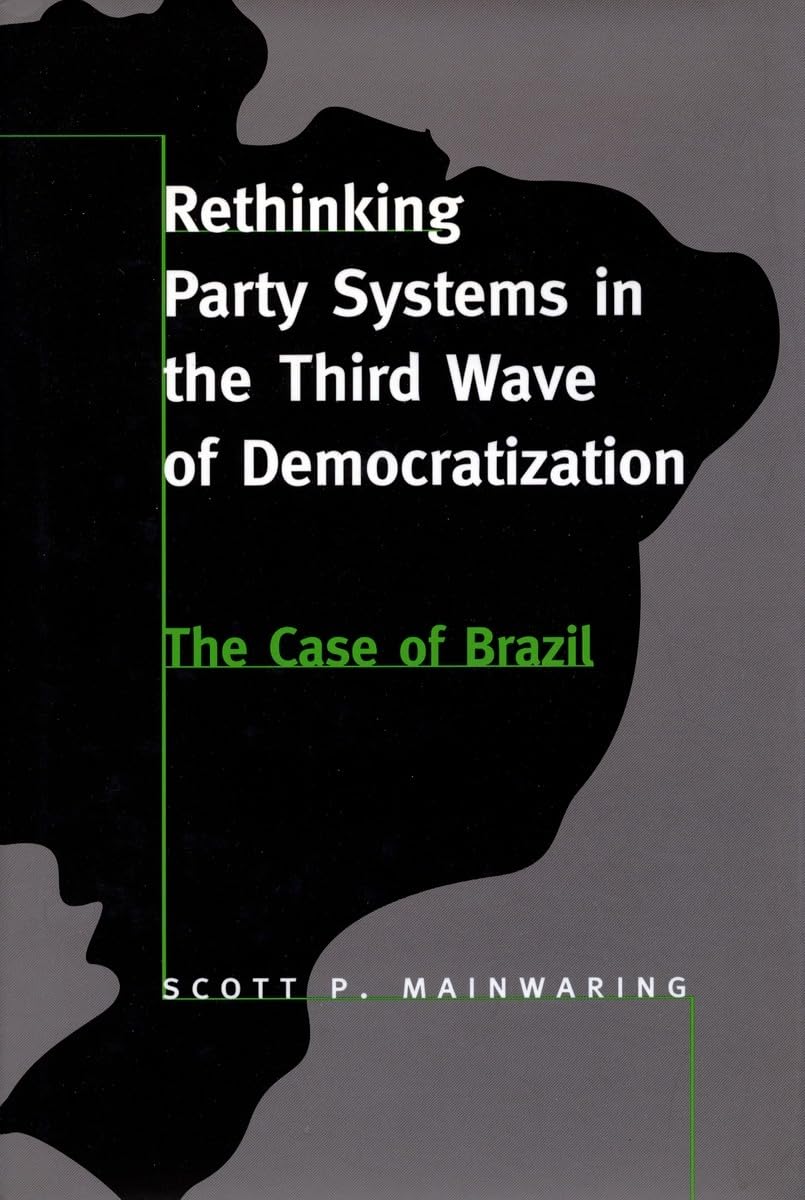
Among the many countries that underwent transitions to democracy in recent decades, only Russia is as important to the United States and the world as Brazil. The fifthlargest country and population in the world, with nearly onehalf the inhabitants of Latin America, Brazil has the worlds ninthrichest economy. Given the nations size and influence, its capacity to achieve stable democracy and economic growth will have global impact. Understanding democracy in Brazil is therefore a crucial task, one which this book undertakes. Theoretically, the author argues that most party systems in the third wave of democratization, after 1974, have distinctive features that require us to reformulate theories about party systems generally; previous works have paid scant attention to the importance of variance in the degree of institutionalization of party systems. The author also argues that many thirdwave cases underscore the need to focus on the capacity of the state and political elites to structure and restructure party systems from below. Empirically, the author studies the Brazilian party system and democratization, with particular reference to the 197996 period. He underscores the weakness of the party system and the resulting problems of democratization. He argues that the party system is poorly institutionalized, explores the reasons for the difficulties of party building, and addresses the consequences of weak institutionalization, which leads him to reaffirm the central significance of parties in the face of widespread skepticism about their importance.
⚠️ WARNING (California Proposition 65):
This product may contain chemicals known to the State of California to cause cancer, birth defects, or other reproductive harm.
For more information, please visit www.P65Warnings.ca.gov.