
Title
Return to Philosophy,Used
Sold by Ergodebooks, an authorized reseller.
Returns accepted within 30 days | support@ergodebooks.com
Shipping Information
- Free Standard Shipping — United States only
- Processing Time: 3–5 business days
- Estimated Delivery: 6–10 business days after dispatch
- Double-boxed, fully insured & discreetly packaged
- Tracking number sent via email once dispatched
Returns & Refund
Returns accepted within 30 days of delivery.
Damaged or Defective Item
Free return shipping + replacement or full refund
Wrong Item Received
Free return shipping + replacement or full refund
Change of Mind
Return shipping at customer's expense · 25% restocking fee applies
Payment Option

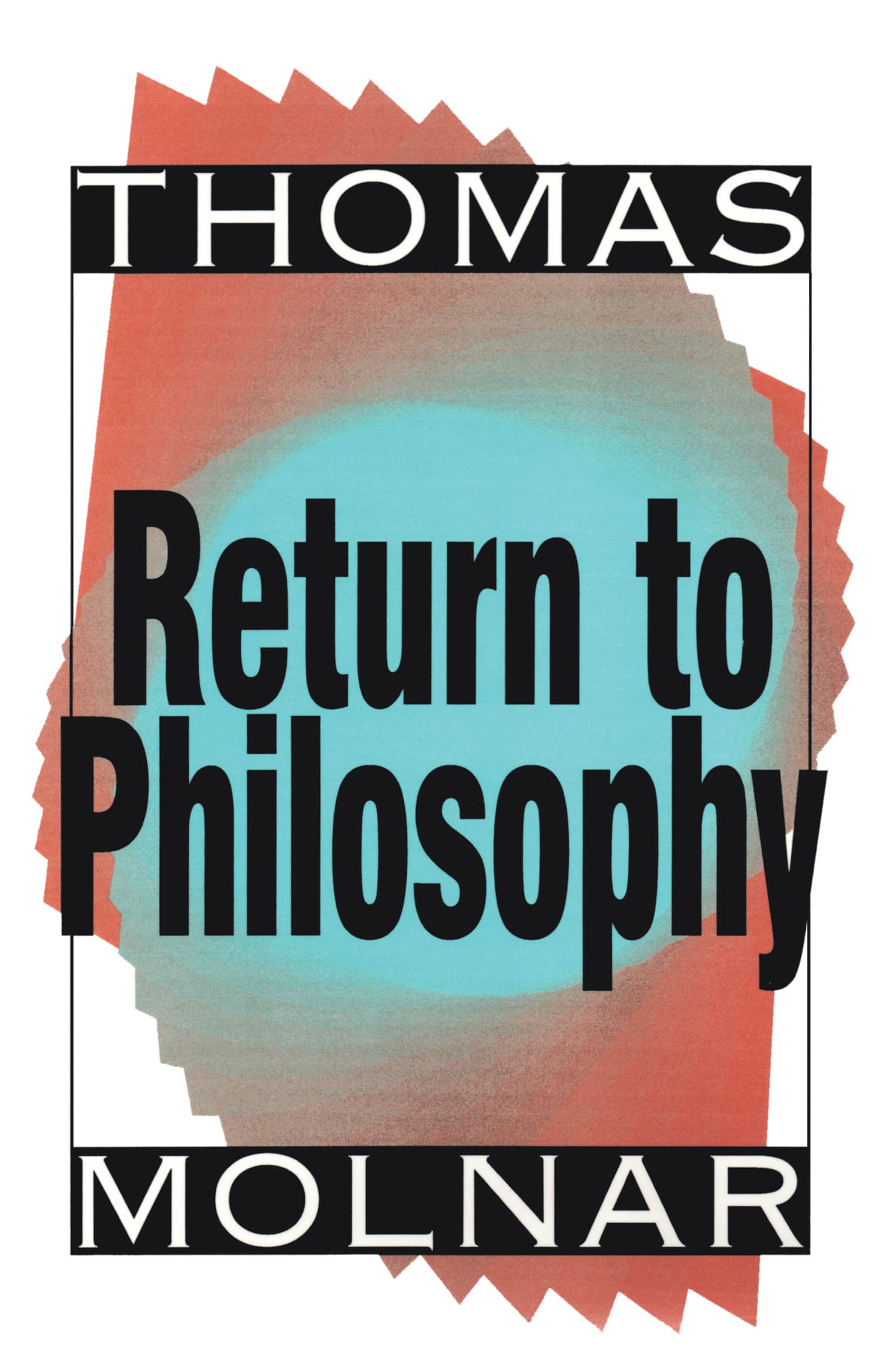
From its earliest beginnings and through much of its history, the philosophical enterprise has rooted its intellectual procedures in common sense. Ordinary discourse is what the preSocratic thinkers did at the dawn of speculation. The same approach was characteristic of the medieval mystics, Pascal in the seventeenth century, and Gaston Bachelard in the twentieth century. However with the ascendency of the physical sciences, mathematics, and depth psychology as influences in contemporary thought, philosophical language and forms of expression became increasingly distant from ordinary language. This created estrangement and confusion in the learner's mind. In Return to Philosophy Thomas Molnar diagnoses the verbal derailment of philosophy and shows how it might be reconnected to the realities of human life.While granting that philosophy must use a somewhat specialized language, Molnar attacks jargonladen thought by tracing certain root assumptions that go deeper than the issue of language itself. He locates these assumptions in the work of philosophers who, espousing modernity, no longer trust the 'reality of the real,' and are convinced that the world and our perception of it are elusive, offering no foundation except in the human mind which, however, is also the result of a 'social contract,' a temporary consensus or transient network of meanings readily discardable. According to changing ideologies and social structures we use 'signs' linguistic, psychological, hermeneutical, structuralist, existentialist not to express reality but to establish communication with others. Philosophy, then, shifts from the task of knowing reality to the task of communicating here and now.Return to Philosophy is a unique endeavor. Molnar's book unmasks the modern derailment and shows that many leading philosophers do not so much philosophize, but merely elaborate verbaltechnical instruments in what may be little more than trivial language games. This volume will be of interest to philosophers, cultural historians, and sociologists.
⚠️ WARNING (California Proposition 65):
This product may contain chemicals known to the State of California to cause cancer, birth defects, or other reproductive harm.
For more information, please visit www.P65Warnings.ca.gov.