If you have any questions, you are always welcome to contact us. We'll get back to you as soon as possible, withing 24 hours on weekdays.
Customer service
All questions about your order, return and delivery must be sent to our customer service team by e-mail at yourstore@yourdomain.com
Sale & Press
If you are interested in selling our products, need more information about our brand or wish to make a collaboration, please contact us at press@yourdomain.com
Help
If you have any questions, you are always welcome to contact us. We'll get back to you as soon as possible, withing 24 hours on weekdays.
Customer service
All questions about your order, return and delivery must be sent to our customer service team by e-mail at yourstore@yourdomain.com
Sale & Press
If you are interested in selling our products, need more information about our brand or wish to make a collaboration, please contact us at press@yourdomain.com
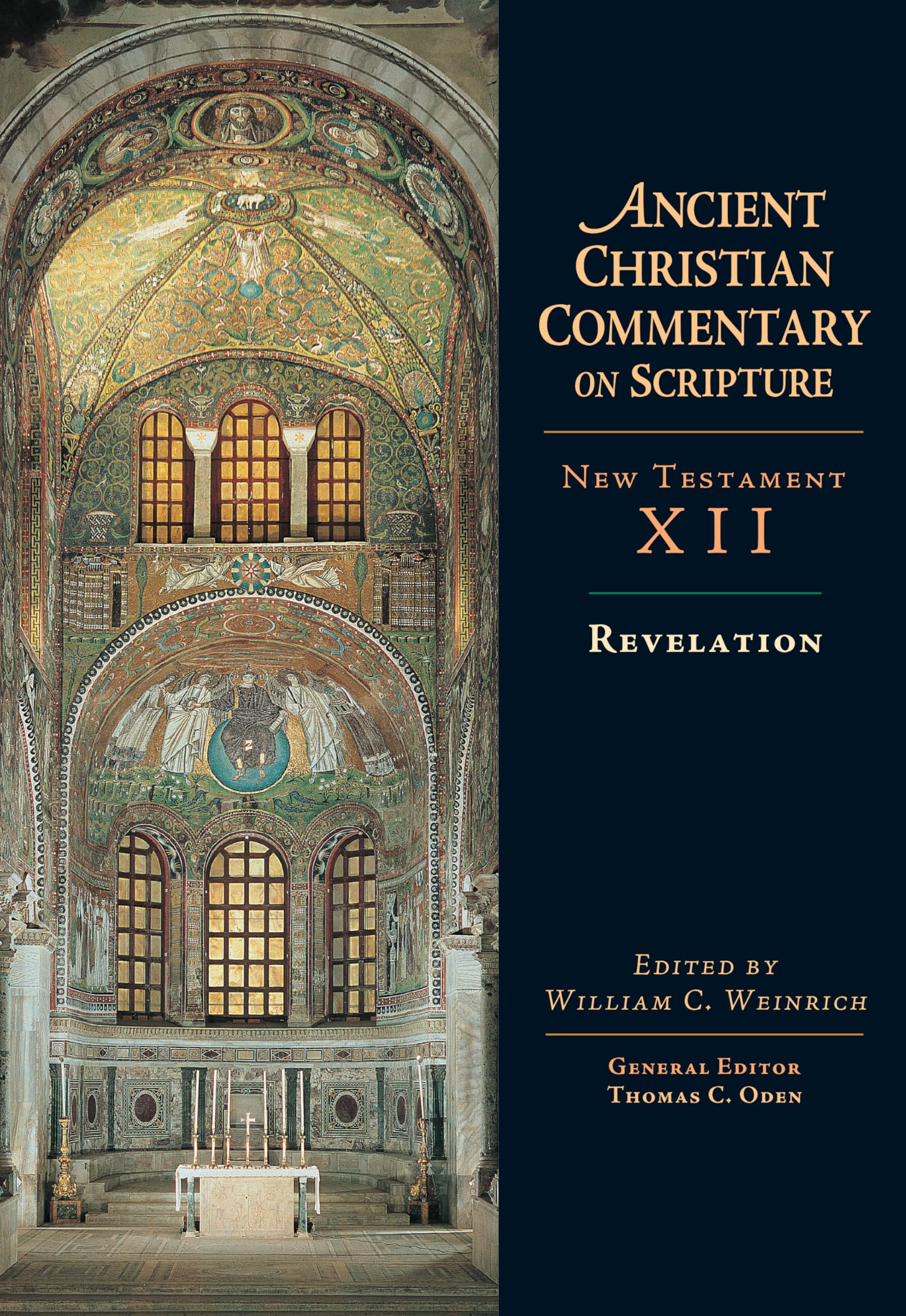
The Revelation to Johnwith its vivid images and portraits of conflict leading up to the formation of a new heaven and a new earthwas widely read, even as it was variously interpreted in the early church. Approaches to its interpretation ranged from the millenarian approach of Victorinus of Petovium to the more symbolic interpretation of Tyconius, who read Revelation in the sense of the universal and unitary time of the church. Tyconius's Book of Rules, deeply admired by Augustine, strongly influenced not only ongoing interpretation of Revelation but the whole of medieval exegesis.From early on the book of Revelation was more widely accepted in the West than in the East. Indeed the earliest extant commentaries on Revelation in Greek date from Oecumenius's commentary in the sixth century, which was soon accompanied by that of Andrew of Caesarea. Earlier Eastern fathers did, however, make reference to Revelation in noncommentary works.This Ancient Christian Commentary on Scripture volume draws heavily on the Greek commentaries from Oecumenius and Andrew of Caesarea to represent Eastern interpretation, while focusing on six other commentaries as primary witnesses to Western interpretationthose of Victorinus of Petovium, Tyconius, Primasius, Caesarius of Arles, Apringius of Beja, and Bede the Venerable. Every effort has been made to give adequate context so that the creative use of Scripture, the theological interest, and the pastoral intent can be discerned by readers today.Amid this treasure trove of early interpretation readers will find much that appears in English translation for the first time.
⚠️ WARNING (California Proposition 65):
This product may contain chemicals known to the State of California to cause cancer,
birth defects, or other reproductive harm.
For MAP (Minimum Advertised Price) violations and Intellectual Property (IP) or Trademark concerns, please contact:
support@ergodebooks.com
⚠️ California Proposition 65 Warning: Some products sold on this website may expose you to chemicals known to the State of California to cause cancer, birth defects, or other reproductive harm. For more information, visit www.P65Warnings.ca.gov.