
Title
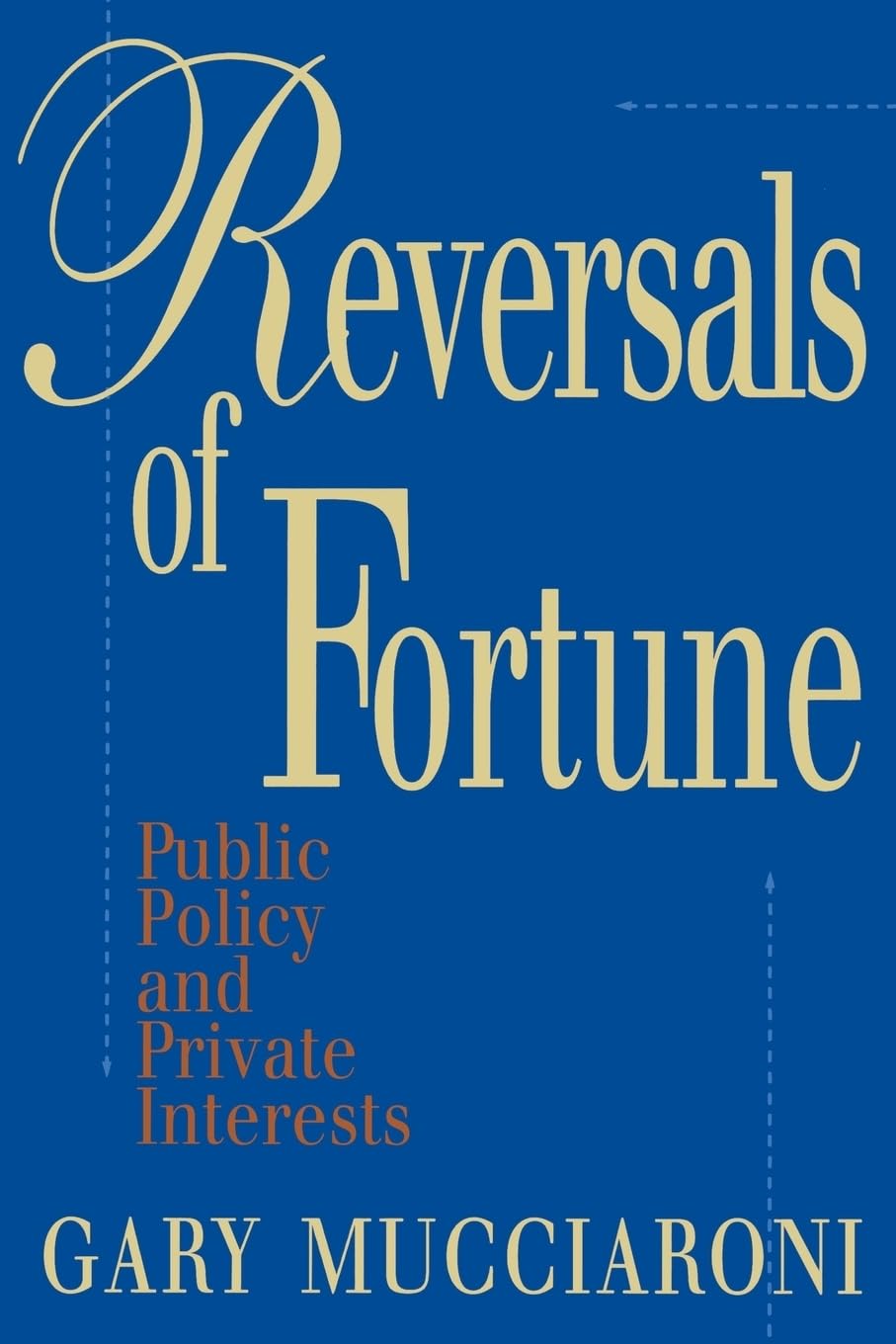
Reversals Of Fortune: Public Policy And Private Interests,Used
Sold by Ergodebooks, an authorized reseller.
Returns accepted within 30 days | support@ergodebooks.com
Shipping Information
- Free Standard Shipping — United States only
- Processing Time: 3–5 business days
- Estimated Delivery: 6–10 business days after dispatch
- Double-boxed, fully insured & discreetly packaged
- Tracking number sent via email once dispatched
Returns & Refund
Returns accepted within 30 days of delivery.
Damaged or Defective Item
Free return shipping + replacement or full refund
Wrong Item Received
Free return shipping + replacement or full refund
Change of Mind
Return shipping at customer's expense · 25% restocking fee applies
Payment Option

In this book, Gary Mucciaroni examines the shifting fortunes of economic interest groups in Washington. He addresses such compelling questions as: Why do policymakers bestow benefits on these groups in some areas of public policy but refrain from doing so in others? Why are benefits given to these industries in one period but revoked at a later time? What conditions and processes shape policymakers' postures toward particular interests, and why do they sometimes change?Mucciaroni compares and contrasts four policy areastax incentives, anticompetitive regulations, trade barriers, and agricultural subsidieswhere it is possible for interest groups to gain substantial benefits while paying little of the costs. He finds that the fortunes of these groups vary considerably across policies and over time.In explaining these patterns, Mucciaroni argues that interest group fortunes are not shaped so much by the interest groups themselves or their political activities, but rather by what he calls the ''issue and institutional contexts.'' The kinds of issues that become salient, how they are defined in policy debates, and the different institutional arrangements for making policy choices all have a powerful impact on group fortunes. The comparative case study approach allows the author to build generalizations about the relationship between issues, institutions, interests, and policy without sacrificing the rich and nuanced insights found in single case studies.'
⚠️ WARNING (California Proposition 65):
This product may contain chemicals known to the State of California to cause cancer, birth defects, or other reproductive harm.
For more information, please visit www.P65Warnings.ca.gov.