If you have any questions, you are always welcome to contact us. We'll get back to you as soon as possible, withing 24 hours on weekdays.
Customer service
All questions about your order, return and delivery must be sent to our customer service team by e-mail at yourstore@yourdomain.com
Sale & Press
If you are interested in selling our products, need more information about our brand or wish to make a collaboration, please contact us at press@yourdomain.com
Help
If you have any questions, you are always welcome to contact us. We'll get back to you as soon as possible, withing 24 hours on weekdays.
Customer service
All questions about your order, return and delivery must be sent to our customer service team by e-mail at yourstore@yourdomain.com
Sale & Press
If you are interested in selling our products, need more information about our brand or wish to make a collaboration, please contact us at press@yourdomain.com
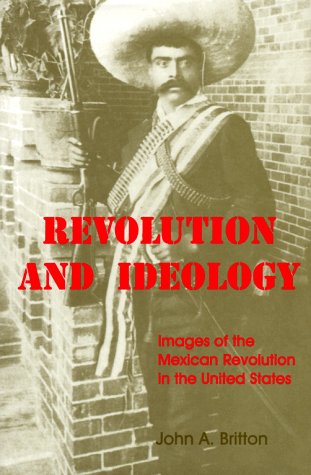
Mexico and the United States share a border of more than 2,000 miles, and their histories and interests have often intertwined. The Mexican Revolution, which began in 1910 and continued in one form or another for the next forty years, was keenly observed by U.S. citizens, especially those who were directly involved in Mexico through property ownership, investment, missionary work, tourism, journalism, and education.Historian John A. Britton examines contemporary accounts written by Americans commenting on fifty years of social upheaval south of the border. The Mexican revolution differed from many others in this century in that MarxistLeninist theory was only one of many radical and reformist influences. With the recent collapse of communist regimes, historians and political scientists are looking at Mexico today with renewed interest in its mostly nonideological revolution.Britton draws on accounts of cultural, business, and political leaders as well as journalists and academics. Radical journalist John Reed, novelists Katherine Anne Porter and D.H. Lawrence, social critics Stuart Chase and Waldo Frank, and bankerdiplomat Dwight Morrow are among the best known commentators. Radical writers John Kenneth Turner and Carleton Beals, academics Herbert I. Priestley and Frank Tannenbaum, and Communists Bertram Wolfe and Joseph Freeman bring their unique points of view to bear on Mexican political events.
⚠️ WARNING (California Proposition 65):
This product may contain chemicals known to the State of California to cause cancer,
birth defects, or other reproductive harm.
For MAP (Minimum Advertised Price) violations and Intellectual Property (IP) or Trademark concerns, please contact:
support@ergodebooks.com
⚠️ California Proposition 65 Warning: Some products sold on this website may expose you to chemicals known to the State of California to cause cancer, birth defects, or other reproductive harm. For more information, visit www.P65Warnings.ca.gov.