
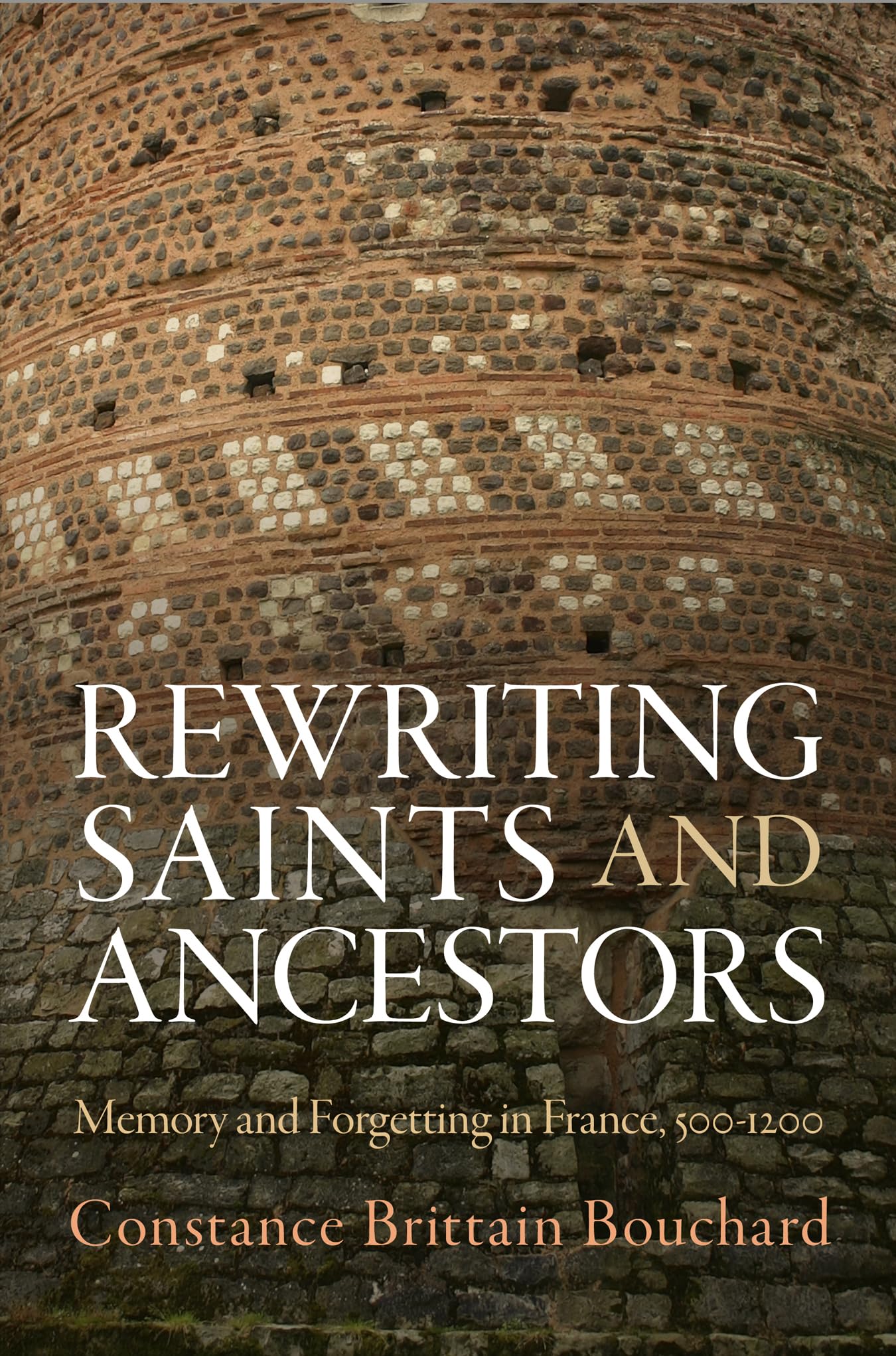
Title
Rewriting Saints And Ancestors: Memory And Forgetting In France, 512 (The Middle Ages Series)
Sold by Ergodebooks, an authorized reseller.
Returns accepted within 30 days | support@ergodebooks.com
Shipping Information
- Free Standard Shipping — United States only
- Processing Time: 3–5 business days
- Estimated Delivery: 6–10 business days after dispatch
- Double-boxed, fully insured & discreetly packaged
- Tracking number sent via email once dispatched
Returns & Refund
Returns accepted within 30 days of delivery.
Damaged or Defective Item
Free return shipping + replacement or full refund
Wrong Item Received
Free return shipping + replacement or full refund
Change of Mind
Return shipping at customer's expense · 25% restocking fee applies
Payment Option

Thinkers In Medieval France Constantly Reconceptualized What Had Come Before, Interpreting Past Events To Give Validity To The Present And Help Control The Future. The Longdead Saints Who Presided Over Churches And The Ancestors Of Established Dynasties Were An Especially Crucial Part Of Creative Memory, Constance Brittain Bouchard Contends. In Rewriting Saints And Ancestors She Examines How Such Ex Post Facto Accounts Are Less An Impediment To The Writing Of Accurate History Than A Crucial Tool For Understanding The Middle Ages.Working Backward Through Time, Bouchard Discusses Twelfthcentury Scribes Contemplating The Ninthcentury Documents They Copied Into Cartularies Or Reworked Into Narratives Of Disaster And Triumph, Ninthcentury Churchmen Deliberately Forging Supposedly Late Antique Documents As Weapons Against Both Kings And Other Churchmen, And Sixth And Seventhcentury Gallic Writers Coming To Terms With An Early Christianity That Had Neither The Saints Nor The Monasteries That Would Become Fundamental To Religious Practice. As They Met With Political Change And Social Upheaval, Each Generation Decided Which Events Of The Past Were Worth Remembering And Which Were To Be Reinterpreted Or Quietly Forgotten. By Considering Memory As An Analytic Tool, Bouchard Not Only Reveals The Ways Early Medieval Writers Constructed A Useful Past But Also Provides New Insights Into The Nature Of Record Keeping, The Changing Ways Dynasties Were Conceptualized, The Relationships Of The Merovingian And Carolingian Kings To The Church, And The Discovery (Or Invention) Of Gaul'S Earliest Martyrs.
⚠️ WARNING (California Proposition 65):
This product may contain chemicals known to the State of California to cause cancer, birth defects, or other reproductive harm.
For more information, please visit www.P65Warnings.ca.gov.
- Q: How many pages does this book have? A: This book has three hundred eighty-four pages. It offers an in-depth exploration of memory and history in medieval France.
- Q: What is the binding type of this book? A: This book is hardcover. The hardcover binding provides durability for frequent reading and display.
- Q: What are the dimensions of the book? A: The dimensions of the book are six point two six inches in length, one point two six inches in width, and nine point zero two inches in height.
- Q: Who is the author of this book? A: The author of this book is Constance Brittain Bouchard. She is known for her scholarly work on medieval history and memory.
- Q: What is the main theme of the book? A: The main theme of the book is the reconceptualization of memory in medieval France. It examines how past events are interpreted to shape the present.
- Q: Is this book suitable for academic studies? A: Yes, this book is suitable for academic studies. It provides valuable insights for students and researchers interested in medieval history.
- Q: Can I read this book if I am not an expert in history? A: Yes, you can read this book even if you are not an expert in history. It is written to engage a broader audience while providing scholarly insights.
- Q: What historical periods does the book cover? A: The book covers the sixth to twelfth centuries in France. It discusses the evolution of memory through different historical contexts.
- Q: How should I care for this hardcover book? A: To care for this hardcover book, keep it in a cool, dry place and avoid exposing it to direct sunlight. This will help preserve its condition.
- Q: Is there a specific way to store this book? A: Yes, store this book upright on a shelf or in a bookcase. Make sure it is not overcrowded to prevent damage to the spine.
- Q: What if the book arrives damaged? A: If the book arrives damaged, you should contact the seller for return or exchange options. Customer service will assist you with the process.
- Q: Are there any notable features in the book? A: Yes, the book features detailed analyses of medieval documents and discussions on memory construction. These features enhance understanding of the era.
- Q: Does the book include any illustrations or maps? A: No, the book does not include illustrations or maps. It focuses on textual analysis and historical interpretation.
- Q: What makes this book different from other history books? A: This book is unique in its focus on memory as an analytic tool. It explores how memory shapes historical narratives in medieval France.
- Q: Is this book part of a series? A: Yes, this book is part of 'The Middle Ages Series.' This series includes various scholarly works on medieval topics.