If you have any questions, you are always welcome to contact us. We'll get back to you as soon as possible, withing 24 hours on weekdays.
Customer service
All questions about your order, return and delivery must be sent to our customer service team by e-mail at yourstore@yourdomain.com
Sale & Press
If you are interested in selling our products, need more information about our brand or wish to make a collaboration, please contact us at press@yourdomain.com
Help
If you have any questions, you are always welcome to contact us. We'll get back to you as soon as possible, withing 24 hours on weekdays.
Customer service
All questions about your order, return and delivery must be sent to our customer service team by e-mail at yourstore@yourdomain.com
Sale & Press
If you are interested in selling our products, need more information about our brand or wish to make a collaboration, please contact us at press@yourdomain.com
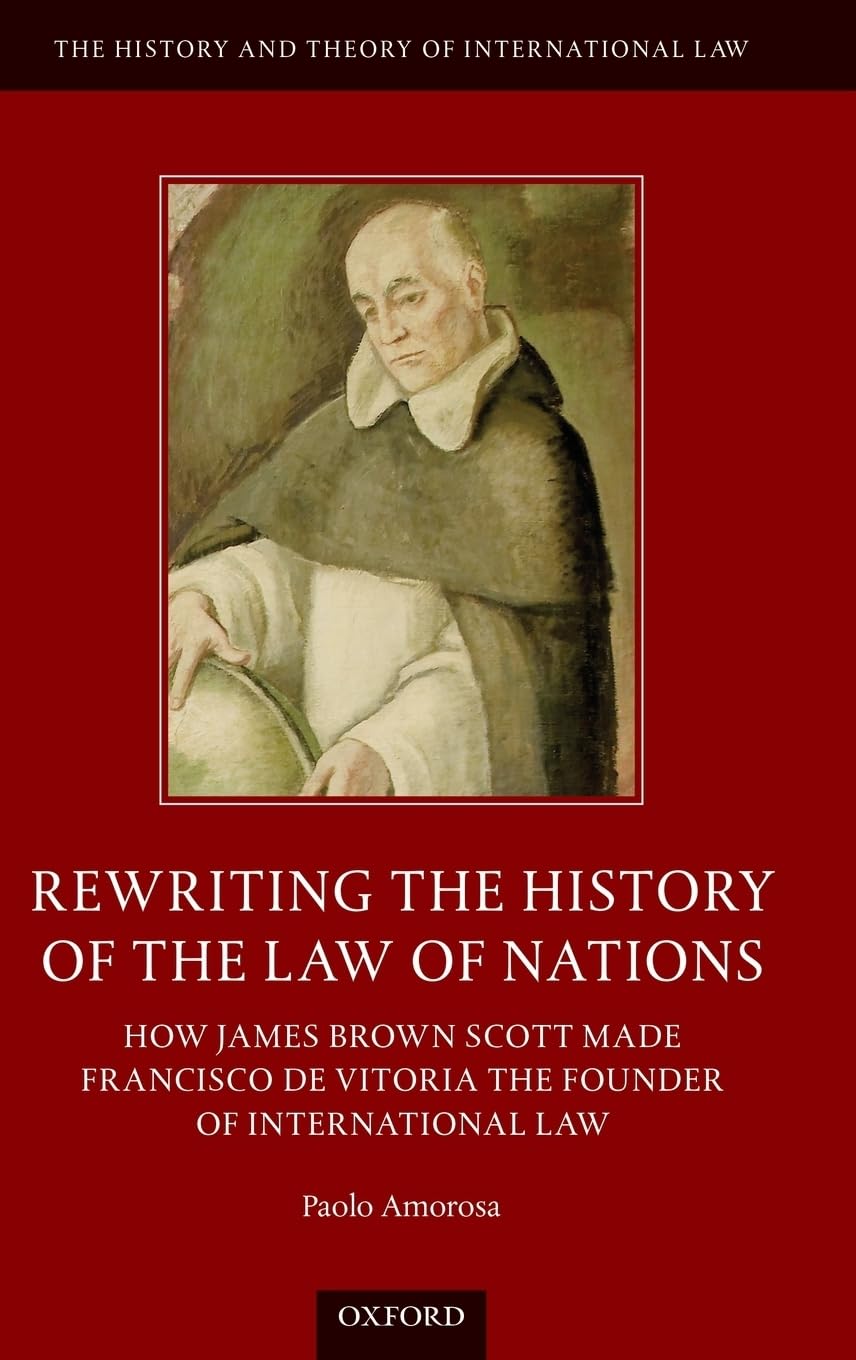
In the interwar years, international lawyer James Brown Scott wrote a series of works on the history of his discipline. He made the case that the foundation of modern international law rested not, as most assumed, with the seventeenthcentury Dutch thinker Hugo Grotius, but with sixteenthcentury Spanish theologian Francisco de Vitoria. Far from being an antiquarian assertion, the Spanish origin narrative placed the inception of international law in the context of the discovery of America, rather than in the European wars of religion. The recognition of equal rights to the American natives by Vitoria was the pedigree on which Scott built a progressive international law, responsive to the rise of the United States as the leading global power and developments in international organization such as the creation of the League of Nations.This book describes the Spanish origin project in context, relying on Scott's biography, changes in the selfunderstanding of the international legal profession, as well as on larger social and political trends in US and global history. Keeping in mind Vitoria's persisting role as a key figure in the canon of international legal history, the book sheds light on the contingency of shared assumptions about the discipline and their unspoken implications. The legacy of the international law Scott developed for the American century is still with the profession today, in the shape of the normalization and depoliticization of rights language and of key concepts like equality and rule of law.
⚠️ WARNING (California Proposition 65):
This product may contain chemicals known to the State of California to cause cancer,
birth defects, or other reproductive harm.
For MAP (Minimum Advertised Price) violations and Intellectual Property (IP) or Trademark concerns, please contact:
support@ergodebooks.com
⚠️ California Proposition 65 Warning: Some products sold on this website may expose you to chemicals known to the State of California to cause cancer, birth defects, or other reproductive harm. For more information, visit www.P65Warnings.ca.gov.