
Title
Rhetoric and Religious Identity in Late Antiquity,Used
Sold by Ergodebooks, an authorized reseller.
Returns accepted within 30 days | support@ergodebooks.com
Shipping Information
- Free Standard Shipping — United States only
- Processing Time: 3–5 business days
- Estimated Delivery: 6–10 business days after dispatch
- Double-boxed, fully insured & discreetly packaged
- Tracking number sent via email once dispatched
Returns & Refund
Returns accepted within 30 days of delivery.
Damaged or Defective Item
Free return shipping + replacement or full refund
Wrong Item Received
Free return shipping + replacement or full refund
Change of Mind
Return shipping at customer's expense · 25% restocking fee applies
Payment Option

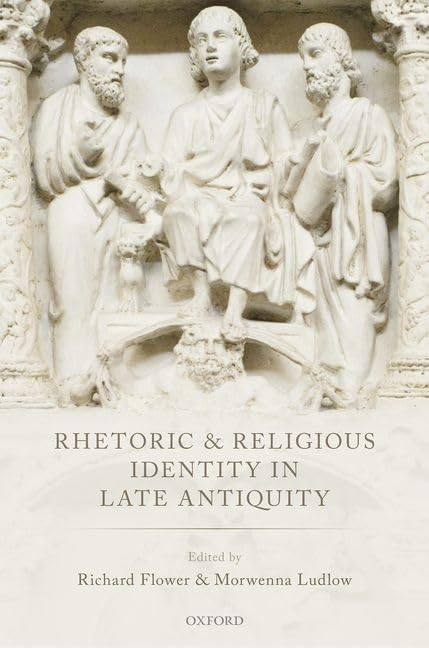
The topic of religious identity in late antiquity is highly contentious. How did individuals and groups come to ascribe identities based on what would now be known as 'religion', categorizing themselves and others with regard to Judaism, Manichaeism, traditional Greek and Roman practices, and numerous competing conceptions of Christianity? How and why did examples of selfidentification become established, activated, or transformed in response to circumstances? To what extent do labels (whether ancient and modern) for religious categories reflect a sense of a unified and enduring social or group identity for those included within them? How does religious identity relate to other forms of ancient identity politics (for example, ethnic discourse concerning 'barbarians')? Rhetoric and Religious Identity in Late Antiquity responds to the recent upsurge of interest in this issue by developing interdisciplinary research between classics, ancient and medieval history, philosophy, religion, patristics, and Byzantine studies, expanding the range of evidence standardly used to explore these questions. In exploring the malleability and potential overlapping of religious identities in late antiquity, as well as their variable expressions in response to different public and private contexts, it challenges some prominent scholarly paradigms. In particular, rhetoric and religious identity are here brought together and simultaneously interrogated to provide mutual illumination: in what way does a better understanding of rhetoric (its rules, forms, practices) enrich our understanding of the expression of lateantique religious identity? How does an understanding of how religious identity was ascribed, constructed, and contested provide us with a new perspective on rhetoric at work in late antiquity?
⚠️ WARNING (California Proposition 65):
This product may contain chemicals known to the State of California to cause cancer, birth defects, or other reproductive harm.
For more information, please visit www.P65Warnings.ca.gov.