
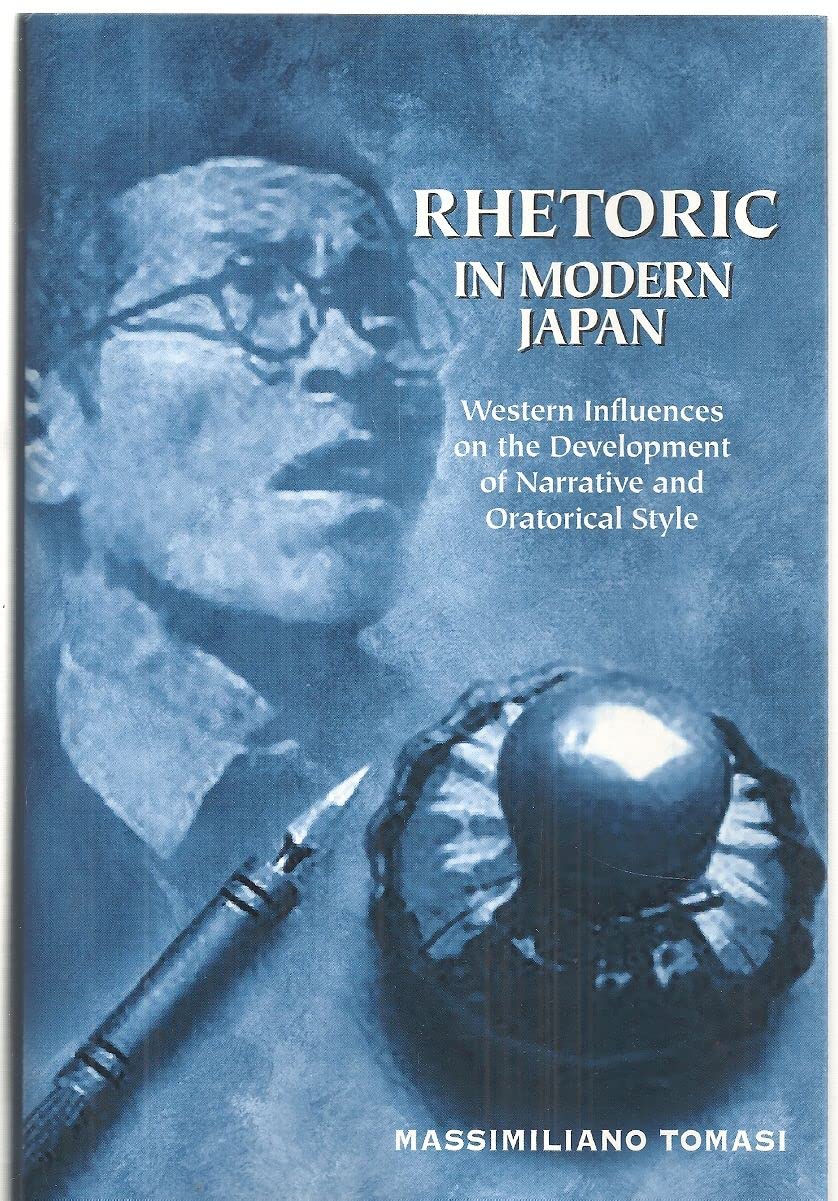
Title
Rhetoric in Modern Japan: Western Influences on the Development of Narrative and Oratorical Style,Used
Sold by Ergodebooks, an authorized reseller.
Returns accepted within 30 days | support@ergodebooks.com
Shipping Information
- Free Standard Shipping — United States only
- Processing Time: 3–5 business days
- Estimated Delivery: 6–10 business days after dispatch
- Double-boxed, fully insured & discreetly packaged
- Tracking number sent via email once dispatched
Returns & Refund
Returns accepted within 30 days of delivery.
Damaged or Defective Item
Free return shipping + replacement or full refund
Wrong Item Received
Free return shipping + replacement or full refund
Change of Mind
Return shipping at customer's expense · 25% restocking fee applies
Payment Option

Rhetoric in Modern Japan is the first volume to discuss the role of Western rhetoric in the creation of a modern Japanese oral and narrative style. It considers the introduction of Western rhetoric, clarifying its interactions with the forces and synergies that shaped Japanese literature and culture in the late nineteenth and early twentieth centuries. Focusing on the Meiji and Taisho years (18681926), it challenges the prevailing view among contemporary scholars that rhetoric did not play a significant role in the literary developments of the period.Massimiliano Tomasi chronicles the blooming of scholarship in the field in the early 1870s, providing the first descriptive analysis and cogently articulated critique of the major rhetorical treatises of the time. In discussing the rise of public speaking in early Meiji society, he unveils the existence of crucial links between the study of rhetoric and the social and literary events of the time, underscoring the key role played by oratory both as a tool for social modernization and as an effective platform for the reappraisal of the spoken language.The collusion and conflicts characterizing rhetoric and its relationship with the genbun itchi movement, which sought to unify spoken and written language, are explored, demonstrating that their perceived antagonism was the uh_product of a misguided notion of rhetoric and the process of rhetorical signification rather than a true theoretical conflict. Tomasi makes a convincing argument that, in fact, Western rhetoric mediated between these equally compelling pursuits and paved the way toward an acceptable compromise between classical and colloquial written styles.
⚠️ WARNING (California Proposition 65):
This product may contain chemicals known to the State of California to cause cancer, birth defects, or other reproductive harm.
For more information, please visit www.P65Warnings.ca.gov.