If you have any questions, you are always welcome to contact us. We'll get back to you as soon as possible, withing 24 hours on weekdays.
Customer service
All questions about your order, return and delivery must be sent to our customer service team by e-mail at yourstore@yourdomain.com
Sale & Press
If you are interested in selling our products, need more information about our brand or wish to make a collaboration, please contact us at press@yourdomain.com
Help
If you have any questions, you are always welcome to contact us. We'll get back to you as soon as possible, withing 24 hours on weekdays.
Customer service
All questions about your order, return and delivery must be sent to our customer service team by e-mail at yourstore@yourdomain.com
Sale & Press
If you are interested in selling our products, need more information about our brand or wish to make a collaboration, please contact us at press@yourdomain.com
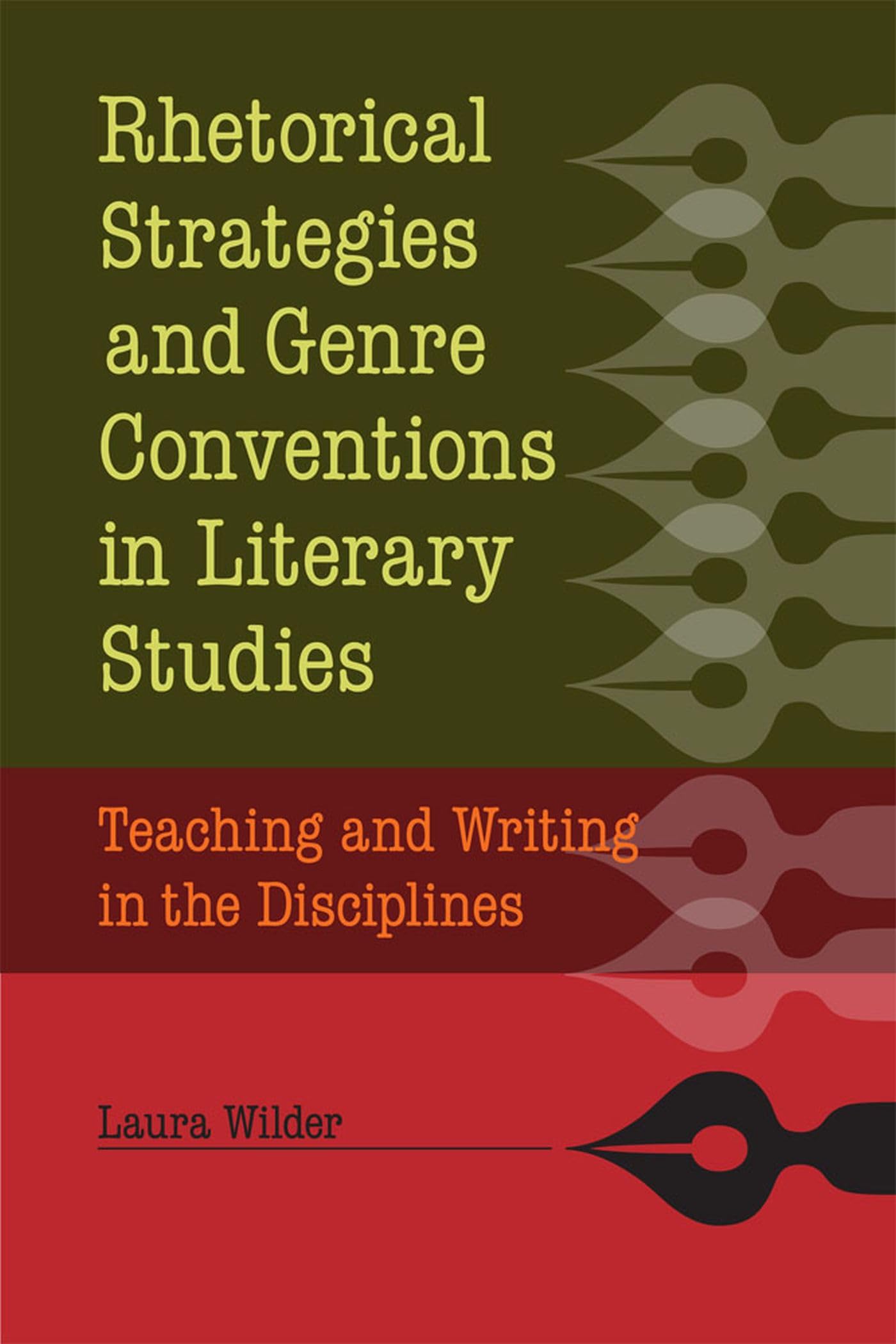
Laura Wilder fills a gap in the scholarship on writing in the disciplines and writing across the curriculum with this thorough study of the intersections between scholarly literary criticism and undergraduate writing in introductory literature courses. Rhetorical Strategies and Genre Conventions in Literary Studies is the first examination of rhetorical practice in the research and teaching of literary study and a detailed assessment of the ethics and efficacy of explicit instruction in the rhetorical strategies and genre conventions of the discipline.Using rhetorical analysis, ethnographic observation, and individual interviews, Wilder demonstrates how rhetorical conventions play a central, although largely tacit, role in the teaching of literature and the evaluation of student writing. Wilder follows a group of literature majors and details their experiences. Some students received experimental, explicit instruction in the special topoi, while others received more traditional, implicit instruction.Arguing explicit instruction in disciplinary conventions has the potential to help underprepared students, Wilder explores how this kind of instruction may be incorporated into literature courses without being overly reductive. Taking into consideration student perspectives, Wilder makes a bold case for expanding the focus of research in writing in the disciplines and writing across the curriculum in order to grasp the full complexity of disciplinary discourse.
⚠️ WARNING (California Proposition 65):
This product may contain chemicals known to the State of California to cause cancer,
birth defects, or other reproductive harm.
For MAP (Minimum Advertised Price) violations and Intellectual Property (IP) or Trademark concerns, please contact:
support@ergodebooks.com
⚠️ California Proposition 65 Warning: Some products sold on this website may expose you to chemicals known to the State of California to cause cancer, birth defects, or other reproductive harm. For more information, visit www.P65Warnings.ca.gov.