
Title
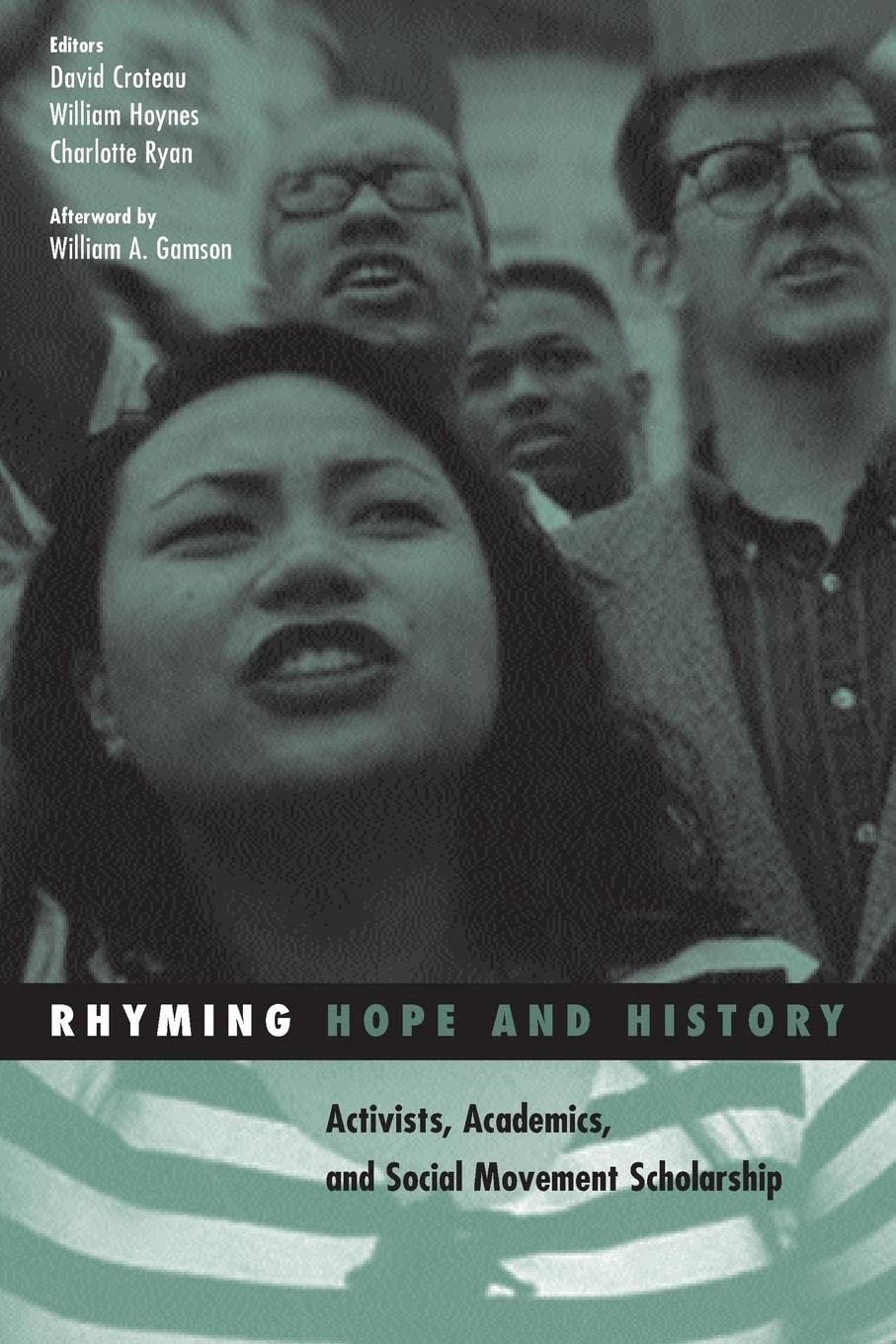
Rhyming Hope and History: Activists, Academics, and Social Movement Scholarship (Volume 24) (Social Movements, Protest and Conte,New
Sold by Ergodebooks, an authorized reseller.
Returns accepted within 30 days | support@ergodebooks.com
Shipping Information
- Free Standard Shipping — United States only
- Processing Time: 3–5 business days
- Estimated Delivery: 6–10 business days after dispatch
- Double-boxed, fully insured & discreetly packaged
- Tracking number sent via email once dispatched
Returns & Refund
Returns accepted within 30 days of delivery.
Damaged or Defective Item
Free return shipping + replacement or full refund
Wrong Item Received
Free return shipping + replacement or full refund
Change of Mind
Return shipping at customer's expense · 25% restocking fee applies
Payment Option

Rhyming Hope and History exposes the frayed relations between activism and social movement scholarship and examines the causes and consequences of this disconnect between theory and practice. Both scholars and activists explore solutions, weighing the promise and perils of engaged theory and the barriers to meaningful collaboration. This volume asserts that partnerships among scholars and activists benefit both academic inquiry and social change efforts.Contributors: Kevin M. Carragee, Suffolk U; Catherine CorrigallBrown, U of California, Irvine; Myra Marx Ferree, U of Wisconsin, Madison; Richard Flacks, U of California, Santa Barbara; Adria D. Goodson; Richard Healy and Sandra Hinson, Grassroots Policy Project; David Meyer, U of California, Irvine; Cynthia Peters, Worker Education Program of the Service Employees International Union, Local 2020; Barbara Risman, North Carolina State U; Robert J. S. Ross, Clark U; Leila J. Rupp, U of California, Santa Barbara; Cassie Schwerner, Schott Foundation; Valerie Sperling, Clark U; David A. Snow, U of California, Irvine; Verta Taylor, U of California, Santa Barbara.David Croteau is formerly associate professor of sociology and anthropology at Virginia Commonwealth University. William Hoynes is professor of sociology and director of media studies at Vassar College. Charlotte Ryan is codirector of the Media Research and Action Project at Boston College. William A. Gamson is professor of sociology at Boston College.
⚠️ WARNING (California Proposition 65):
This product may contain chemicals known to the State of California to cause cancer, birth defects, or other reproductive harm.
For more information, please visit www.P65Warnings.ca.gov.
- Q: What is the main theme of 'Rhyming Hope and History'? A: The main theme of 'Rhyming Hope and History' is the examination of the frayed relationship between activism and social movement scholarship, exploring the causes and consequences of the disconnect between theory and practice.
- Q: Who are the key contributors to this book? A: Key contributors include Kevin M. Carragee, Catherine Corrigall-Brown, Myra Marx Ferree, Richard Flacks, and David A. Snow, among others, who provide insights from both academic and activist perspectives.
- Q: What is the publication date of 'Rhyming Hope and History'? A: 'Rhyming Hope and History' was published on August 20, 2005.
- Q: What is the format of this book? A: This book is available in a paperback format.
- Q: How many pages does 'Rhyming Hope and History' have? A: 'Rhyming Hope and History' contains a total of 316 pages.
- Q: Is this book suitable for both scholars and activists? A: Yes, the book is designed for both scholars and activists, as it addresses the importance of collaboration between theory and practice.
- Q: What edition is 'Rhyming Hope and History'? A: 'Rhyming Hope and History' is published as a First Edition.
- Q: What condition is the used book typically in? A: Used copies of 'Rhyming Hope and History' are generally in good condition.
- Q: Who are the authors of this book? A: The primary author is David Croteau, along with contributions from various scholars and activists.
- Q: What is the significance of the book in relation to social change? A: The book asserts that partnerships between scholars and activists enhance both academic inquiry and social change efforts, emphasizing the benefits of engaged theory.