If you have any questions, you are always welcome to contact us. We'll get back to you as soon as possible, withing 24 hours on weekdays.
Customer service
All questions about your order, return and delivery must be sent to our customer service team by e-mail at yourstore@yourdomain.com
Sale & Press
If you are interested in selling our products, need more information about our brand or wish to make a collaboration, please contact us at press@yourdomain.com
Help
If you have any questions, you are always welcome to contact us. We'll get back to you as soon as possible, withing 24 hours on weekdays.
Customer service
All questions about your order, return and delivery must be sent to our customer service team by e-mail at yourstore@yourdomain.com
Sale & Press
If you are interested in selling our products, need more information about our brand or wish to make a collaboration, please contact us at press@yourdomain.com
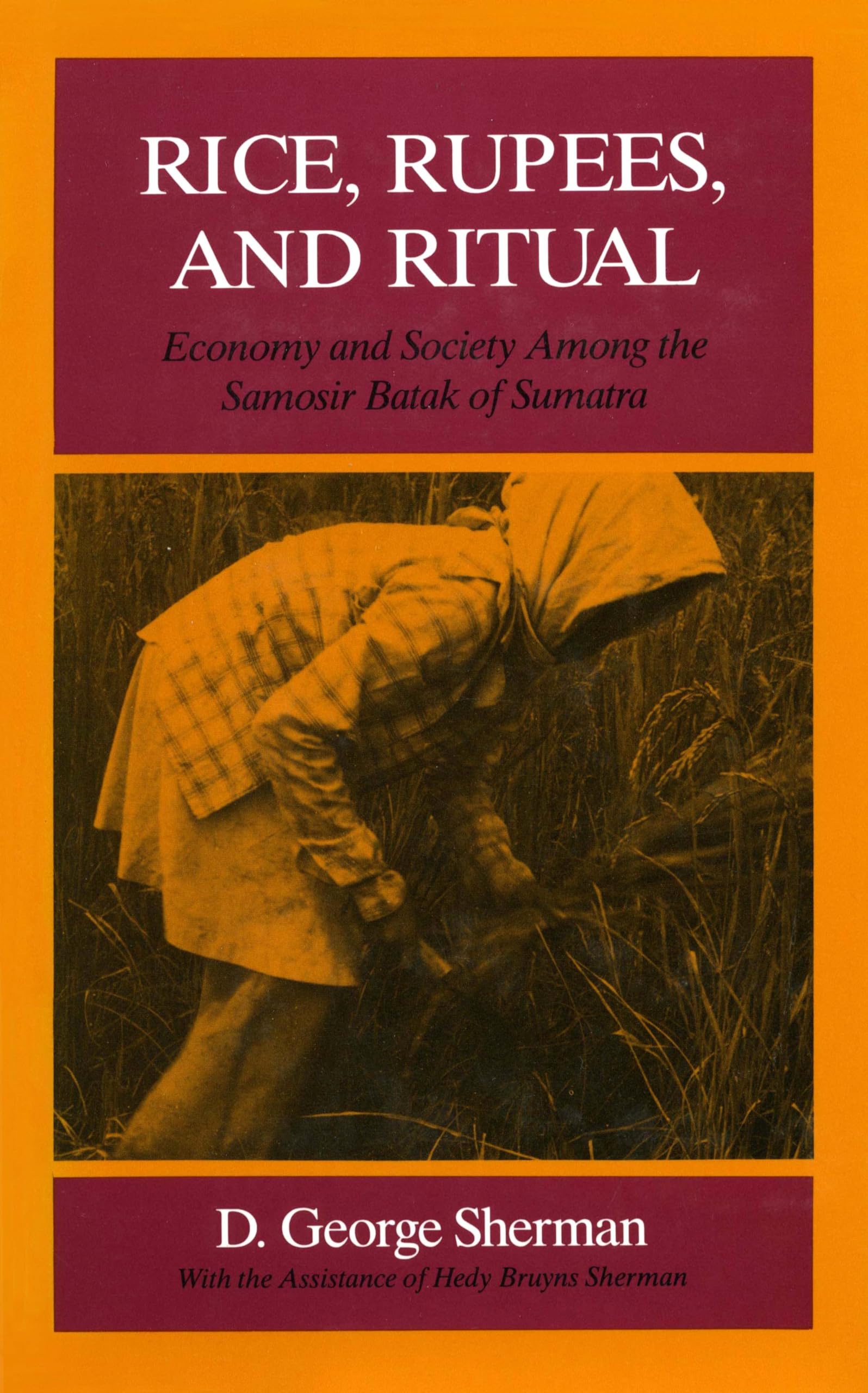
In this ethnographic study of the small mountain village of Huta Ginjang in the Samosir area of northern Sumatra, the author pursues three main themes: the role of rice in the Batak economy of feasting, and the cultural ecology of dry and floodedfield ricegrowing. Two important questions emerge: How did the social and economic changes resulting from Dutch colonization particularly the adoption of money as a medium of exchange affect Samosir Batak culture/ Have the values that largely shape the local economy been fundamentally altered by the effects of colonization and subsequent Japanese and Indonesian administrations? After introductory chapters present the environmental and historical background of the Samosir region, the author describes the sociocultural base on which its agricultural economy rests: indigenous political and religious institutions, concepts of patrilineal descent and marriage alliance, and, most importantly, the ideology of the feasting system. He then examines in detail and in comparative perspective the agricultural practices of Huta Ginjang, and also deals more generally with the economic relations and institutions of the villagers, notably marketing, credit, and cooperative endeavours. Since the key production units are nuclear families, the author analyzes the development of households and the organization of labor in cultivating crops. He then turns to the distribution of livestock and land by both ritual and nonritual means. The book is illustrated with photographs, line drawings, and maps.
⚠️ WARNING (California Proposition 65):
This product may contain chemicals known to the State of California to cause cancer,
birth defects, or other reproductive harm.
For MAP (Minimum Advertised Price) violations and Intellectual Property (IP) or Trademark concerns, please contact:
support@ergodebooks.com
⚠️ California Proposition 65 Warning: Some products sold on this website may expose you to chemicals known to the State of California to cause cancer, birth defects, or other reproductive harm. For more information, visit www.P65Warnings.ca.gov.