If you have any questions, you are always welcome to contact us. We'll get back to you as soon as possible, withing 24 hours on weekdays.
Customer service
All questions about your order, return and delivery must be sent to our customer service team by e-mail at yourstore@yourdomain.com
Sale & Press
If you are interested in selling our products, need more information about our brand or wish to make a collaboration, please contact us at press@yourdomain.com
Help
If you have any questions, you are always welcome to contact us. We'll get back to you as soon as possible, withing 24 hours on weekdays.
Customer service
All questions about your order, return and delivery must be sent to our customer service team by e-mail at yourstore@yourdomain.com
Sale & Press
If you are interested in selling our products, need more information about our brand or wish to make a collaboration, please contact us at press@yourdomain.com
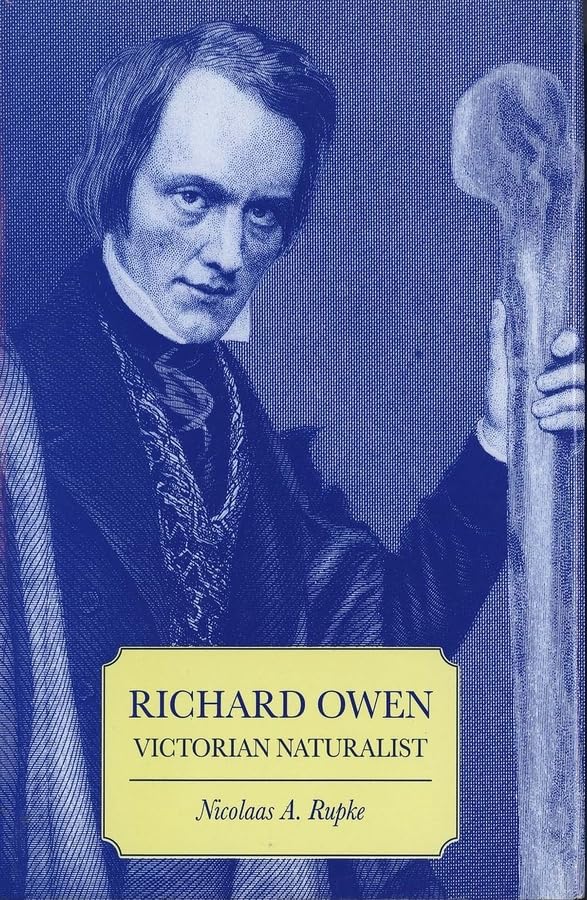
Richard Owen (180492) was, after Darwin, the leading naturalist of nineteenthcentury Britain. A distinguished anatomist and paleontologist, he was influential in Victorian scientific reform and in the debate over natural selection. Leader of the nineteenthcentury museum movement, he founded London's monumental Natural History Museum, wrote and published copiously, and won every professional honor. This first fullfledged biography of Owen presents the complete range of his scientific and intellectual achievements.Nicolaas Rupke discusses Owen's epic power struggles with colleagues, the most notorious of which were with Darwin and Huxley. As a renowned opponent of natural selection, Owen became the bte noire of the Darwinian evolution debate. Rupke argues, however, that Owen should no longer be judged by the evolution dispute that was only a minor part of his work yet has come to dominate his memory. Instead, Rupke emphasizes and throws new light on a wide area of Owen's other activities. In particular, he explains the central division in Owen's scientific oeuvre between the functionalism of Oxbridge natural theology and the transcendentalism of German nature philosophy. Rupke shows that this was a fundamental extension of the intellectual and political maneuvering for control of Victorian cultural institutions and an inextricable part of the rise to public authority of the most articulate proponents of the scientific study of nature.
⚠️ WARNING (California Proposition 65):
This product may contain chemicals known to the State of California to cause cancer,
birth defects, or other reproductive harm.
For MAP (Minimum Advertised Price) violations and Intellectual Property (IP) or Trademark concerns, please contact:
support@ergodebooks.com
⚠️ California Proposition 65 Warning: Some products sold on this website may expose you to chemicals known to the State of California to cause cancer, birth defects, or other reproductive harm. For more information, visit www.P65Warnings.ca.gov.