
Title
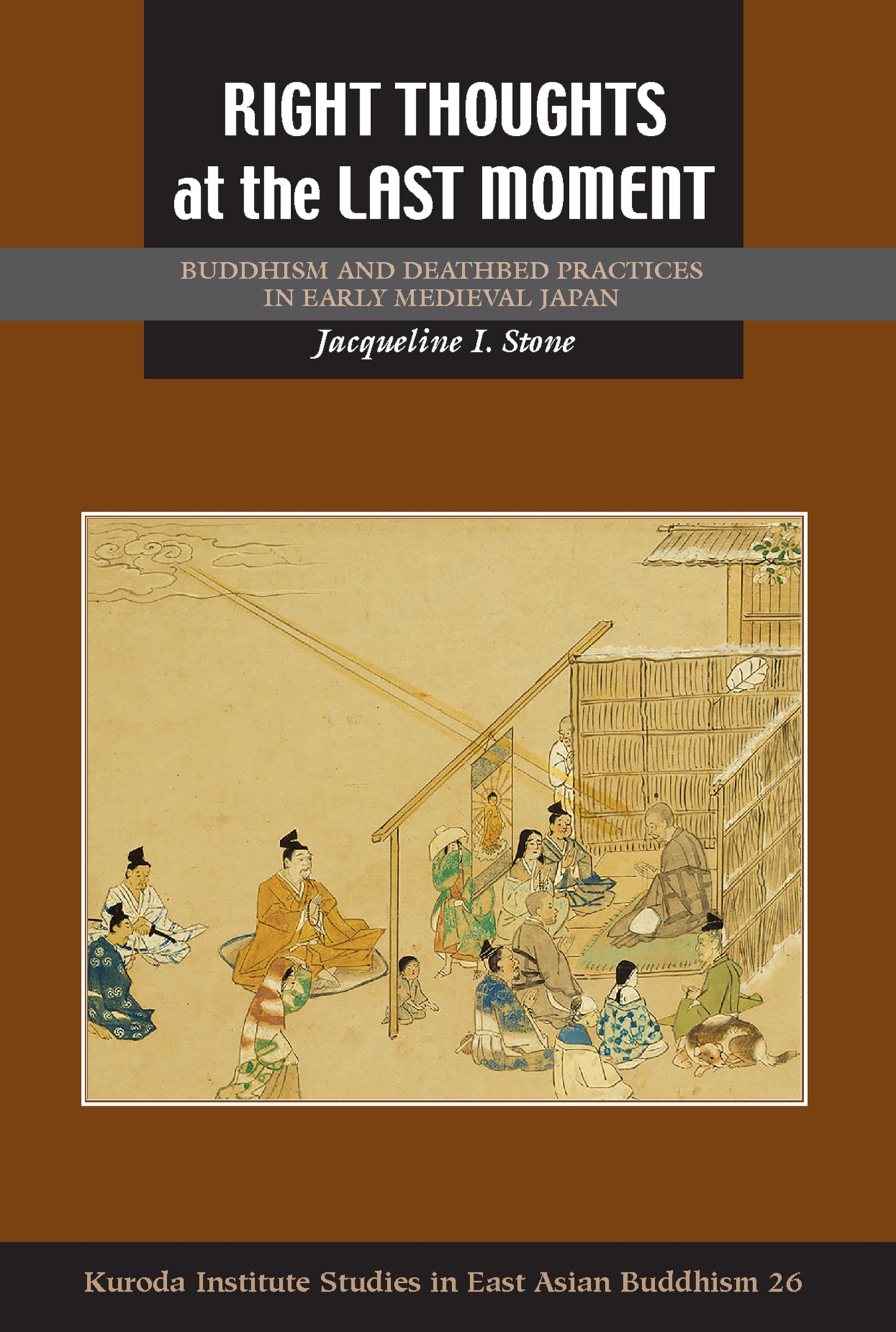
Right Thoughts at the Last Moment: Buddhism and Deathbed Practices in Early Medieval Japan (Kuroda Studies in East Asian Buddhis,Used
Sold by Ergodebooks, an authorized reseller.
Returns accepted within 30 days | support@ergodebooks.com
Shipping Information
- Free Standard Shipping — United States only
- Processing Time: 3–5 business days
- Estimated Delivery: 6–10 business days after dispatch
- Double-boxed, fully insured & discreetly packaged
- Tracking number sent via email once dispatched
Returns & Refund
Returns accepted within 30 days of delivery.
Damaged or Defective Item
Free return shipping + replacement or full refund
Wrong Item Received
Free return shipping + replacement or full refund
Change of Mind
Return shipping at customer's expense · 25% restocking fee applies
Payment Option

Buddhists across Asia have often aspired to die with a clear and focused mind, as the historical Buddha himself is said to have done. This book explores how the ideal of dying with right mindfulness was appropriated, disseminated, and transformed in premodern Japan, focusing on the late tenth through early fourteenth centuries. By concentrating ones thoughts on the Buddha in ones last moments, it was said even an ignorant and sinful person could escape the cycle of deluded rebirth and achieve birth in a buddhas pure land, where liberation would be assured. Conversely, the slightest mental distraction at that final juncture could send even a devout practitioner tumbling down into the hells or other miserable rebirth realms. The ideal of mindful death thus generated both hope and anxiety and created a demand for ritual specialists who could act as religious guides at the deathbed. Buddhist death management in Japan has been studied chiefly from the standpoint of funerals and mortuary rites. Right Thoughts at the Last Moment investigates a largely untold side of that story: how early medieval Japanese prepared for death, and how desire for ritual assistance in ones last hours contributed to Buddhist preeminence in deathrelated matters. It represents the first booklength study in a Western language to examine how the Buddhist ideal of mindful death was appropriated in a specific historical context.Practice for ones last hours occupied the intersections of multiple, often disparate approaches that Buddhism offered for coping with death. Because they crossed sectarian lines and eventually permeated all social levels, deathbed practices afford insights into broader issues in medieval Japanese religion, including intellectual developments, devotional practices, pollution concerns, ritual performance, and divisions of labor among religious professionals. They also allow us to see beyond the categories of old versus new Buddhism, or establishment Buddhism versus marginal heterodoxies, which have characterized much scholarship to date. Enlivened by cogent examples, this study draws on a wealth of sources including ritual instructions, hagiographies, doctrinal writings, didactic tales, courtier diaries, historical records, letters, and relevant art historical material to explore the interplay of doctrinal ideals and ontheground practice.
⚠️ WARNING (California Proposition 65):
This product may contain chemicals known to the State of California to cause cancer, birth defects, or other reproductive harm.
For more information, please visit www.P65Warnings.ca.gov.