
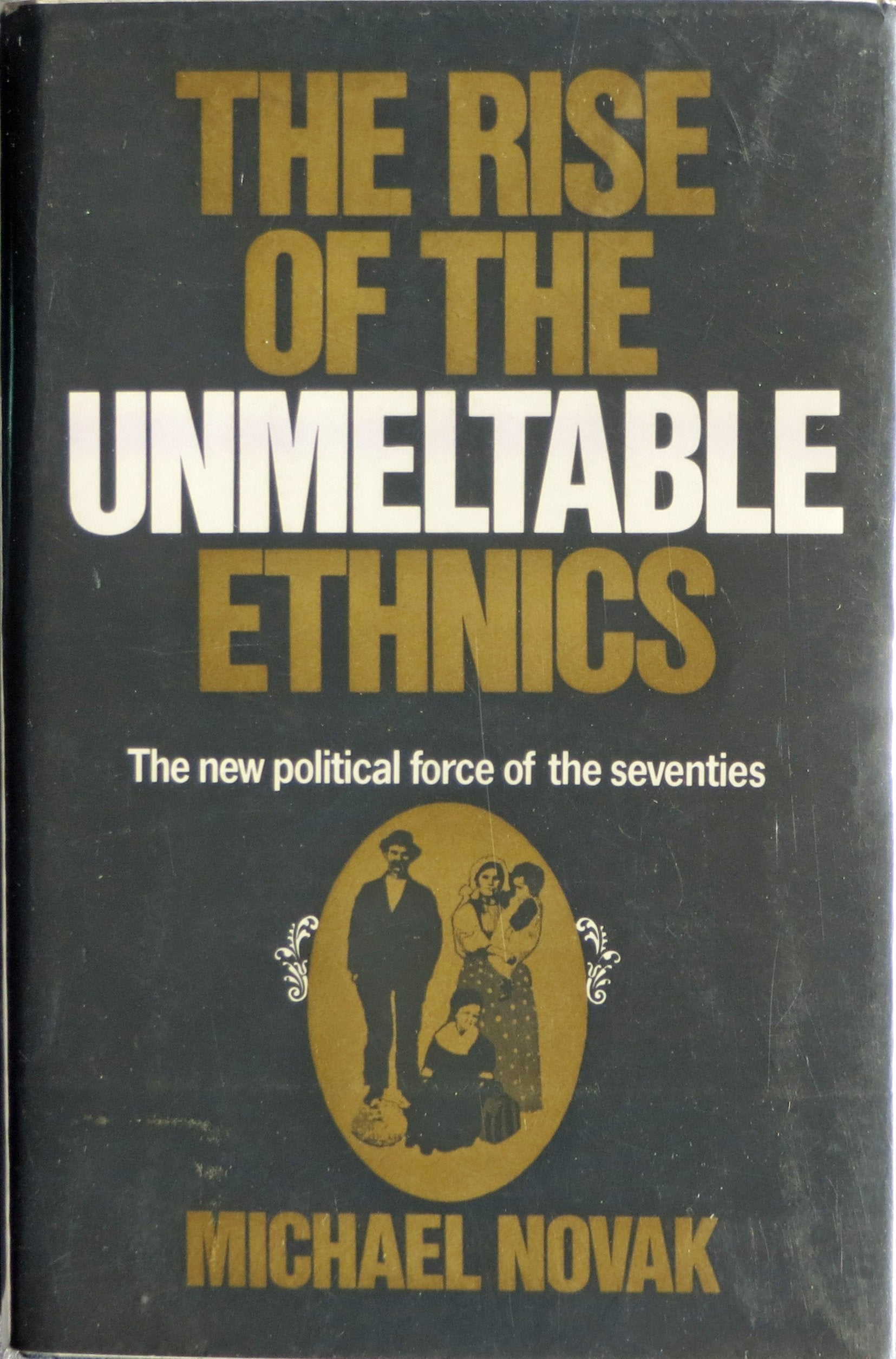
Title
Rise of the Unmeltable Ethnics,Used
Sold by Ergodebooks, an authorized reseller.
Returns accepted within 30 days | support@ergodebooks.com
Shipping Information
- Free Standard Shipping — United States only
- Processing Time: 3–5 business days
- Estimated Delivery: 6–10 business days after dispatch
- Double-boxed, fully insured & discreetly packaged
- Tracking number sent via email once dispatched
Returns & Refund
Returns accepted within 30 days of delivery.
Damaged or Defective Item
Free return shipping + replacement or full refund
Wrong Item Received
Free return shipping + replacement or full refund
Change of Mind
Return shipping at customer's expense · 25% restocking fee applies
Payment Option

Purchase of this book includes free trial access to www.millionbooks.com where you can read more than a million books for free.brThis is an OCR edition with typos.brExcerpt from book#58;brCHAPTER III. Ontology And Epistemology. The conclusions of the two preceding chapters have led us to a further problem which we shall here be forced to face. If it be true that thought does in point of fact express the nature of things, then it would seem to follow that the science of thought is the science of things, that ontology and epistemology coincide. In this connection two questions arise#58; Does Hegel identify the two? And if so, what does he mean by the identification and what justification is there for it? It is to the task of answering these questions that we now address ourselves. To the first of the above questions there can, I think, be only one answer. Hegel does identify logic and metaphysics. In the first place, we have his own explicit statement on the point. Since thoughts are 'Objective Thoughts,' he says, 'Logic therefore coincides with metaphysics, the science of things set and held in thoughts#151;thoughts accredited able to express the essential reality of things.'1 Besides such an explicit statement, one might offer as evidence the whole logical bias of the Hegelian philosophy which is unquestionably towards this identification. Since the categories 'really are, as forms of the Notion, the vital spirit of the actual world,' and since things or objects which do not agree with them are accidental, arbitrary, and untrue phenomena ;3 since the universal aspect of the object is not something subjective attributed to it only when it is an object of thought, but ratherbelongs to and expresses its essential nature, it follows that the science which has to do with these universals is ipso facto the science of reality. This science, of course, is logic. Logic, therefore, is metaphysics.4 lEnc., sect; 24. 'Ibid., sect; 162. 'Cf. Werke, Bd. V, p. 231. Notice also H...
⚠️ WARNING (California Proposition 65):
This product may contain chemicals known to the State of California to cause cancer, birth defects, or other reproductive harm.
For more information, please visit www.P65Warnings.ca.gov.