If you have any questions, you are always welcome to contact us. We'll get back to you as soon as possible, withing 24 hours on weekdays.
Customer service
All questions about your order, return and delivery must be sent to our customer service team by e-mail at yourstore@yourdomain.com
Sale & Press
If you are interested in selling our products, need more information about our brand or wish to make a collaboration, please contact us at press@yourdomain.com
Help
If you have any questions, you are always welcome to contact us. We'll get back to you as soon as possible, withing 24 hours on weekdays.
Customer service
All questions about your order, return and delivery must be sent to our customer service team by e-mail at yourstore@yourdomain.com
Sale & Press
If you are interested in selling our products, need more information about our brand or wish to make a collaboration, please contact us at press@yourdomain.com
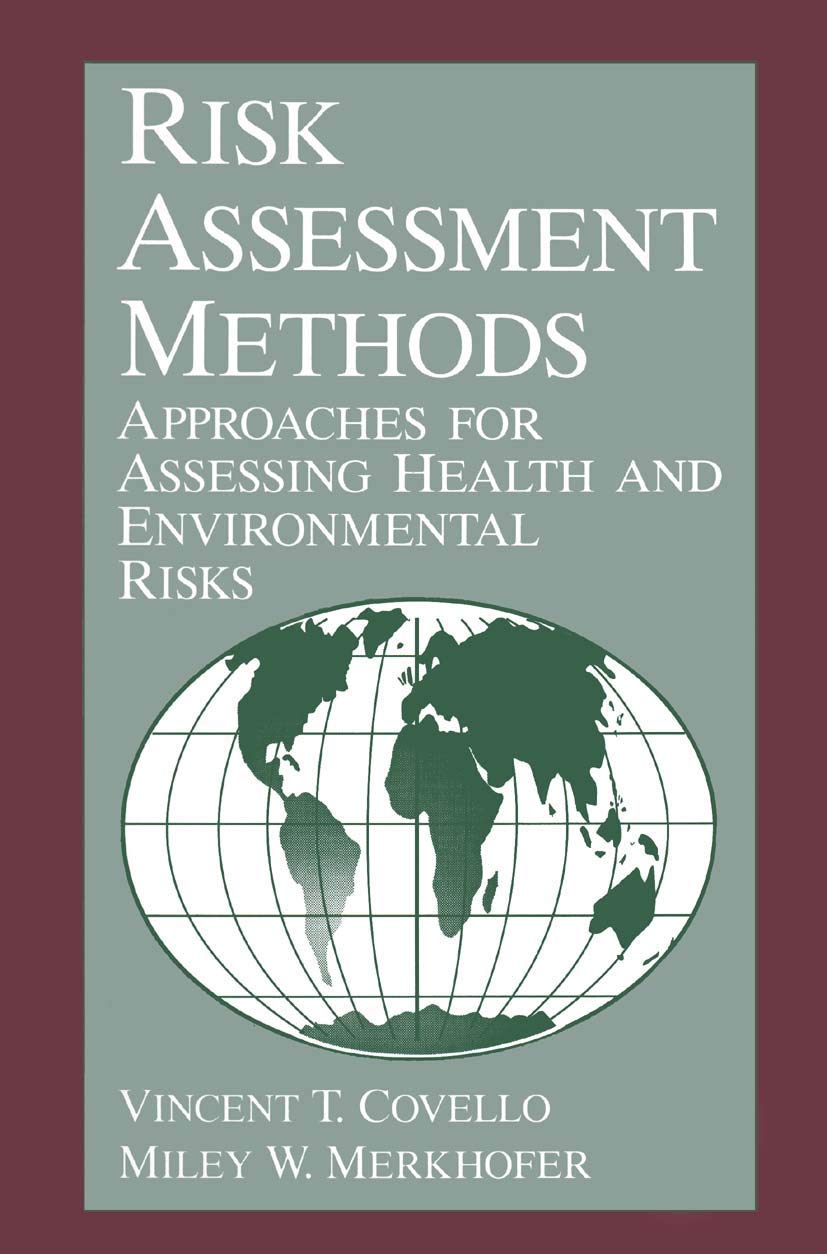
Much has already been written about risk assessment. Epidemiologists write books on how risk assessment is used to explore the factors that influence the distribution of disease in populations of people. Toxicologists write books on how risk assess ment involves exposing animals to risk agents and concluding from the results what risks people might experience if similarly exposed. Engineers write books on how risk assessment is utilized to estimate the risks of constructing a new facility such as a nuclear power plant. Statisticians write books on how risk assessment may be used to analyze mortality or accident data to determine risks. There are already many books on risk assessmentthe trouble is that they all seem to be about different sUbjects! This book takes another approach. It brings together all the methods for assessing risk into a common framework, thus demonstrating how the various methods relate to one another. This produces four important benefits: First, it provides a comprehensive reference for risk assessment. This one source offers readers concise explanations of the many methods currently available for describing and quantifying diverse types of risks. Second, it consistently evaluates and compares available risk assessment methods and identifies their specific strengths and limitations. Understand ing the limitations of risk assessment methods is important. The field is still in its infancy, and the problems with available methods are disappoint ingly numerous. At the same time, risk assessment is being used.
⚠️ WARNING (California Proposition 65):
This product may contain chemicals known to the State of California to cause cancer,
birth defects, or other reproductive harm.
For MAP (Minimum Advertised Price) violations and Intellectual Property (IP) or Trademark concerns, please contact:
support@ergodebooks.com
⚠️ California Proposition 65 Warning: Some products sold on this website may expose you to chemicals known to the State of California to cause cancer, birth defects, or other reproductive harm. For more information, visit www.P65Warnings.ca.gov.