
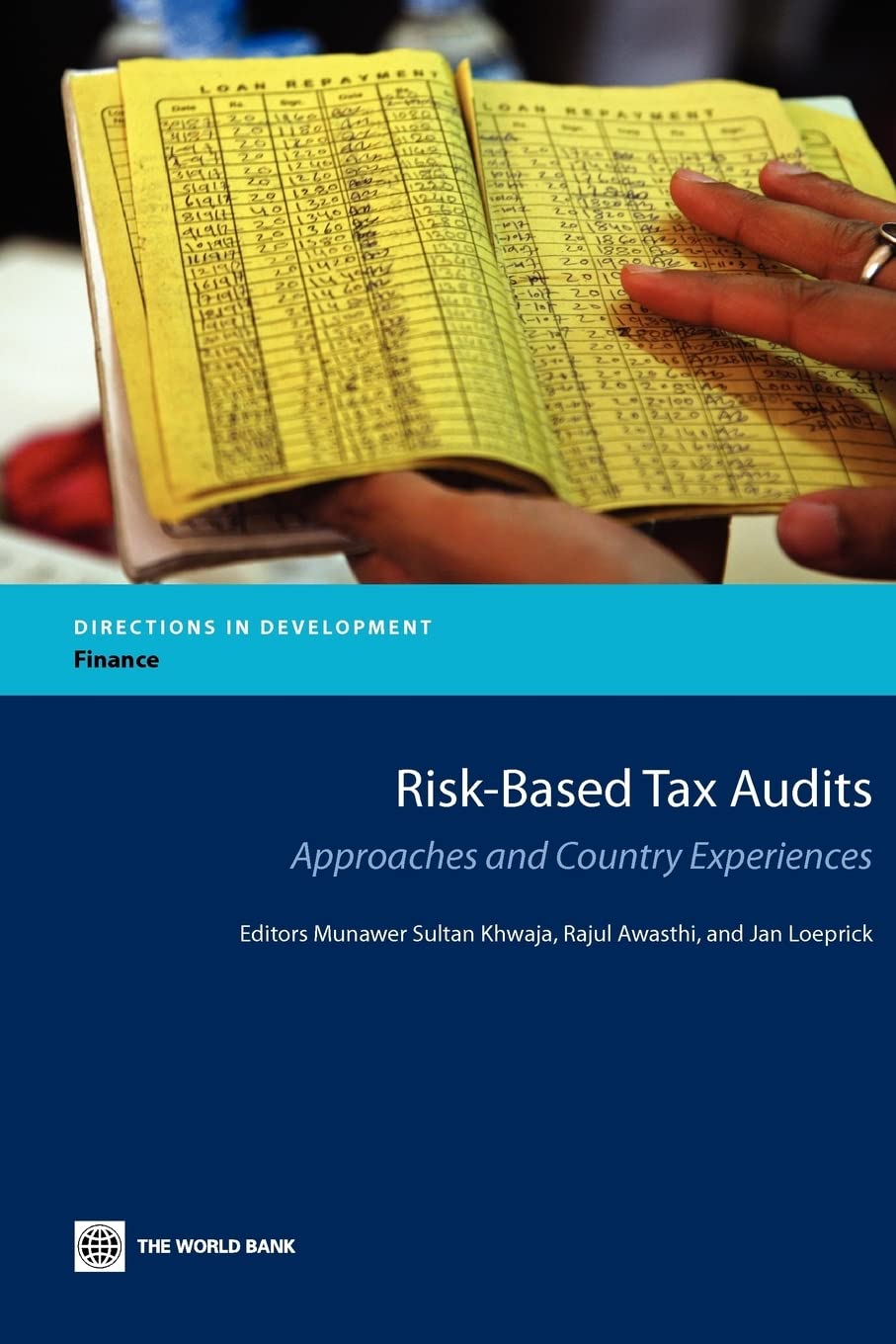
Title
Riskbased Tax Audits: Approaches And Country Experiences (Directions In Development) (Directions In Development: Finance),New
Sold by Ergodebooks, an authorized reseller.
Returns accepted within 30 days | support@ergodebooks.com
Shipping Information
- Free Standard Shipping — United States only
- Processing Time: 3–5 business days
- Estimated Delivery: 6–10 business days after dispatch
- Double-boxed, fully insured & discreetly packaged
- Tracking number sent via email once dispatched
Returns & Refund
Returns accepted within 30 days of delivery.
Damaged or Defective Item
Free return shipping + replacement or full refund
Wrong Item Received
Free return shipping + replacement or full refund
Change of Mind
Return shipping at customer's expense · 25% restocking fee applies
Payment Option

This book serves as a toolkit on riskbased audits and brings together country experiences for implementing riskbased audit systems. Risk management is an important element of effective and efficient compliance management in revenue administration. It is impossible for any revenue administration to control and check every single taxpayer, and an unnecessary waste of scarce enforcement resources on routinely examining lowrisk, compliant taxpayers. The opportunity costs for such roving examinations are high. Just as a private business allocates its resources to areas they feel have the most potential for generating revenues and profits, a modern revenue administration selects cases for audits using methods focused on highrisk taxpayers. This targeted focus is likely to raise higher revenue and, arguably, provide a stronger deterrence for noncompliance. Risk management techniques should not be considered to be confined to the selection of tax audit cases. It is part of a holistic and cooperative approach to enhance compliance. This is dramatically changing the way revenue administrations and taxpayers interact with each other. The effectiveness of a riskbased compliance management has been enabled by, and depends fundamentally on, the use of automated systems to: (1) gather thirdparty information and match with taxpayer reporting using reliable databases and a unique taxpayer identification number; (2) undertake selective checks based on risk analysis; (3) standardize payment processes (e.g., payments through banks) and accounting requirements; (4) provide assurance that the legislation and procedures are being applied uniformly; and (5) provide adequate, timely information to support management decision making and tax policy formulation.
⚠️ WARNING (California Proposition 65):
This product may contain chemicals known to the State of California to cause cancer, birth defects, or other reproductive harm.
For more information, please visit www.P65Warnings.ca.gov.