
Title
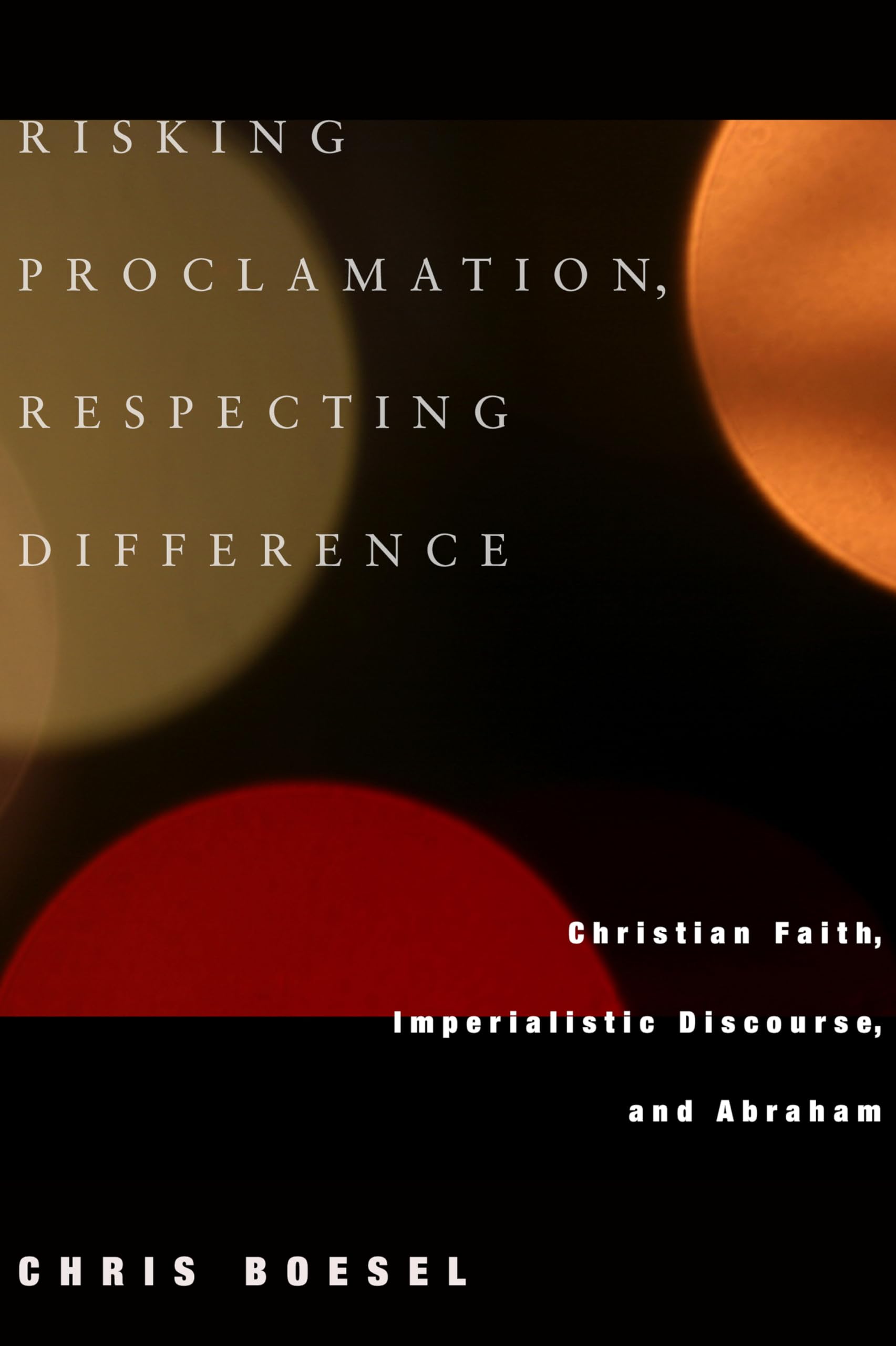
Risking Proclamation, Respecting Difference: Christian Faith, Imperialistic Discourse, And Abraham,New
Sold by Ergodebooks, an authorized reseller.
Returns accepted within 30 days | support@ergodebooks.com
Shipping Information
- Free Standard Shipping — United States only
- Processing Time: 3–5 business days
- Estimated Delivery: 6–10 business days after dispatch
- Double-boxed, fully insured & discreetly packaged
- Tracking number sent via email once dispatched
Returns & Refund
Returns accepted within 30 days of delivery.
Damaged or Defective Item
Free return shipping + replacement or full refund
Wrong Item Received
Free return shipping + replacement or full refund
Change of Mind
Return shipping at customer's expense · 25% restocking fee applies
Payment Option

This is a work of Christian theology that Karl Barth might call an ad hoc or secondary apologetic. Relying on a paraphrase of Anselm'faith seeking the ethical'Boesel engages modern and postmodern theologians and philosophersfrom Kierkegaard to Barth, Ruether, Hegel, Derrida, and Levinasto analyze the imperialistic dynamics entailed in the church's theological interpretations of the Jewish neighbor. He demonstrates the dimensions of the problem as they are paradigmatically visible in the evangelical theological assumptions of Karl Barth. Turning to Ruether's exemplary remedy of the problem, Boesel illumines the ways her analysis and critique are funded by a specific cluster of modern assumptions that constitute what he calls 'modern ethical desire.' Employing a reading of Levinas and Derrida, Boesel shows that these assumptions constitute an imperialistic discourse of a different order, with its own specific hostility toward the Abrahamic tradition. In light of these postmodern critiques, Boesel returns to Barth to suggest that his evangelical theological assumptions, while indeed amounting to a form of Christian interpretive imperialism in relation to the Jewish neighbor, may nevertheless determine and delimit the knowledge and speech of Christian faith in such a way that resists more toxic forms of Christian imperialism. Broader implications of the argument follow: The ethical faces a radical limit, both in general and in relation to concrete faith. Therefore, no human remedy for the imperialistic discourse of Christian faith presents itself that does not entail an interpretive imperialism. To paraphrase Derrida: there is always an interpretive imperialism. Ethically, then, there is only discernment between different forms of interpretive imperialism. Theologically, an understanding of Christian faith as irreducible to the ethical may offer surprising though always risky ethical resourcement within this predicament of radically limited ethical possibility.
⚠️ WARNING (California Proposition 65):
This product may contain chemicals known to the State of California to cause cancer, birth defects, or other reproductive harm.
For more information, please visit www.P65Warnings.ca.gov.