
Title
Ritualizing on the Boundaries: Continuity And Innovation in the Tamil Diaspora (Studies in Comparative Religion),New
Sold by Ergodebooks, an authorized reseller.
Returns accepted within 30 days | support@ergodebooks.com
Shipping Information
- Free Standard Shipping — United States only
- Processing Time: 3–5 business days
- Estimated Delivery: 6–10 business days after dispatch
- Double-boxed, fully insured & discreetly packaged
- Tracking number sent via email once dispatched
Returns & Refund
Returns accepted within 30 days of delivery.
Damaged or Defective Item
Free return shipping + replacement or full refund
Wrong Item Received
Free return shipping + replacement or full refund
Change of Mind
Return shipping at customer's expense · 25% restocking fee applies
Payment Option

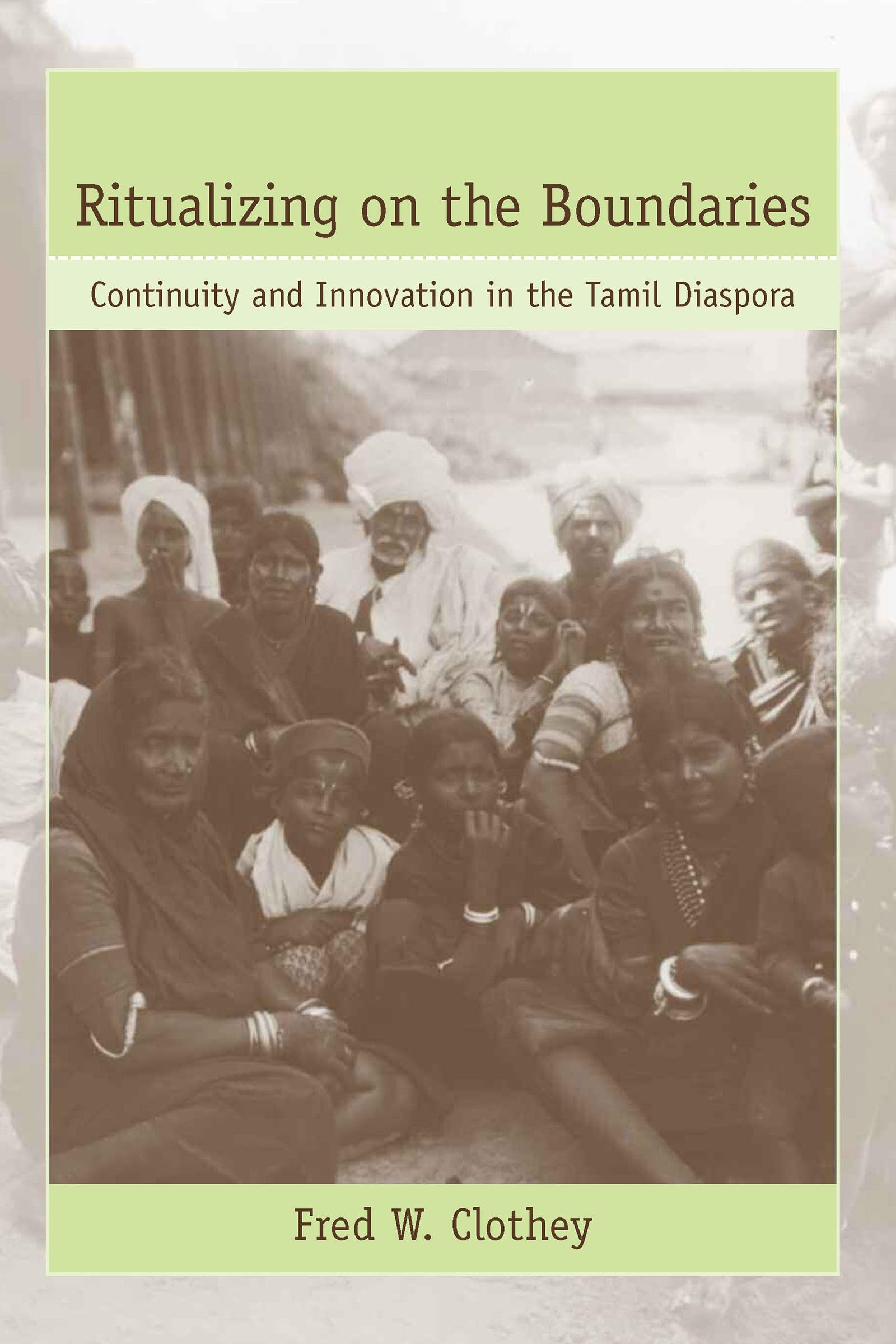
A comparative study of the roles of ritual in four South Indian immigrant communitiesFor centuries and particularly since the 1830s, Tamils and other South Indians have become part of a diaspora that has scattered their identities and traditions, both real and invented, to cities around the world. In his comparative study of four Tamil resettlements, senior scholar Fred W. Clothey examines the rituals that have traveled with these South Indian communitiesHindu, Muslim, and Christianand how these practices perpetuate or modify the heritages these groups claim for themselves in their new environs.Clothey looks specifically at settlements in the cities of Kuala Lumpur, Malaysia; Singapore; Mumbai, India; and Pittsburgh, Pennsylvania. Describing such settlements as communities living on boundaries, Clothey explores how their existence illustrates divisions among ethnic, local, and global identities; between generations; and between imagined pasts and uncertain futures. He contends that one of the most visible ways expatriated communities negotiate these boundaries is through the use of ritual as manifested in the building of shrines and temples, the celebration of festivals, the perpetuation and modification of performances, and the enactment of ceremonies believed to have ancient roots.In individual chapters Clothey examines the construction of Pittsburgh's Sri Venkateswara temple, one of the oldest and most authentic Hindu temples in the United States; explores the transition from temporary to permanent shrines in Singapore's Hindu community; compares how brahmins in Mumbai and Kuala Lumpur perpetuate subethnic identities in their shrines; and surveys Mumbai's slums to explore the worlds of Muslims, Christians, and castes of Hindus. He also reflects on the meanings of elaborate festivals in each of these cities and speculates about how the singing of hymns links the singers to their perceived lineage as well as to social configurations in their new homes. Such vignettes reveal how rituals serve to affirm a community's sense of heritage while at the same time reflecting their present circumstances. Through these case studies of the Tamil diaspora, Clothey suggests that rituals can create a process of being at home away from home.
⚠️ WARNING (California Proposition 65):
This product may contain chemicals known to the State of California to cause cancer, birth defects, or other reproductive harm.
For more information, please visit www.P65Warnings.ca.gov.