
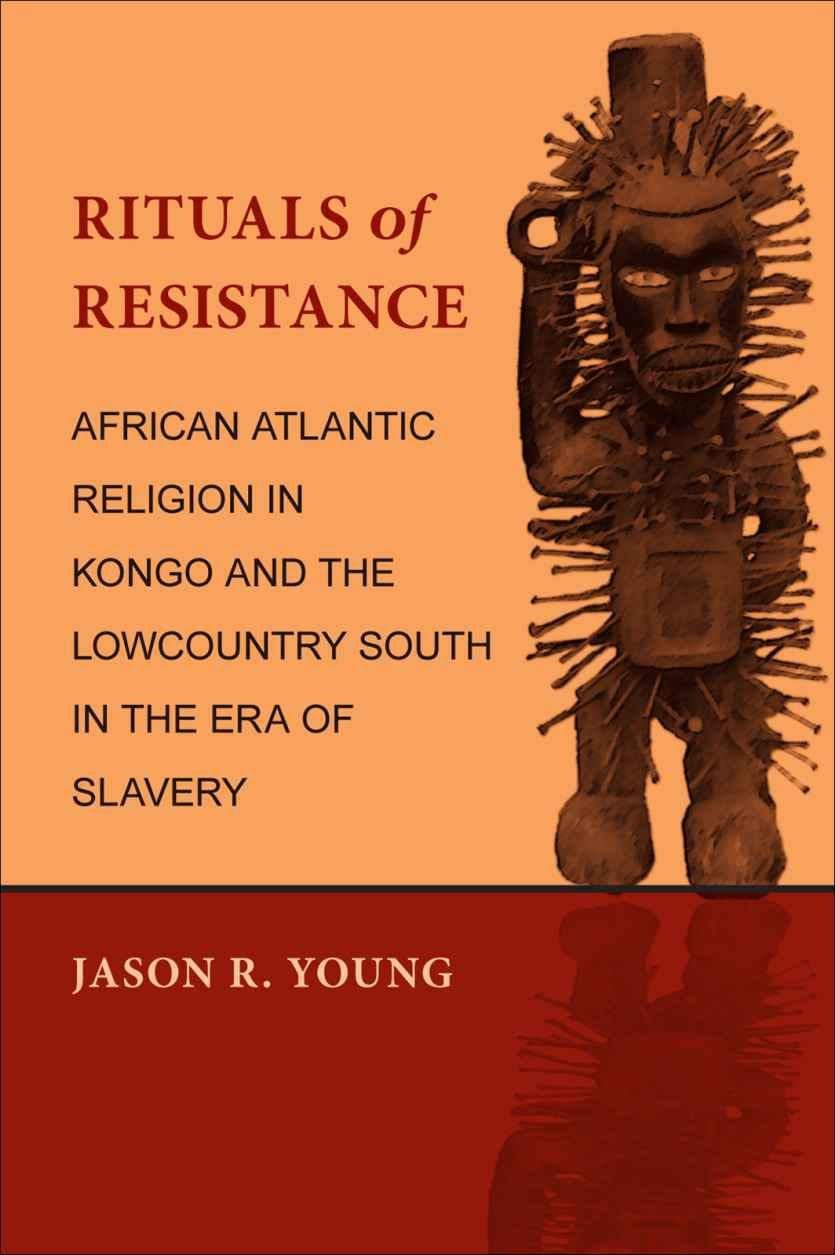
Title
Rituals Of Resistance: African Atlantic Religion In Kongo And The Lowcountry South In The Era Of Slavery
Sold by Ergodebooks, an authorized reseller.
Returns accepted within 30 days | support@ergodebooks.com
Shipping Information
- Free Standard Shipping — United States only
- Processing Time: 3–5 business days
- Estimated Delivery: 6–10 business days after dispatch
- Double-boxed, fully insured & discreetly packaged
- Tracking number sent via email once dispatched
Returns & Refund
Returns accepted within 30 days of delivery.
Damaged or Defective Item
Free return shipping + replacement or full refund
Wrong Item Received
Free return shipping + replacement or full refund
Change of Mind
Return shipping at customer's expense · 25% restocking fee applies
Payment Option

In Rituals Of Resistance Jason R. Young Explores The Religious And Ritual Practices That Linked Westcentral Africa With The Lowcountry Region Of Georgia And South Carolina During The Era Of Slavery. The Choice Of These Two Sites Mirrors The Historical Trajectory Of The Transatlantic Slave Trade Which, For Centuries, Transplanted Kongolese Captives To The Lowcountry Through The Ports Of Charleston And Savannah. Analyzing The Historical Exigencies Of Slavery And The Slave Trade That Sent Not Only Men And Women But Also Cultural Meanings, Signs, Symbols, And Patterns Across The Atlantic, Young Argues That Religion Operated As A Central Form Of Resistance Against Slavery And The Ideological Underpinnings That Supported It.Through A Series Of Comparative Chapters On Christianity, Ritual Medicine, Burial Practices, And Transmigration, Young Details The Manner In Which Kongolese People, Along With Their Contemporaries And Their Progeny Who Were Enslaved In The Americas, Utilized Religious Practices To Resist The Savagery Of The Slave Trade And Slavery Itself. When Slaves Acted Outside Accepted Parametersin Transmigration, Spirit Possession, Ritual Internment, And Conjureyoung Explains, They Attacked Not Only The Condition Of Being A Slave, But Also The Systems Of Modernity And Scientific Rationalism That Supported Slavery. In Effect, He Argues, Slave Spirituality Played A Crucial Role In The Resocialization Of The Slave Body And Behavior Away From The Oppressions And Brutalities Of The Master Class. Young'S Work Expands Traditional Scholarship On Slavery To Include Both The Extensive Work Done By African Historians And Current Interdisciplinary Debates In Cultural Studies, Anthropology, And Literature.Drawing On A Wide Range Of Primary Sources From Both American And African Archives, Including Slave Autobiography, Folktales, And Material Culture, Rituals Of Resistance Offers Readers A Nuanced Understanding Of The Cultural And Religious Connections That Linked Blacks In Africa With Their Enslaved Contemporaries In The Americas. Moreover, Young'S Groundbreaking Work Gestures Toward Broader Themes And Connections, Using The Case Of The Kongo And The Lowcountry To Articulate The Development Of A Much Larger African Atlantic Space That Connected Peoples, Cultures, Languages, And Lives On And Across The Ocean'S Waters.
⚠️ WARNING (California Proposition 65):
This product may contain chemicals known to the State of California to cause cancer, birth defects, or other reproductive harm.
For more information, please visit www.P65Warnings.ca.gov.
- Q: What is the main theme of 'Rituals of Resistance'? A: The main theme of 'Rituals of Resistance' is the exploration of religious and ritual practices that connected West-Central Africa with the Lowcountry region during the era of slavery, highlighting how these practices served as forms of resistance against the oppressive conditions of slavery.
- Q: Who is the author of the book and what is his background? A: The author of the book is Jason R. Young, who is known for his scholarly work on African Atlantic religion and culture, particularly in relation to the historical context of slavery.
- Q: What type of sources does the author use in this book? A: Jason R. Young utilizes a wide range of primary sources, including slave autobiographies, folktales, and material culture from both American and African archives to support his arguments.
- Q: How many pages does the book contain? A: The book contains 272 pages.
- Q: What is the binding type of this book? A: This book is available in paperback binding.
- Q: When was 'Rituals of Resistance' published? A: The book was published on February 11, 2011.
- Q: Is this book suitable for academic study? A: Yes, 'Rituals of Resistance' is suitable for academic study, as it engages with interdisciplinary debates in cultural studies, anthropology, and literature, making it a valuable resource for scholars.
- Q: What edition of the book is available? A: The available edition is the 2nd edition.
- Q: What topics are covered in the comparative chapters of the book? A: The comparative chapters cover topics such as Christianity, ritual medicine, burial practices, and transmigration, detailing how these practices were utilized by Kongolese people and their descendants.
- Q: How does the book contribute to the understanding of slavery and cultural resistance? A: The book expands traditional scholarship on slavery by illustrating how African religious practices were fundamental forms of resistance, thus providing a nuanced understanding of the cultural and religious connections between Africa and the Americas.