
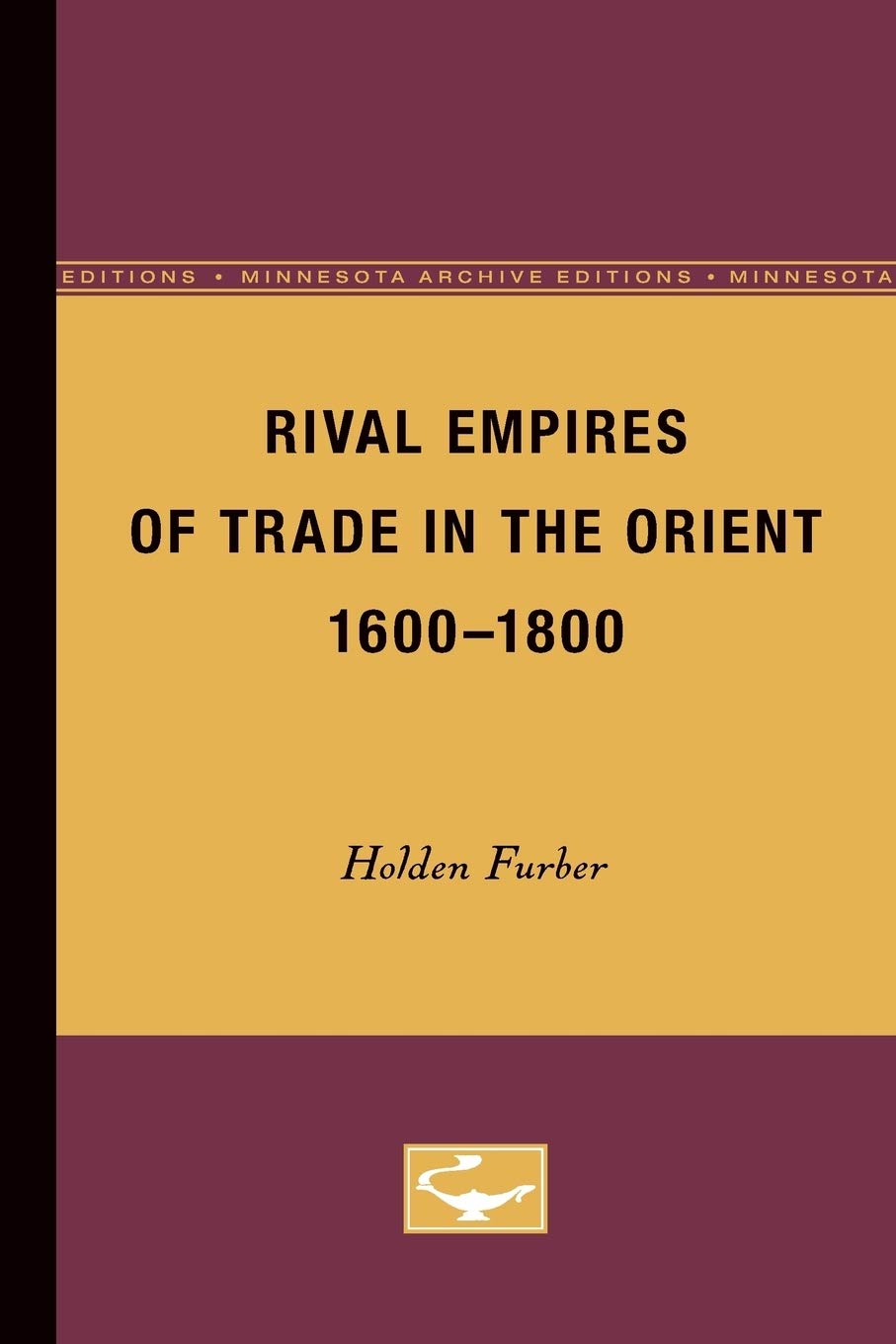
Title
Rival Empires Of Trade In The Orient, 16001800 (Volume 2) (Europe And The World In Age Of Expansion),Used
Sold by Ergodebooks, an authorized reseller.
Returns accepted within 30 days | support@ergodebooks.com
Shipping Information
- Free Standard Shipping — United States only
- Processing Time: 3–5 business days
- Estimated Delivery: 6–10 business days after dispatch
- Double-boxed, fully insured & discreetly packaged
- Tracking number sent via email once dispatched
Returns & Refund
Returns accepted within 30 days of delivery.
Damaged or Defective Item
Free return shipping + replacement or full refund
Wrong Item Received
Free return shipping + replacement or full refund
Change of Mind
Return shipping at customer's expense · 25% restocking fee applies
Payment Option

Rival Empires of Trade in the Orient, 16001800 was first published in 1976. Minnesota Archive Editions uses digital technology to make longunavailable books once again accessible, and are published unaltered from the original University of Minnesota Press editions.This volume presents an account of European expansion in Asia through the seventeenth and eighteenth centuries the story of the rivalries of the East India companies and the growth of British maritime dominance which forged the Pax Britannica destined to keep Asia under European control until 1941. The author explains that it is called Rival Empires of Trade in the Orient because the few thousands of Europeans who built these empires thought of themselves primarily as merchants rather than as rulers.The book consists of two parts, the first, narrative, the second, interpretive. The story of European commercial activity in the East is told in three chapters, the first ending with the Dutch conquest of Ceylon in 1656 and the reorganization and revival of the English East India Company as a permanent joint stock company under Oliver Cromwell's charter of 1657. The second chapter ends with the European peace settlement at Utrecht in 1713, and the third with the establishment of British preponderance in the East India trade at the close of the eighteenth century.In the second part the author discusses the organization and structure of East India companies, the commodities in East India trade, the nature, growth, and development of the 'country trade,' and the relations between Europeans and Asians with some reference to the growth of European knowledge of Asia and the influence of the European presence in Asia on social history in both Asia and Europe.
⚠️ WARNING (California Proposition 65):
This product may contain chemicals known to the State of California to cause cancer, birth defects, or other reproductive harm.
For more information, please visit www.P65Warnings.ca.gov.