
Title
Roman Christianity and Roman Stoicism: A Comparative Study of Ancient Morality,Used
Sold by Ergodebooks, an authorized reseller.
Returns accepted within 30 days | support@ergodebooks.com
Shipping Information
- Free Standard Shipping — United States only
- Processing Time: 3–5 business days
- Estimated Delivery: 6–10 business days after dispatch
- Double-boxed, fully insured & discreetly packaged
- Tracking number sent via email once dispatched
Returns & Refund
Returns accepted within 30 days of delivery.
Damaged or Defective Item
Free return shipping + replacement or full refund
Wrong Item Received
Free return shipping + replacement or full refund
Change of Mind
Return shipping at customer's expense · 25% restocking fee applies
Payment Option

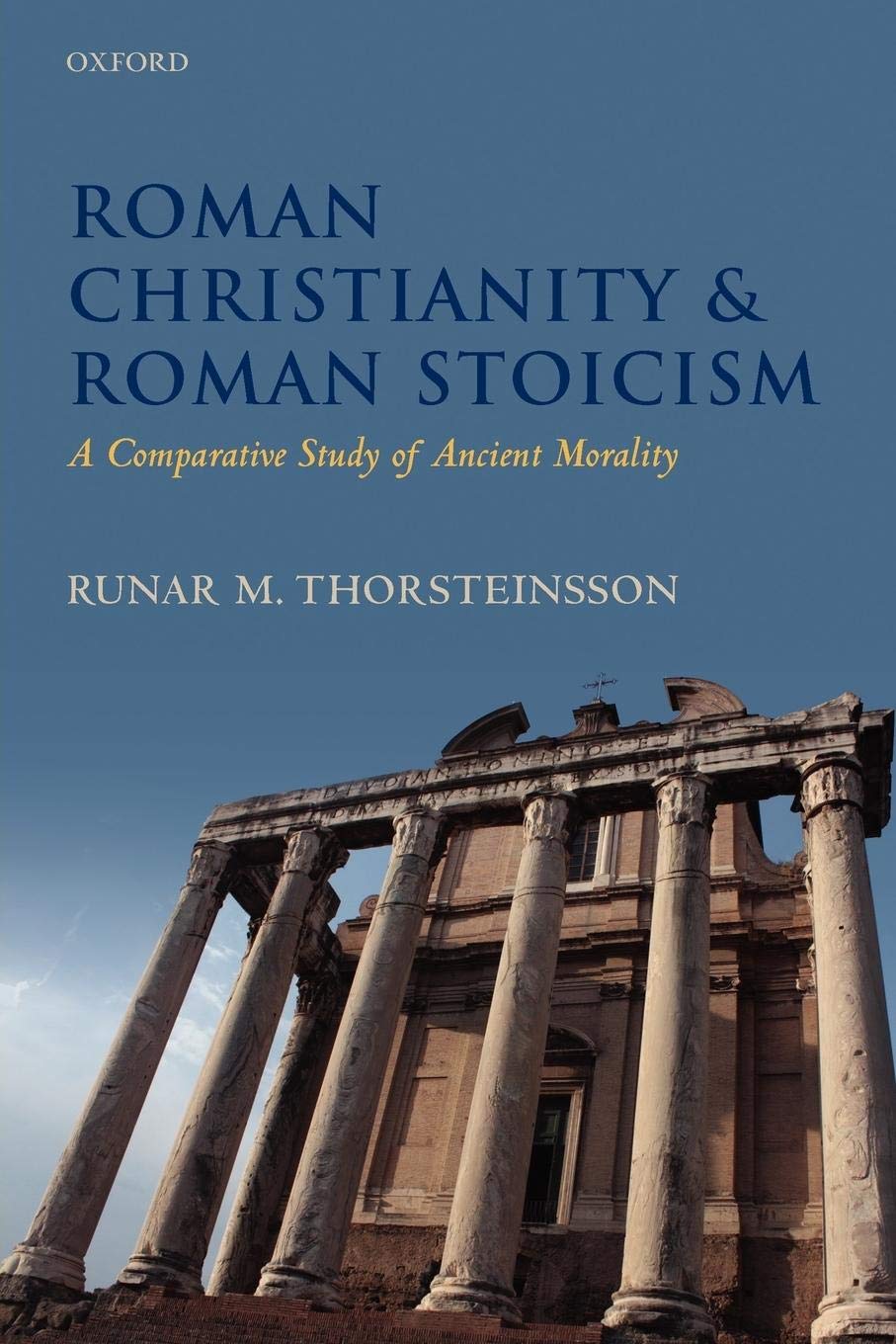
Christianity is commonly held to have introduced an entirely new and better morality into the ancient world, a new morality that was decidedly universal, in contrast to the ethics of the philosophical schools which were only concerned with the intellectual few. Runar M. Thorsteinsson presents a challenge to this view by comparing Christian morality in firstcentury Rome with contemporary Stoic ethics in the city.Thorsteinsson introduces and discusses the moral teaching of Roman Stoicism; of Seneca, Musonius Rufus, and Epictetus. He then presents the moral teaching of Roman Christianity as it is represented in Paul's Letter to the Romans, the First Letter of Peter, and the First Letter of Clement. Having established the bases for his comparison, he examines the similarities and differences between Roman Stoicism and Roman Christianity in terms of morality.Five broad themes are used for the comparison, questions of Christian and Stoic views about: a particular morality or way of life as proper worship of the deity; certain individuals (like Jesus and Socrates) as paradigms for the proper way of life; the importance of mutual love and care; nonretaliation and 'love of enemies'; and the social dimension of ethics. This approach reveals a fundamental similarity between the moral teachings of Roman Christianity and Roman Stoicism. The most basic difference is found in the ethical scope of the two: While the latter teaches unqualified universal humanity, the former seems to condition the ethical scope in terms of religious adherence.
⚠️ WARNING (California Proposition 65):
This product may contain chemicals known to the State of California to cause cancer, birth defects, or other reproductive harm.
For more information, please visit www.P65Warnings.ca.gov.