If you have any questions, you are always welcome to contact us. We'll get back to you as soon as possible, withing 24 hours on weekdays.
Customer service
All questions about your order, return and delivery must be sent to our customer service team by e-mail at yourstore@yourdomain.com
Sale & Press
If you are interested in selling our products, need more information about our brand or wish to make a collaboration, please contact us at press@yourdomain.com
Help
If you have any questions, you are always welcome to contact us. We'll get back to you as soon as possible, withing 24 hours on weekdays.
Customer service
All questions about your order, return and delivery must be sent to our customer service team by e-mail at yourstore@yourdomain.com
Sale & Press
If you are interested in selling our products, need more information about our brand or wish to make a collaboration, please contact us at press@yourdomain.com
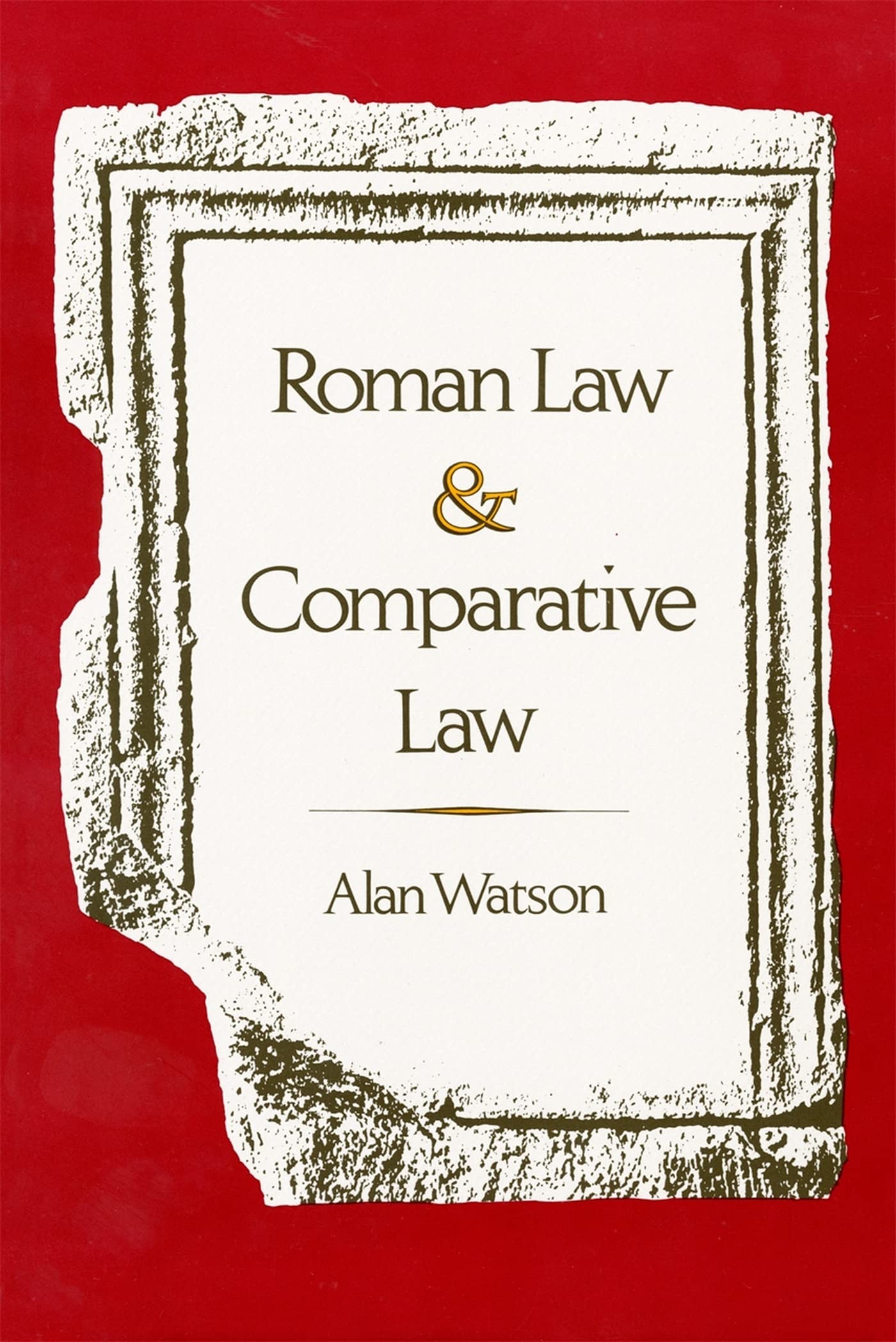
To understand how law develops and how legal rules and structures relate to society, one must examine the issues both comparatively and historically, Alan Watson asserts. And in the Western world, he adds, in order to understand law comparatively, one must have knowledge of Roman law.As his title suggests, Watson has divided the book into two related but independent parts. The first part, a revised and enlarged version of his 1970 volume The Law of the Ancient Romans, provides a comprehensive description of the system of Roman law. Watson begins with a discussion of law and the Roman mind and proceeds to such topics as slavery, property, contracts, delicts, and succession. In part two he argues that comparative lawan area of study still in its infancycan help us 'to identify the circumstances in which law changes, thereby uncovering the causes of legal development.'Guided by this purpose, Watson examines the ways in which Roman law influenced later legal systems and how comparative law explains the role of law in society. He ties his explication throughout to individual issues. These include the structure of European legal systems, tort law in the French civil code, the structure of Blackstone's Commentaries on the Law of England, differences between contract law in France and Germany, the parameters of judicial reasoning, lessons to be drawn from feudal law, and the interests of governments in making and communicating law. He takes care to discriminate between law created by legislatures and law conceived by scholarly jurists or judges.
⚠️ WARNING (California Proposition 65):
This product may contain chemicals known to the State of California to cause cancer,
birth defects, or other reproductive harm.
For MAP (Minimum Advertised Price) violations and Intellectual Property (IP) or Trademark concerns, please contact:
support@ergodebooks.com
⚠️ California Proposition 65 Warning: Some products sold on this website may expose you to chemicals known to the State of California to cause cancer, birth defects, or other reproductive harm. For more information, visit www.P65Warnings.ca.gov.