
Title
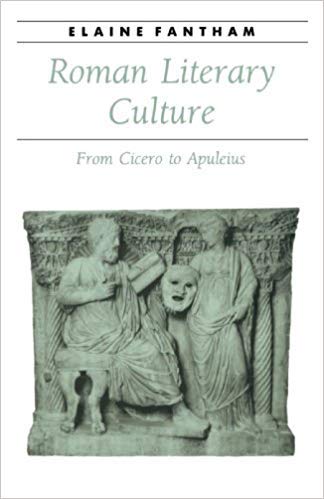
Roman Literary Culture: From Cicero To Apuleius (Ancient Society And History),Used
Sold by Ergodebooks, an authorized reseller.
Returns accepted within 30 days | support@ergodebooks.com
Shipping Information
- Free Standard Shipping — United States only
- Processing Time: 3–5 business days
- Estimated Delivery: 6–10 business days after dispatch
- Double-boxed, fully insured & discreetly packaged
- Tracking number sent via email once dispatched
Returns & Refund
Returns accepted within 30 days of delivery.
Damaged or Defective Item
Free return shipping + replacement or full refund
Wrong Item Received
Free return shipping + replacement or full refund
Change of Mind
Return shipping at customer's expense · 25% restocking fee applies
Payment Option

This Is A Book That Needed To Be Written In Answer To A Deep Gap In Our Resources On Latin Literature... We Owe Fantham Much Gratitude For Having The Energy And Wisdom To Undertake This Demanding And Original Project. Every Latinist Should Study Her Book.' William S. Anderson, American Journal Of Philologyscholars Of Ancient Literature Have Often Focused On The Works And Lives Of Major Authors Rather Than On Such Questions As How These Works Were Produced And Who Read Them. In Roman Literary Culture, Elaine Fantham Fills That Void By Examining The Changing Social And Historical Context Of Literary Production In Ancient Rome And Its Empire. Fantham Discusses The Habits Of Roman Readers And Developments In Their Means Of Access To Literature, From Booksellers And Copyists To Pirated Publications And Libraries. She Examines The Issues Of Patronage And The Utility Of Literature. She Shows How The Constraints Of The Physical Object Itself The Ancient 'Book' Influenced The Practice Of Both Reading And Writing. And She Explores The Ways In Which Ancient Criticism And Critical Attitudes Reflected Cultural Assumptions Of The Time.'The Book Remains Thoroughly Absorbing From The Account Of Late Republican Literary Culture Through The Imperial, And Especially The Neronian, Periods, And Continues To Instruct And Delight Concerning Cultural Decline In The Age Of The Antonines.' Robert P. Sonkowsky, Phi Beta Kappa Key Reporter' Roman Literary Culture Is An Important Work, Full Of Learning, Which Serves Simultaneously To Deepen Our Appreciation Of Latin Literature In Its Social Context, To Provoke Further Exploration Of The Questions The Author Raises, And To Continue Debate Concerning Certain Of The Answers.' Jeri Blair Debrohun, New England Classical Journal
⚠️ WARNING (California Proposition 65):
This product may contain chemicals known to the State of California to cause cancer, birth defects, or other reproductive harm.
For more information, please visit www.P65Warnings.ca.gov.