If you have any questions, you are always welcome to contact us. We'll get back to you as soon as possible, withing 24 hours on weekdays.
Customer service
All questions about your order, return and delivery must be sent to our customer service team by e-mail at yourstore@yourdomain.com
Sale & Press
If you are interested in selling our products, need more information about our brand or wish to make a collaboration, please contact us at press@yourdomain.com
Help
If you have any questions, you are always welcome to contact us. We'll get back to you as soon as possible, withing 24 hours on weekdays.
Customer service
All questions about your order, return and delivery must be sent to our customer service team by e-mail at yourstore@yourdomain.com
Sale & Press
If you are interested in selling our products, need more information about our brand or wish to make a collaboration, please contact us at press@yourdomain.com
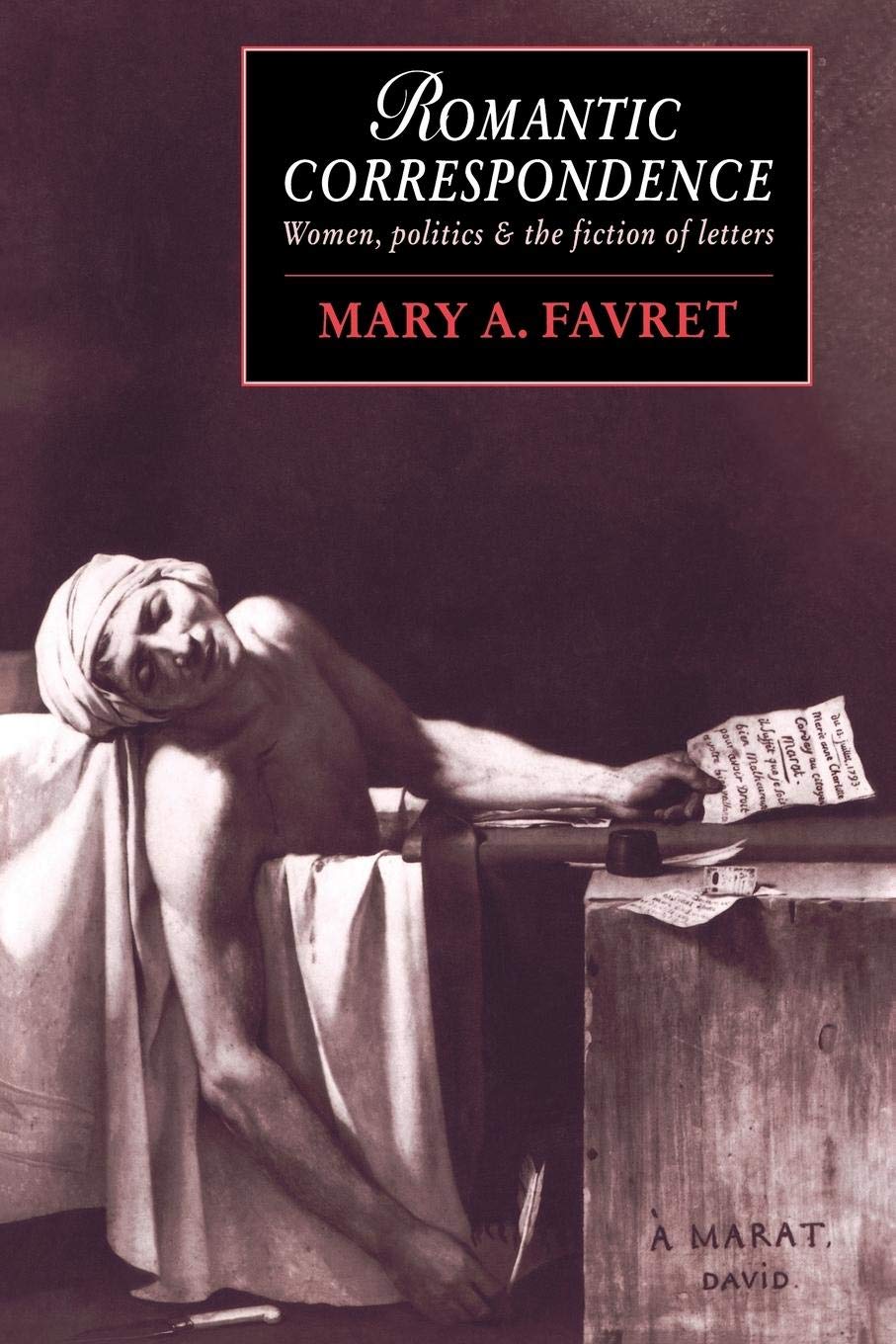
The literary importance of letters did not end with the demise of the eighteenthcentury epistolary novel. In the turbulent period between 1789 and 1830, the letter was used as a vehicle for political rather than sentimental expression. Against a background of severe political censorship, seditious Corresponding Societies, and the rise of the modern Post Office, letters as they are used by Romantic writers, especially women, become the vehicle for a distinctly political, often disruptive force. Mary Favret's study of Romantic correspondence reexamines traditional accounts of epistolary writing, and redefines the letter as a 'feminine' genre. The book deals not only with letters which circulated in the novels of Austen or Mary Shelley, but also with political pamphlets, incendiary letters and spy letters available for public consumption.
⚠️ WARNING (California Proposition 65):
This product may contain chemicals known to the State of California to cause cancer,
birth defects, or other reproductive harm.
For MAP (Minimum Advertised Price) violations and Intellectual Property (IP) or Trademark concerns, please contact:
support@ergodebooks.com
⚠️ California Proposition 65 Warning: Some products sold on this website may expose you to chemicals known to the State of California to cause cancer, birth defects, or other reproductive harm. For more information, visit www.P65Warnings.ca.gov.