
Title

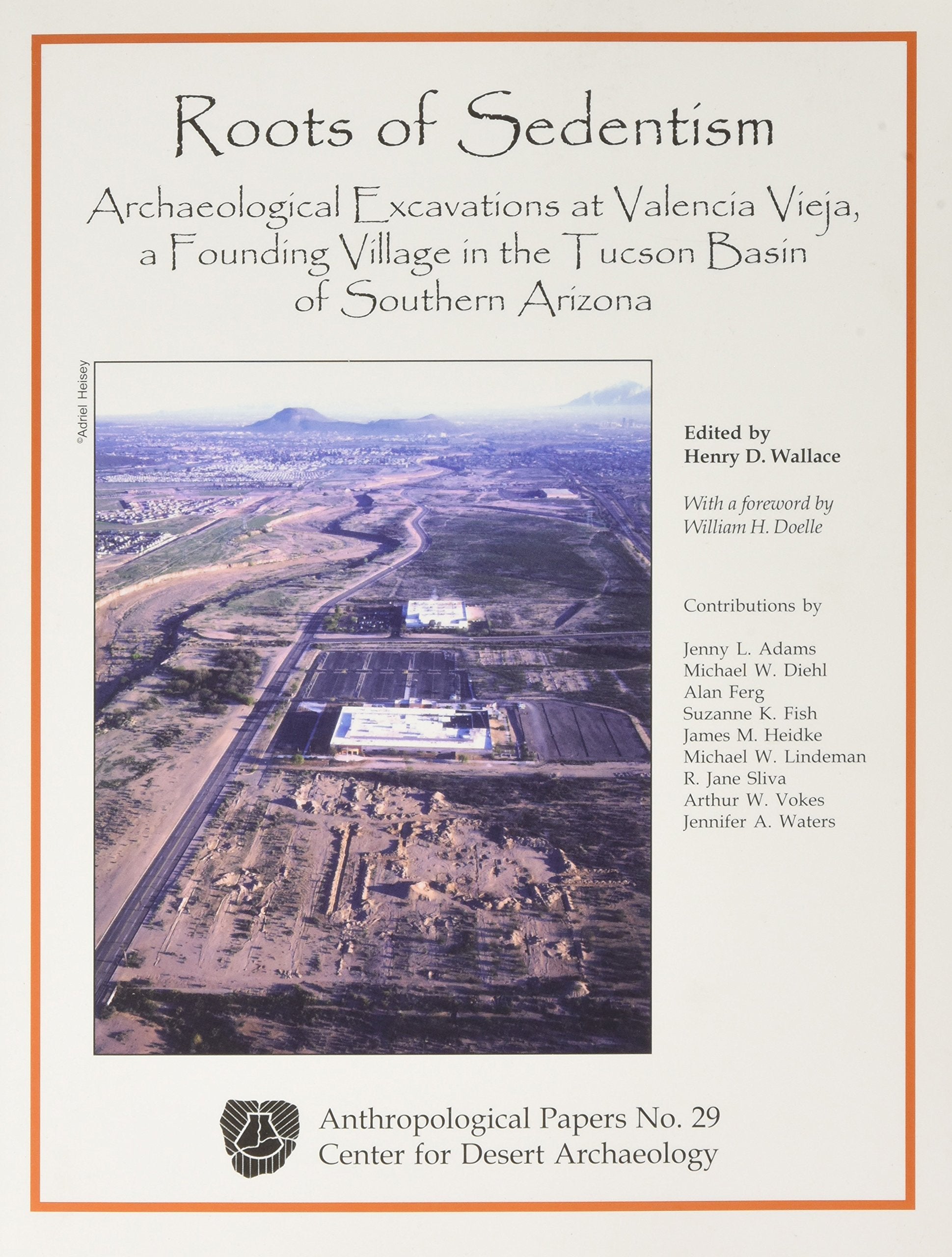
Roots of Sedentism: Archaeological Excavations at Valencia Vieja, a Founding Village in the Tucson Basin of Southern Ariz. (Cda ,Used
Sold by Ergodebooks, an authorized reseller.
Returns accepted within 30 days | support@ergodebooks.com
Shipping Information
- Free Standard Shipping — United States only
- Processing Time: 3–5 business days
- Estimated Delivery: 6–10 business days after dispatch
- Double-boxed, fully insured & discreetly packaged
- Tracking number sent via email once dispatched
Returns & Refund
Returns accepted within 30 days of delivery.
Damaged or Defective Item
Free return shipping + replacement or full refund
Wrong Item Received
Free return shipping + replacement or full refund
Change of Mind
Return shipping at customer's expense · 25% restocking fee applies
Payment Option

Roots of Sedentism takes the reader to one of the most inadequately understood points of cultural transformation in prehistory: the origins of settled village life and the origins of a dynamic culture in the American Southwest, the Hohokam. The results of largescale excavations at Valencia Vieja, a pristine early village in the southern Tucson Basin founded in the fifth century is presented. Occupied for no more than 275 years, the village was left untouched until archaeologists began excavation. Estimated to have over 400 pit structures, Valencia Vieja residential, activity, and refuse zones were arranged in concentric rings around a central plaza that contained a probable cemetery. Comprehensive testing and extensive horizontal excavations resulted in an unusually complete picture of village structure and growth. A sequence of rebuilding episodes is documented, detailing the impacts of aggregation and early sociopolitical developments. Radiocarbon dates, houserebuilding sequences, and key artifacts provided strong dating control and permitted comparison with similarly dated remains elsewhere in the Hohokam region of southern Arizona. The rise of maintained aggregation, residential permanence, and the establishment of permanent ritual facilities were key factors in the growth of Hohokam Culture. This volume has much to offer for scholars interested in the effects of sedentism and aggregation in agricultural societies and is a boon to Hohokam archaeologists who have strived to understand the origins of this desert culture.
⚠️ WARNING (California Proposition 65):
This product may contain chemicals known to the State of California to cause cancer, birth defects, or other reproductive harm.
For more information, please visit www.P65Warnings.ca.gov.