If you have any questions, you are always welcome to contact us. We'll get back to you as soon as possible, withing 24 hours on weekdays.
Customer service
All questions about your order, return and delivery must be sent to our customer service team by e-mail at yourstore@yourdomain.com
Sale & Press
If you are interested in selling our products, need more information about our brand or wish to make a collaboration, please contact us at press@yourdomain.com
Help
If you have any questions, you are always welcome to contact us. We'll get back to you as soon as possible, withing 24 hours on weekdays.
Customer service
All questions about your order, return and delivery must be sent to our customer service team by e-mail at yourstore@yourdomain.com
Sale & Press
If you are interested in selling our products, need more information about our brand or wish to make a collaboration, please contact us at press@yourdomain.com
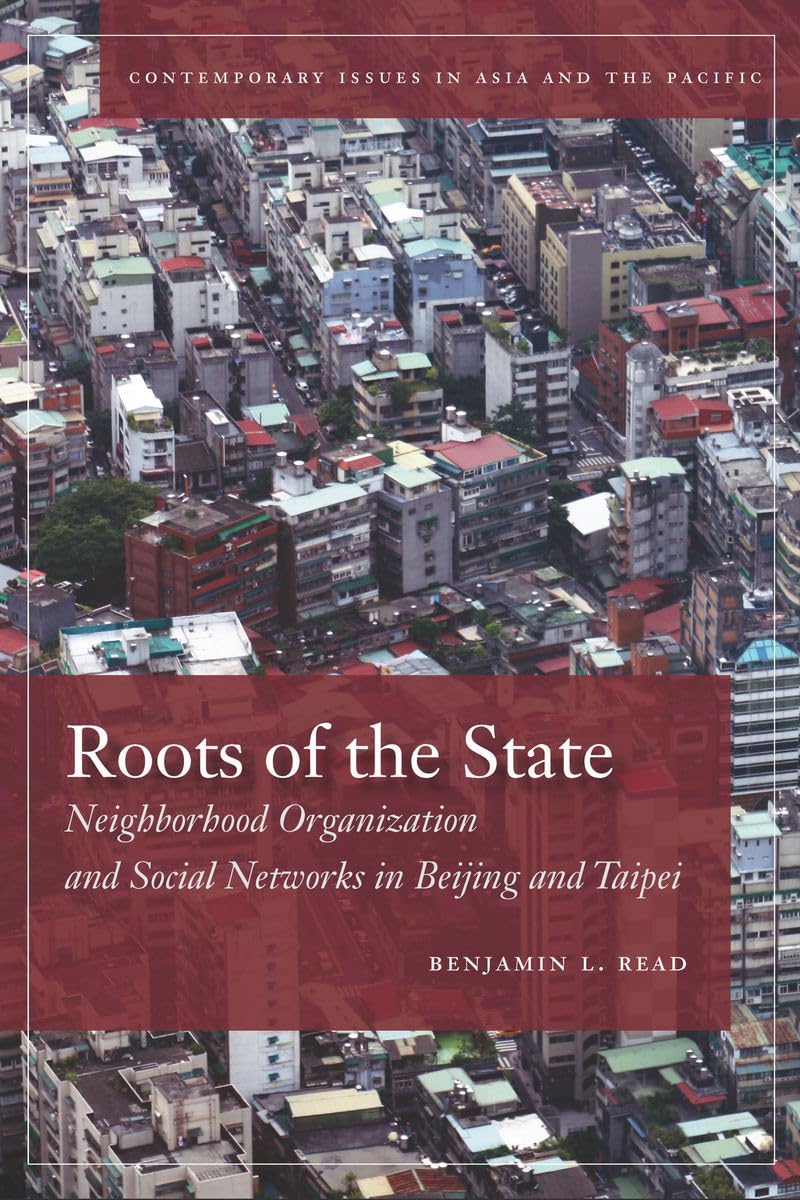
Most social science studies of local organizations tend to focus on 'civil society' associations, voluntary associations independent from state control, whereas governmentsponsored organizations tend to be theorized in totalitarian terms as 'mass organizations' or manifestations of state corporatism. Roots of the State examines neighborhood associations in Beijing and Taipei that occupy a unique space that exists between these concepts.Benjamin L. Read views the work of the neighborhood associations he studies as a form of 'administrative grassroots engagement.' States sponsor networks of organizations at the most local of levels, and the networks facilitate governance and policing by building personal relationships with members of society. Association leaders serve as the state's designated liaisons within the neighborhood and perform administrative duties covering a wide range of government programs, from welfare to political surveillance. These partly statecontrolled entities also provide a range of services to their constituents.Neighborhood associations, as institutions initially created to control societies, may underpin a repressive regime such as China's, but they also can evolve to empower societies, as in Taiwan. This book engages broad and muchdiscussed questions about governance and political participation in both authoritarian and democratic regimes.
⚠️ WARNING (California Proposition 65):
This product may contain chemicals known to the State of California to cause cancer,
birth defects, or other reproductive harm.
For MAP (Minimum Advertised Price) violations and Intellectual Property (IP) or Trademark concerns, please contact:
support@ergodebooks.com
⚠️ California Proposition 65 Warning: Some products sold on this website may expose you to chemicals known to the State of California to cause cancer, birth defects, or other reproductive harm. For more information, visit www.P65Warnings.ca.gov.