
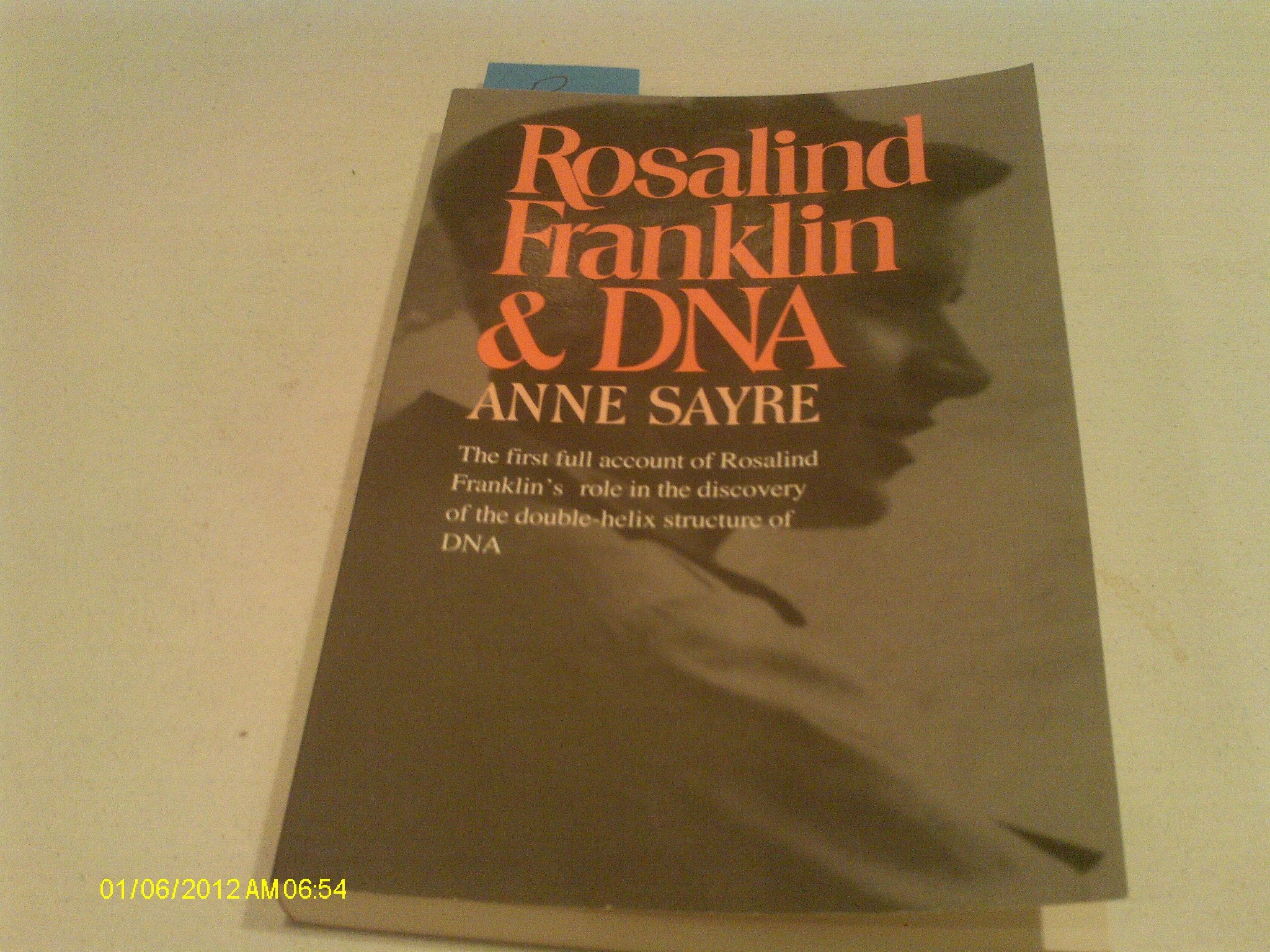
Title
Rosalind Franklin and DNA,Used
Sold by Ergodebooks, an authorized reseller.
Returns accepted within 30 days | support@ergodebooks.com
Shipping Information
- Free Standard Shipping — United States only
- Processing Time: 3–5 business days
- Estimated Delivery: 6–10 business days after dispatch
- Double-boxed, fully insured & discreetly packaged
- Tracking number sent via email once dispatched
Returns & Refund
Returns accepted within 30 days of delivery.
Damaged or Defective Item
Free return shipping + replacement or full refund
Wrong Item Received
Free return shipping + replacement or full refund
Change of Mind
Return shipping at customer's expense · 25% restocking fee applies
Payment Option

Rosalind Franklins research was central to the discovery of the doublehelix structure of DNA. She never received the credit she was due during her lifetime.In this classic work Anne Sayre, a journalist and close friend of Franklin, puts the record straight. Photographs
⚠️ WARNING (California Proposition 65):
This product may contain chemicals known to the State of California to cause cancer, birth defects, or other reproductive harm.
For more information, please visit www.P65Warnings.ca.gov.
- Q: What is the size of the book Rosalind Franklin and DNA? A: The book measures six point three inches in length, zero point five nine inches in width, and nine point four five inches in height.
- Q: How many pages does Rosalind Franklin and DNA have? A: The book contains two hundred twenty-one pages, providing an in-depth exploration of Rosalind Franklin's contributions to DNA research.
- Q: What type of binding does this book have? A: The book is available in paperback binding, making it lightweight and easy to handle.
- Q: Who is the author of Rosalind Franklin and DNA? A: The author is Anne Sayre, who was a journalist and a close friend of Rosalind Franklin.
- Q: What is the main theme of Rosalind Franklin and DNA? A: The book focuses on the life and work of Rosalind Franklin, emphasizing her crucial role in the discovery of the DNA double helix.
- Q: Is Rosalind Franklin and DNA suitable for young readers? A: Yes, the book is suitable for young readers who are interested in science and history, especially related to women's contributions.
- Q: How does the book explain Rosalind Franklin's research? A: The book provides detailed narratives and insights into Franklin's research methods and the challenges she faced in her career.
- Q: Can I read Rosalind Franklin and DNA if I’m not familiar with science? A: Yes, the book is written in an accessible style, making it comprehensible for readers without a scientific background.
- Q: How should I store Rosalind Franklin and DNA to keep it in good condition? A: Store the book in a cool, dry place, away from direct sunlight to prevent fading and damage to the pages.
- Q: Is there any special care needed for the book's pages? A: No special care is required, but handle the pages gently to avoid tearing or creasing.
- Q: What is the return policy for Rosalind Franklin and DNA? A: The return policy typically allows returns within a specified period if the book is unopened and in its original condition.
- Q: What if Rosalind Franklin and DNA arrives damaged? A: If the book arrives damaged, contact customer support for assistance with replacements or refunds.
- Q: Is this book a good choice for history enthusiasts? A: Yes, it is an excellent choice for history enthusiasts, particularly those interested in women's contributions to science.
- Q: How does this book compare to other biographies about scientists? A: This book uniquely highlights the underappreciated contributions of Rosalind Franklin, setting it apart from other biographies that may focus on more recognized figures.
- Q: Is Rosalind Franklin and DNA appropriate for academic use? A: Yes, it is appropriate for academic use, especially in courses related to biology, women's studies, or history of science.
- Q: How does this book address the issue of credit in scientific research? A: The book discusses the historical context of Franklin's work and the lack of recognition she received, advocating for her rightful place in scientific history.