
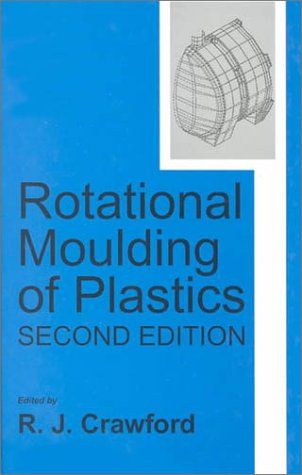
Title
Rotational Moulding Of Plastics (Polymer Engineering Series, 2),Used
Sold by Ergodebooks, an authorized reseller.
Returns accepted within 30 days | support@ergodebooks.com
Shipping Information
- Free Standard Shipping — United States only
- Processing Time: 3–5 business days
- Estimated Delivery: 6–10 business days after dispatch
- Double-boxed, fully insured & discreetly packaged
- Tracking number sent via email once dispatched
Returns & Refund
Returns accepted within 30 days of delivery.
Damaged or Defective Item
Free return shipping + replacement or full refund
Wrong Item Received
Free return shipping + replacement or full refund
Change of Mind
Return shipping at customer's expense · 25% restocking fee applies
Payment Option

Rotational Moulding Has Been Available As A Processing Method For Hollow Plastic Products For More Than Forty Years, But For A Long Time It Was Regarded As A Slow Method Limited To Only A Few Plastics. Now, There Has Been A Dramatic Change. Engineers And Designers Recognise The Scope That Rotational Moulding Offers For The Production Of Relatively Inexpensive, Complex Shapes With Low Levels Of Mouldedin Stress. Materials Suppliers Are Continually Developing New Grades Of Plastics As Well As A Wider Selection Of Materials Suited To The Process. In Addition, Machinery Suppliers Are Producing More Sophisticated Moulding Equipment So That The Moulder Now Has Control Over The Process That Was Previously Thought Impossible. The Second Edition Of This Book, First Published In 1992, Has Been Extensively Updated And Expanded By Its Authors, Who Are Leaders In Their Specialities Within The Field Of Rotational Moulding. It Provides An Introduction To The Subject, As Well As Giving Comprehensive Coverage Of The Stateoftheart. There Are New Chapters On Rotational Moulding Of Liquid Polymers And On Pinholes And Bubbles In Rotationally Moulded Products. It Will Surely Be Welcomed Again By Moulders, Materials And Equipment Suppliers, Engineers And Designers, And By Lecturers Looking For Uptodate Information To Include In Their Courses.
⚠️ WARNING (California Proposition 65):
This product may contain chemicals known to the State of California to cause cancer, birth defects, or other reproductive harm.
For more information, please visit www.P65Warnings.ca.gov.
- Q: What are the dimensions of this book? A: The book measures seven point ninety-nine inches in length, two point zero one inches in width, and ten inches in height.
- Q: How many pages does this book have? A: This book contains two hundred seventy-two pages, providing a comprehensive overview of rotational moulding.
- Q: What type of binding does this book have? A: This book is bound in hardcover, which offers durability and a professional appearance.
- Q: Who is the author of this book? A: The author of this book is R.J. Crawford, a recognized expert in the field of rotational moulding.
- Q: What is the main focus of this book? A: This book focuses on the process of rotational moulding in plastics, exploring both its history and technological advancements.
- Q: How do I use this book for my studies? A: You can use this book as a textbook for understanding rotational moulding principles and as a reference for advanced techniques.
- Q: Is this book suitable for beginners? A: Yes, this book is suitable for beginners, as it provides an introduction along with advanced topics in rotational moulding.
- Q: Can this book benefit professionals in the industry? A: Yes, professionals will find valuable insights and updates on state-of-the-art practices in the rotational moulding field.
- Q: What topics are covered in the new chapters of this edition? A: The new chapters cover rotational moulding of liquid polymers and address pin-holes and bubbles in moulded products.
- Q: How should I care for this book? A: To keep this book in good condition, store it upright and away from direct sunlight to prevent fading.
- Q: Is this book safe for all audiences? A: Yes, this book is appropriate for all audiences interested in polymer engineering and moulding processes.
- Q: What if I find defects in the book upon delivery? A: If you find defects in the book, you should contact the seller for a return or exchange according to their policy.
- Q: Does this book have any hazardous materials? A: No, this book does not contain any hazardous materials, making it safe for handling.
- Q: Can I use this book for academic purposes? A: Yes, this book is an excellent resource for academic purposes, especially for engineering and design courses.
- Q: What is the publication date of this book? A: The second edition of this book was published in 1992 and has been extensively updated.
- Q: Where can I find more information about the author? A: More information about R.J. Crawford can typically be found through professional engineering associations and academic publications.